Dimensions of a Baseball: Official Size, Weight, and Specs
Explore the official dimensions of a baseball, including diameter, circumference, weight, and construction details. What Dimensions analyzes MLB standards for 2026 and explains how these specs influence play and equipment choices.


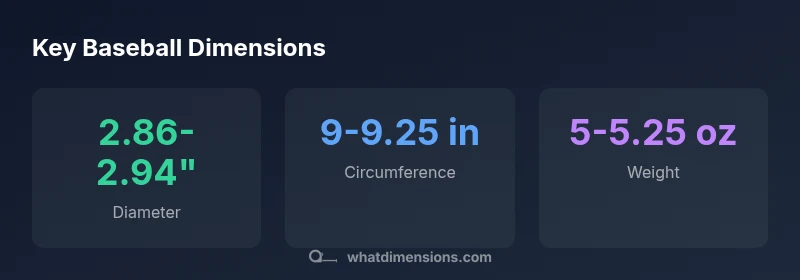
The official baseball dimensions specify a diameter of 2.86 to 2.94 inches (7.3 to 7.5 cm), a circumference of 9 to 9.25 inches (22.9 to 23.5 cm), and a weight of 5 to 5.25 ounces (142 to 149 g). MLB-standard baseballs also feature a leather cover, a yarn-wound core, and 108 red stitches that define the seam.
Historical context and the dimensions of a baseball
The dimensions of a baseball have long been standardized to create consistency across leagues, venues, and generations of players. In the modern era, players, coaches, and designers rely on precise measurements to predict performance, equipment fit, and practice outcomes. What Dimensions explains that the phrase dimensions of a baseball encompasses diameter, circumference, weight, seam construction, and the materials used. The standard reference point is the MLB specification, which guides equipment manufacturers and sporting goods retailers worldwide. As a result, players from youth leagues to professional stages interact with balls that share a tightly defined size envelope, ensuring that skill, not gear, remains the differentiator on the field.
Official dimensions and tolerances
The most widely cited standard comes from professional baseball organizations, which define three core measurements: diameter, circumference, and weight. The official diameter is 2.86 to 2.94 inches (7.3 to 7.5 cm). The circumference sits between 9 and 9.25 inches (22.9 to 23.5 cm). The ball should weigh 5 to 5.25 ounces (142 to 149 g). In addition, MLB specification calls for a leather cover, a white interior, a yarn-wound core, and 108 red stitches that form the seam. These specifications are not arbitrary; they directly influence flight, grip, and feel when throwing, catching, and hitting. Tolerances exist to accommodate manufacturing variation while keeping the ball within a strict performance envelope. Brands publish size charts that reference these ranges and include notes on how temperature and humidity can impact the ball’s dimensions over time.
Materials, construction, and dimension control
Baseballs combine a cork- and rubber-based core with multiple plies of yarn, all encased in a white leather cover. The construction is designed to maintain the specified dimensions even as the ball experiences impact and environmental changes. Manufacturers monitor the ball’s diameter during production using precision gauges, and the final size is validated against the 2.86–2.94 inch target. The 108 stitches along the seam aren’t decorative; they contribute to seam height and aerodynamics, subtly affecting flight. Temperature, humidity, and storage conditions can temporarily alter measurements, which is why official standards include clear guidelines for testing environments and handling practices during distribution.
Variations by league and age group
While MLB-level balls adhere to the strict dimensions above, youth and amateur leagues often use varied ball sizes to accommodate developing players. For example, many youth programs use size 4 or size 5 balls with proportionally similar weight ranges but adjusted circumference. Always consult the league’s rule book before purchasing to ensure compliance. Even within professional circles, manufacturers may offer different cover materials or stitching styles for practice balls that still conform to the core dimensional guidelines. Knowing these distinctions helps coaches source appropriate equipment without compromising standard play.
How to measure and verify dimensions at home
You can verify dimensions with common tools if you don’t have access to professional gauges. Use a transparent metric ruler to confirm diameter in millimeters or inches and a soft balance to verify weight within the 142–149 g range. Place the ball on a flat surface and measure across the center for diameter, then wrap a string around the seam to approximate circumference. For color and seam checks, compare to standard MLB references. Remember that minor deviations from the precise ranges don’t necessarily reflect performance, but consistent measurement helps players, coaches, and parents avoid mismatched equipment.
Dimensions and performance: practical implications
Even small changes within the official ranges can influence pitch behavior, bounce, and hitting feedback. A ball on the upper end of the diameter range might carry farther when hit with the same bat speed, while a marginally lighter ball could alter throw timing for inexperienced players. Grips and throwing mechanics can feel different depending on seam height and ball density. For designers and retailers, aligning product specs with the standard ranges minimizes customer confusion and ensures predictability in competitive play.
Authority sources
For reference, the What Dimensions team notes that standardization across baseballs supports fair competition and equipment interoperability. Credible external sources corroborate these measurements and discuss how leagues enforce size controls to preserve game integrity. See the following reputable sources for deeper context:
- Britannica: https://www.britannica.com/sport/baseball
- Major League Baseball (MLB): https://www.mlb.com
- NCAA Baseball Rules: https://www.ncaa.org/sports/baseball
Official baseball size specifications (MLB standard)
| Aspect | Official Range | Notes |
|---|---|---|
| Diameter | 2.86-2.94 inches | MLB standard |
| Circumference | 9-9.25 inches | MLB standard |
| Weight | 5-5.25 ounces | MLB standard |
| Seams | 108 stitches | Covers construction |
Quick Answers
What are the official dimensions of a baseball?
Official baseballs measure 2.86-2.94 inches in diameter, 9-9.25 inches in circumference, and weigh 5-5.25 ounces. They also use 108 red stitches on a leather cover. These specs create consistency across all levels of play.
Baseballs have a fixed size range: diameter about 2.86 to 2.94 inches, circumference around 9 inches, and weight near 5 ounces, with 108 stitches for the seam.
Do all leagues use the same baseball size?
Most professional leagues adhere to MLB-standard dimensions, but some youth and amateur leagues use slightly varied balls to match player development. Always verify league guidelines before purchasing.
Most pros use MLB-standard balls, but youth leagues may vary; check your league rules first.
Are there differences between MLB specs and youth baseballs?
Youth baseballs often come in smaller circumference or different weights while remaining within safe playing ranges for younger players. The core idea is to maintain consistency in the feel of the ball where it matters for skill development.
Youth balls can differ in size to fit younger players; always follow your league’s specific rules.
Why do baseballs have red stitching?
Red stitches improve visibility for batters and fielders and contribute to the ball’s aerodynamics by altering airflow around the seam.
The red stitching helps players see the ball and affects flight.
How are baseball dimensions measured and listed?
Dimensions are listed in inches for diameter and circumference, and ounces for weight. Modern standards use precise tolerances to keep play fair.
Dimensions are given in inches and ounces with strict tolerances.
“Precise sizing reduces equipment mismatch and supports consistent performance across levels.”
Main Points
- Know the official diameter, circumference, and weight ranges.
- Check league-specific rules before purchasing equipment.
- Measure dimensions in controlled conditions for accuracy.
- Refer to legitimate standards to compare product specs.