What Are Sofa Dimensions: A Practical Guide to Sizing
Learn how to estimate sofa dimensions, understand standard widths, depths, and heights, and measure your space accurately with practical tips from What Dimensions.


Sofa dimensions define how a couch will fit, function, and look in your space. The key measurements are width, depth, and height, plus seat depth and arm height for comfort. Understanding these numbers helps you choose a model that accommodates seating needs, fits through entryways, and coordinates with rugs and coffee tables. According to What Dimensions, precise size specs prevent layout headaches.
What are sofa dimensions
Sofa dimensions are more than numbers on a spec sheet; they are the blueprint for how comfortable a couch will feel and how well it will fit in a living space. In practice, the core measurements are width, depth, and height. Many models also list seat depth and arm height, which influence how easy it is to sit down, stand up, and reach the coffee table. The What Dimensions team emphasizes that understanding these figures helps homeowners avoid buyers' regret, especially when moving between rooms with different doorways and hallways. By focusing on the total footprint, you can predict how a sofa will anchor furniture like chairs, ottomans, and media stands, while also planning for rug size and traffic flow.
Standard sofa dimensions by type
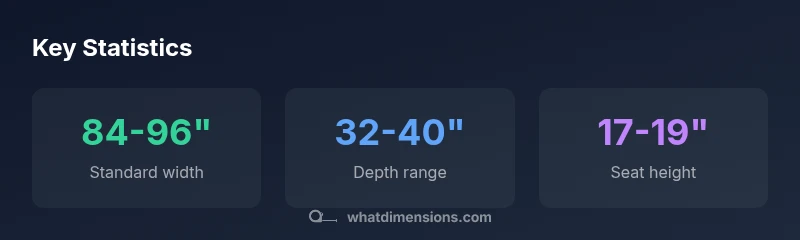
The market segments sofas into several common types, each with typical size ranges. A standard 3-seat sofa usually runs about 84–96 inches wide, with a depth of roughly 32–40 inches and an overall height of 30–36 inches. Seat height tends to be around 17–19 inches, depending on cushion design and frame construction. A loveseat, designed for two, typically spans 58–72 inches in width and sits a bit shallower in depth. Sectional sofas vary the most, with configurations from 110–140 inches for a corner unit or a modular setup that can expand well beyond 140 inches. These ranges are approximate and can vary by style, so always compare the exact model to your space. The goal is to balance seating capacity with room proportions and door clearance, ensuring the sofa fits the room’s scale and still leaves room for movement.
How to measure your space for a sofa
Accurate measurements start with the room, not the furniture. Begin by measuring the width of the wall where the sofa will sit, including any baseboards or trim. Next, measure doors, hallways, and stairways to confirm the sofa can pass through without disassembly. In the room, reserve at least 18–24 inches of walking clearance around furniture for traffic; across main paths, a minimum 36 inches is often recommended. When choosing width, leave additional space for end tables or lamps. Finally, measure potential rug dimensions to ensure the sofa and rug combination maintains visual balance. What Dimensions suggests writing down the space in both inches and centimeters to avoid conversion errors during shopping.
Seating options and capacity vs dimensions
Sizing a sofa around seating goals helps avoid under- or over-furnishing a room. A 3-seat sofa typically accommodates three adults but may feel cramped if cushions are deep or if the space includes a bulky coffee table. If you frequently host guests, consider a sectional or a chaise lounge configuration that stretches width utilization while keeping pathways clear. For tight spaces, a loveseat plus a compact chair can offer similar seating without overwhelming the floor plan. Remember that a sofa’s depth affects perceived space: deeper seats feel cozier but can reduce legroom in small rooms.
Room layout and traffic flow considerations
Where you place a sofa influences the entire living area. Align the sofa with the primary focal point (TV, fireplace, or view) but avoid blocking entry paths or window light. The ideal distance from a TV is typically 1.5 to 2.5 times the diagonal screen size, but for conversation, a closer seating arrangement is often better. Corner sections and modular sofas should be oriented to maximize sight lines and conversation angles while preserving clear walkways. If you place a sofa opposite a dining area, consider a small rug between spaces to define zones and reduce echo.
Material, cushions, and height considerations
Cushion depth and seat height influence comfort for different body types. A deeper seat invites lounging and can reduce thigh support for shorter users, while a shallower seat height makes getting in and out easier for many people. Upholstery, cushion fill, and back height also affect comfort and support. If your space has a high-traffic lifestyle or pets, consider durable fabric and removable, machine-washable covers, as well as cushions with resilient foam to maintain shape. Visual balance should guide height choices; a very tall sofa can overwhelm a small room, while a low-profile sofa can make a room feel more open.
Shopping tips and practical checks
Before buying, bring accurate measurements to every showroom visit. Compare models with similar widths and depths to get a true sense of fit. For online shopping, check the product’s exact dimensions, especially if you rely on a sofa’s modular pieces. When possible, test seating depth by sitting with your legs extended; ensure there’s enough clearance for ankles and knees in front of the sofa. Lastly, consider delivery logistics—narrow staircases, elevators, and door thresholds can complicate installation. What Dimensions highlights the importance of precise specs to minimize surprises after delivery.
Common sofa dimensions by type
| Sofa type | Typical width | Typical depth | Typical height | Seating capacity |
|---|---|---|---|---|
| Standard sofa (3-seat) | 84-96 inches | 32-40 inches | 30-36 inches | 3 |
| Loveseat (2-seat) | 58-72 inches | 30-36 inches | 28-34 inches | 2 |
| Sectional (configurable) | 110-140 inches | 32-40 inches | 30-36 inches | 4-6 |
Quick Answers
What is the standard sofa size?
Most standard 3-seat sofas measure about 84–96 inches wide, with depth typically 32–40 inches and overall height around 30–36 inches. Seat height tends to be about 17–19 inches. These ranges help approximate fit, but always verify specific models.
Most standard sofas are around 84 to 96 inches wide with a depth of 32 to 40 inches and a seat height of 17 to 19 inches.
How do I measure a sofa before buying?
Measure room dimensions, doorways, hallways, and potential path routes. Record width, depth, and height of the sofa and add clearance for movement—typically 36 inches along main walkways and 18–24 inches around furniture.
Measure the space, note door widths, and ensure you have at least 36 inches of walking clearance.
Are there standard depths for sofas?
Yes, most sofas have depths in the 30–40 inch range. Deeper seats are great for lounging, while shallower depths suit compact rooms and easier entry.
Most sofas sit 30 to 40 inches deep.
What should I consider for sectional sofas?
Sectionals vary widely by configuration. Plan for 110–140 inches or more, depending on the layout, then test sit and walk around to ensure smooth traffic flow.
Sectionals come in many sizes; plan for over 110 inches and check traffic flow.
How much space should be left around a sofa?
Allow 18–36 inches around the sofa for traffic, with at least 36 inches of clearance for primary walkways. This keeps rooms feeling open and navigable.
Leave at least 18–36 inches around the sofa for easy movement.
“A precise understanding of sofa dimensions prevents awkward layouts and ensures safe, comfortable living spaces.”
Main Points
- Measure your space before shopping
- Check doorways and hallways for pass-through
- Match width to seating needs and room layout
- Prioritize depth for comfort and height for accessibility