Wash Basin Dimensions in Feet: Your Sizing Guide
Learn exact wash basin dimensions in feet, including width, depth, and bowl size. Practical measurement methods, conversion tips, and planning guidance for bathrooms of all sizes.


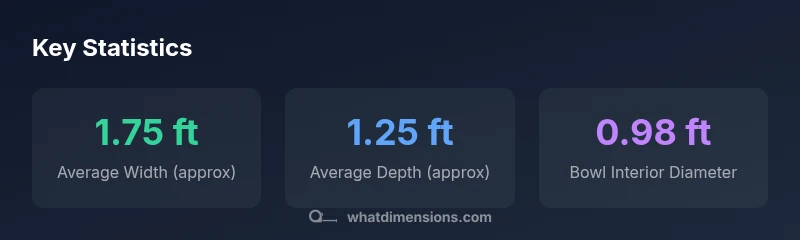
In feet, typical wash basin dimensions range from 1.25–2.00 ft in width and 1.00–1.50 ft in depth, with interior bowl diameters around 0.80–1.25 ft. Rim heights commonly sit around 2.50–2.83 ft from the floor, depending on vanity height. For more exact planning, verify measurements on site and compare against manufacturer templates.
Why wash basin dimensions in feet matter for bathroom design
Choosing the right wash basin size is more than aesthetics. Accurate dimensions in feet ensure the basin fits the vanity, aligns with faucet spacing, and leaves enough room for doors, drawers, and toe-kicks. A mismatch can lead to cramped movement, splash zones, and costly rework during installation. According to What Dimensions, planning with clear measurements helps you avoid layout conflicts, optimize plumbing clearances, and validate that door swings won’t clash with a pedestal or wall-mounted option. When you design a bathroom around precise footprint data, you create a space that remains comfortable and functional over time. This middle-ground approach—balancing style with measurable constraints—serves homeowners, designers, and students sourcing exact size specs for projects.
From a practical standpoint, start by establishing your target width and depth in feet, then translate that into space requirements for adjacent cabinetry, mirrors, and lighting. For family bathrooms, consider taller rim heights for accessibility, while in powder rooms a compact basin may free up essential floor area. Notably, the most common basins fall within standard width and depth ranges, but there are exceptions for vessel and wall-mounted designs that optimize visual space while maintaining usable dimensions.
What Dimensions emphasizes that every project begins with a measurement plan, not a guess. Your plan should include field notes, a simple sketch, and a quick cross-check against typical ranges to ensure you aren’t designing around a faulty assumption. By documenting dimensions in feet, you can communicate clearly with contractors and suppliers who often use these units by default.
Typical width ranges for wash basins in feet
Width is the most immediate dimension people associate with a wash basin. In feet, the typical outer width commonly falls between 1.25 ft and 2.00 ft. Pedestal and wall-mounted basins may appear leaner or wider depending on the mounting hardware and decorative rims. When planning, differentiate between the overall width (edge-to-edge) and the interior bowl width, since faucet reach and handles must align with the basin profile. A broader basin can offer more countertop space, but it also demands more room in front for comfortable use. If your bathroom has a tight layout, a compact 1.25–1.5 ft basin often fits better while still maintaining decent usability. For homeowners upgrading from an older layout, confirm whether a new basin will fit within the existing vanity recess or if cabinet adjustments are required. From a sizing perspective, expect a gradual shift toward compact widths in small bathrooms, driven by urban living trends and space optimization strategies. What Dimensions notes that precise width choices influence both visual proportion and plumbing compatibility, so measure twice and plan for 3–6 inches of clearance on each side for comfortable use.
Depth and bowl dimension considerations in feet
Depth governs how far the basin extends from the wall and influences knee clearance, countertop space, and plumbing layout. Typical front-to-back depth ranges from 1.00 ft to 1.50 ft in most residential basins. This depth interacts with vanity depth and available toe-kick space; deeper basins may encroach on legroom in smaller bathrooms. The interior bowl diameter, usually around 0.80 ft to 1.25 ft, affects how much washing surface you get and whether your preferred faucet style (center-set, widespread, or wall-mounted) will align with the basin opening. When you’re designing around a specific vanity or countertop, map the footprint in feet and cross-check the depth against door swing and medicine cabinet clearance. Remember that even modest depth changes can impact under-sink storage and pipe routing, so incorporate a small margin for installation tolerances. Pro tip: draw a quick scale diagram to verify you can access both sides of the basin and still open cabinet doors without obstruction.
Special case types: vessel and wall-mounted basins
Vessel basins sit on top of the counter and often require less depth than under-mounter options, but they can demand more countertop width to maintain balance. In feet, vessel basins might stay within the 1.25–1.75 ft overall width range, yet counter space behind the basin should be considered to prevent clutter. Wall-mounted basins reduce cabinet depth pressure and can be ideal in compact bathrooms; however, mounting height and exposed plumbing must be planned precisely. For these designs, confirm the mounting height (in feet) with your wall studs, verify faucet alignment, and account for potential splash zones. Pedestal or wall-mounted configurations influence not only the width and depth but also the surrounding hardware, so coordination with mirrors, towel bars, and lighting is essential. Regardless of type, maintaining a thoughtful balance between human ergonomics and structural feasibility will deliver lasting satisfaction.
How to measure an existing basin and translate to feet
Start by measuring the outside width and depth with a tape measure, recording both values in feet. If you have inches, convert to feet by dividing by 12 (e.g., 24 inches = 2 feet). Next, measure the interior bowl diameter to gauge usable washing space. Note the rim height from the floor, especially in relation to vanity height, seating, and door clearance. Finally, confirm faucet distance from the basin centerline to ensure your selected faucet model will align properly. When you finish, summarize the measurements in a simple table with columns for dimension (Width, Depth, Bowl, Rim height) and values in feet. If you’re replacing an existing unit, check for plumbing compatibility—altering sink width or depth may require adjusting supply lines and drain pipes. What Dimensions recommends carrying a printed measurement sheet to the showroom to compare options side-by-side.
Planning tips for small bathrooms and powder rooms
In tight spaces, every inch matters. Favor basins that fit within the intermediate width range (1.25–1.5 ft) and prioritize wall-mounted or semi-recessed designs to preserve floor area. Use a mirror with a lower frame to visually expand the space and keep the rim height comfortable for all users, especially if the room doubles as a guest bathroom. When possible, choose a basin that leaves at least 2–3 inches of clearance on either side to prevent splashes from hitting cabinetry or walls. For powder rooms with limited vanity depth, consider vessel basins or recessed trough styles that stay within your foot-based footprint while offering enough surface area for daily routines. Finally, coordinate with plumbing and code requirements to ensure your chosen dimensions align with local standards.
Conversion tips: feet to inches and back
Converting between feet and inches is straightforward: multiply feet by 12 to get inches, and divide inches by 12 to get feet. For example, a 1.75 ft width equals 21 inches (1.75 × 12 = 21). When planning, keep a small conversion chart handy for quick reference and to prevent rounding errors during layout conversations with contractors. Use feet for high-level space planning and inches for precise fittings, especially around faucet centers and cabinet clearances. What Dimensions recommends maintaining numerical consistency by choosing a primary unit for a given project and sticking with it throughout drawings and shopping lists.
Common wash basin dimensions in feet by type and footprint
| Dimension | Typical Range (ft) | Notes |
|---|---|---|
| Width (outer) | 1.25–2.00 | Edge-to-edge measurement |
| Depth (front-to-back) | 1.00–1.50 | Distance from wall to front edge |
| Bowl interior diameter | 0.80–1.25 | Opening width inside basin |
| Rim height (from floor) | 2.50–2.83 | Typical vanity-aligned height |
Quick Answers
What is the standard width of a wash basin in feet?
Most wash basins fall within 1.25–2.00 ft in width. This range covers common vanity configurations while leaving space for faucets and side cabinets. Always measure your space to choose the best fit.
Most basins are between about 1.25 and 2 feet wide, so measure your space before choosing.
How do I measure my current wash basin dimensions in feet?
Use a tape measure to capture width (left to right), depth (front to back), and rim height from floor. Convert inches to feet by dividing by 12. Record interior bowl diameter separately for usable space.
Measure width, depth, rim height, and bowl size, then convert inches to feet as needed.
Can I replace a 2 ft wide basin with a 1.5 ft one?
Yes, but consider cabinet clearance, faucet reach, and drain alignment. A narrower basin may require rearranging plumbing or adjusting vanity depth to preserve usability and aesthetics.
A narrower basin can work, but check plumbing and vanity clearance first.
Are vessel basins larger in feet than pedestal basins?
Vessel basins can appear wider due to their above-counter placement, but their footprint is defined by width and depth similar to other basins. Measure the actual outer dimensions and ensure counter space supports use.
Vessel basins can look larger, so measure the actual footprint.
How do I convert inches to feet when measuring?
Divide the number of inches by 12. For example, 24 inches equals 2 feet. Keep a small chart handy for quick conversions during design.
Divide inches by 12 to get feet.
Which standards define standard plumbing dimensions?
Standards are defined by building codes and industry organizations. Check local codes and references like ANSI/IPC guidance for fixture placement, mounting heights, and clearance requirements.
Check local codes for fixture sizing and clearance requirements.
“Precise footprint data is the foundation of a bathroom that functions well and ages gracefully.”
Main Points
- Measure in feet for consistent planning.
- Expect width 1.25–2.00 ft and depth 1.00–1.50 ft.
- Interior bowl diameter typically 0.80–1.25 ft.
- Rim heights commonly around 2.50–2.83 ft from floor.
- Always verify on-site and with manufacturer templates.