W-Beam Dimensions: Reading Wide-Flange Beams for Projects
Learn how to interpret W-beam dimensions, including depth, flange width, and weight per foot, to choose the right wide-flange beam for structural projects. This guide explains codes, readings, tolerances, and practical selection tips.


W-beam dimensions describe a wide-flange steel beam by its depth, flange width, web thickness, and weight per foot. Recognizing that the W designation signals a standardized wide-flange shape helps you compare sections quickly. When selecting beams, you’ll translate the size code (for example, a W-shape) into actual dimensions used in design drawings and fabrication.
What W-Beam Dimensions Define
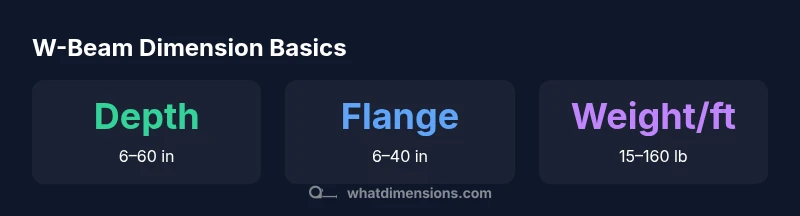
W-beam dimensions are the numeric and nominal properties that describe a wide-flange beam’s size and capacity. The core values you’ll encounter on size charts are depth (the vertical distance from flange to flange), flange width (the horizontal width of the top and bottom flanges), web thickness (the thickness of the vertical section connecting the flanges), and weight per foot (lb/ft). In practice, these measurements translate into bending capacity, shear strength, and stiffness for beams spanning a particular distance under a given load. When you search for size codes like W12, W14, or W18, you’re looking at standardized shapes whose dimensions are defined by industry-wide tables. This standardization makes it easier to compare beams from different manufacturers and to scale designs from drawings into shop fabrication.
Core Dimensions You Should Know
Beyond depth and flange width, two other critical values influence performance: web thickness and the exact configuration of the flanges. The web thickness affects shear resistance, while flange width and thickness govern bending stiffness. Weight per foot is a practical proxy for overall cross-section material, shipment weight, and handling. Different W-beams can share the same depth but vary in flange width or weight, which changes load-carrying capacity and deflection characteristics. For precise projects, you’ll need the full dimension list from the manufacturer’s spec sheet and the structural engineer’s design values.
Reading a W-Beam Size Code
W-beams use a naming convention beginning with W, followed by a depth code (in inches) and a weight per foot code (lb/ft). For example, a W12x40 is nominally about 12 inches deep and weighs roughly 40 pounds per foot. The actual physical dimensions can vary slightly by production lot and standard, so engineers always verify against the latest published specs. When you compare two W-shapes—say W12x40 and W12x58—the same depth can pair with different weights, yielding different stiffness and strength. Always cross-check the manufacturer’s data, not just the code.
Tolerances and Practical Implications
All structural members have manufacturing tolerances. For W-beams, tolerances affect fitment on connections, bolt patterns, and embodied length. Small variances in depth or flange width can alter clearances in supports or the way plates butt up at connections. In design documents, note the allowable deviation and how it may impact load paths, connection details, and field assembly. When ordering, request the tolerance envelope and inspect a sample or data sheet upon arrival to confirm conformance.
Practical Selection Guide for Projects
A robust selection process starts with defining the span, load, and support conditions. Begin by listing required bending strength, then consult a size chart to narrow to several candidate W-beams. Consider construction sequence, corrosion protection, and available stock. Use the following steps:
- Determine the design loads and span; 2) Pick a depth that satisfies stiffness and deflection criteria; 3) Compare flange width and weight per foot to satisfy connection geometry; 4) Confirm tolerances and manufacturing notes; 5) Validate with structural engineer and local codes; 6) Order with a precise bill of materials and QA documentation.
How What Dimensions Supports Precision
At What Dimensions, we translate complex beam specifications into clear, actionable size references. Our analyses help homeowners, designers, and students understand how to read W-beam dimensions and how to apply them in real projects. By aligning every size code with corresponding depth, flange width, web thickness, and weight per foot, we reduce misinterpretations and improve fabrication accuracy. This approach integrates dimensional data with practical, on-site decisions.
Common Pitfalls and How to Avoid Them
Avoid mixing size codes from different standards or assuming a code applies universally across all producers. Always verify the exact dimensional data and tolerances for the specific product you intend to buy. Misreading a depth or weight designation can lead to under- or over-design, affecting safety and cost. Keep your design documentation up-to-date and cross-check against the latest supplier data sheets.
Representative W-beam size codes and dimensions
| W-beam Size Code | Approx Depth (in) | Approx Flange Width (in) | Weight per ft (lb) | Notes |
|---|---|---|---|---|
| W6x9 | 6 | 6.0 | 9 | Compact member for light loads |
| W12x40 | 12 | 9.2 | 40 | Common for residential-to-light commercial framing |
Quick Answers
What does the 'W' in W-beam stand for?
The 'W' indicates a wide-flange shape, a standardized beam geometry used in structural steel. This designation helps engineers compare sections quickly and match them to design loads and spans.
The W stands for wide-flange. It signals a standardized shape that makes comparing sizes straightforward for structural design.
How is W-beam depth measured on charts?
Depth is the vertical distance between the extreme outer surfaces of the flanges, measured in inches. The depth is a primary driver of bending stiffness and load-carrying capacity.
Depth is the vertical distance from the top to the bottom of the beam, measured in inches.
How do I convert a W-beam size code to exact dimensions?
Convert with the manufacturer’s published data sheet, which lists exact depth, flange width, flange thickness, web thickness, and weight per foot for the specific size. Codes are a starting point; exact figures come from the data sheet.
Use the data sheet for the exact figures; codes guide you to the right family of beams.
Are W-beams tolerant to field modifications?
Yes, within specified tolerances. Field modifications can affect fit and performance, so verify allowances with the shop drawings and implement only within approved tolerances.
Tolerances exist; verify with shop drawings before field cutting or drilling.
What’s the best practice when ordering W-beams?
Provide a complete bill of materials, reference the exact size code, confirm tolerances, and request a materials certificate. Coordinate with the supplier to ensure the delivered beams match the design intent.
Have a precise bill of materials, confirm tolerances, and get a certificate of compliance from the supplier.
“W-beam dimensions are the bridge between a size code and real-world fabrication. Accurate interpretation of depth, flange width, and weight per foot ensures safe, code-compliant sizing in any project.”
Main Points
- Read W-beam dimensions by depth, flange width, web thickness, and weight per foot.
- Use size codes as a starting point, then verify exact dimensions from manufacturer sheets.
- Consider tolerances and connections early to avoid field fit issues.
- Consult a structural engineer for load-path and deflection considerations.
- Leverage standardized W-beam data to compare sections quickly across suppliers.