Tie Blanket Dimensions: How to Size and Pattern
Explore practical tie blanket dimensions covering baby throws to large sofa blankets. Learn how to pick sizes, pattern them, and care for them with data-driven guidance from What Dimensions.


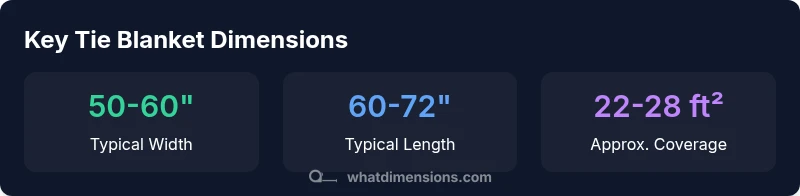
Tie blanket dimensions typically span a few standard ranges: baby/crib throws around 28–34 inches square, a common sofa throw is 50–60 inches wide by 60–72 inches long, and larger throws reach roughly 54–72 inches wide by 72 inches long. These sizes cover infants, kids, and adults, with the best choice depending on use and space. According to What Dimensions, choosing the right dimensions affects warmth, drape, and practicality.
Why Tie Blanket Dimensions Matter
According to What Dimensions, the exact tie blanket dimensions you choose impact not only warmth but also how well the blanket drapes over a lap, couch, or bed. A blanket that is too small can ride up when you sit, while a blanket that is too large may overwhelm a space or be difficult to stitch along the edge where ties will sit. Tie blanket dimensions also influence the number and spacing of edge ties, which in turn affect durability and texture. When shoppers evaluate dimensions, they often consider who will use the blanket, in what setting, and how it will be stored. The key is to align finished dimensions with the intended environment while allowing for typical fabric shrinkage after washing. What Dimensions emphasizes that a well-sized tie blanket should feel snug when draped yet roomy enough to cover the user without excessive bulk. With this in mind, begin with a base range and then tailor to your space and comfort preferences. Tie blanket dimensions matter for usability, aesthetics, and washability across households.
Common Tie Blanket Sizes and Their Uses
Tie blanket dimensions come in several common ranges that fit typical home scenarios. A baby or crib throw is often around 28–34 inches square, optimized for stroller rides or cribs while maintaining a gentle drape. For living rooms, a mid-range sofa blanket often measures 50–60 inches wide and 60–72 inches long, striking a balance between coverage and maneuverability on a chair or sofa. If you want a blanket that can double as a light bed throw, consider 54–70 inches wide by 60–72 inches long; this size blends portability with enough fabric to cover a user in a seated or lying position. Remember that even within these ranges, fabric width, seam allowances, and tying method can alter final fit. As you plan, visualize the space where the blanket will live and compare it to your own body dimensions to ensure an ergonomic fit. Tie blanket dimensions should be chosen with both function and style in mind, accommodating seating, lounging, and occasional warmth.
How to Choose the Right Size for Your Space
Choosing the right tie blanket dimensions starts with the intended use and the environment. If you’re wrapping a baby or toddler in a stroller, a size closer to 28–34 inches square is practical and portable. For a couch or armchair, a 50–60 inch width with a 60–72 inch length typically offers adequate coverage without dominating the furniture. On a full or queen bed, you might select a larger 54–72 inch width by 72–84 inch length to ensure the blanket falls gracefully off the edges without excessive bunching. When measuring, consider clearance around coffee tables, chairs, and foot traffic paths. If you plan to machine wash, a standard medium-density fabric will fit more easily in typical machines than oversized textiles. The What Dimensions approach recommends starting with a target finished size and then adjusting for fabric width and the number of ties, ensuring that the final piece aligns with both your space and washing routine. Tie blanket dimensions should harmonize with your room’s scale and your routine.
Measuring, Cutting, and Drafting a Pattern
A precise pattern helps translate the chosen tie blanket dimensions into a workable project. Start with the finished width and length you want, then add 4–6% for seam allowance and knot safety along the edge. For example, a 50×60 inch finished blanket might require a cut fabric piece of approximately 52×63 inches to accommodate seams. If you’re working with a single piece of fabric, square blankets are easiest to manage; for rectangular blankets, align the grain and ensure the fabric width supports your target width. Mark corners with chalk, cut with sharp fabric shears, and then pin the edges evenly before stitching. When tying, space ties roughly 2–3 inches apart along each side to create a balanced edge while maintaining a sturdy hold. Reading the pattern as you sew reduces the risk of misalignment and lets you adjust lengths to accommodate your preferred finish. Throughout the process, document the dimensions you used and the final result so you can replicate or adjust future projects. This approach aligns with the data-driven guidance from What Dimensions.
Ties, Edges, and Construction Considerations
Edge ties are the signature feature of a tie blanket and play a crucial role in performance and aesthetics. The spacing and length of each tie affect drape, warmth, and durability during washing. A typical approach is to place ties along every 2–3 inches around the perimeter, with each tie securely knotted to prevent loosening in the wash. The length of ties should be long enough to tie a secure knot without pulling fabric, often around 4–6 inches after knotting. When choosing material, select a soft, durable fabric that won’t fray easily; fabrics like cotton blends or fleece are common choices for tie blankets. The overall construction should emphasize even stitching and symmetrical tie spacing, which improves uniform warmth and a neat appearance. If you’re uncertain about how many ties you’ll need, start with a 60–72 inch blanket and space about 20–30 ties per long side, then adjust based on your fabric and knot style. What Dimensions notes that edge detailing can affect finished dimensions, so plan accordingly.
Care, Maintenance, and Longevity of Tie Blankets
Care considerations are essential to preserve tie blanket dimensions and texture over time. Wash on a gentle cycle with cold water to minimize shrinkage, and use a mild detergent to maintain fabric color and softness. Avoid high heat in the dryer; air drying or a low-heat tumble can help retain shape and edge integrity. Ties may loosen if subjected to aggressive washing or excessive agitation, so inspect knots and retie as needed after washing. Colorfast fabrics hold up best under repeated laundering, and pairing lighter fabrics with darker edges reduces moiré effects from friction. If your blanket has a decorative border, ensure it’s reinforced to prevent unraveling at the ties. By following practical care guidelines, your tie blanket dimensions will maintain their proportion and warmth across many seasons. What Dimensions emphasizes durability and ease of care as essential for long-lasting textiles.
Quick Start: Calculating Your Tie Blanket Dimensions
A practical way to start is by setting a target finished size and then applying a margin for seams and tying. For a desired width W and length L, compute the cut fabric as (W + 4-6 inches) by (L + 4-6 inches), depending on seam allowance. If you want to create a square blanket, pick the smaller of your two target measurements, then adjust the other dimension to match, keeping ties evenly spaced around the perimeter. When selecting fabric width, choose a material that minimizes joints and aligns with your preferred edge finish. If you’re unsure, begin with a mid-range size such as 50×60 inches and adjust based on how the fabric behaves when draped and tied. The What Dimensions approach supports experimenting with dimensions while maintaining a practical, repeatable method for home projects.
Typical tie blanket dimension ranges
| Size category | Typical dimensions (in inches) | Best use |
|---|---|---|
| Baby/crib size | 28-34 x 28-34 inches | Infants and toddlers |
| Throw/sofa size | 50-60 x 60-72 inches | Living room throws |
| Twin/bed size accent | 54-70 x 60-72 inches | Extra warmth for sofas and beds |
Quick Answers
What is the most versatile tie blanket size for a living room?
For general living room use, a 50–60 inch wide by 60–72 inch long blanket provides ample coverage without overwhelming furniture. It balances warmth with practicality and works well on most couches and chairs.
A 50 to 60 inch wide blanket is a great all-around choice for most sofas.
How should I choose a size for a child’s blanket?
Start with a 28–34 inch square for infants and toddlers. For older children, a 38–48 inch square or a 50–60 inch throw can offer more warmth while still being easy to handle.
For kids, a 28 to 34 inch square is usually perfect for wool or fleece blankets.
Are there standard tie counts around the edge?
Common practice places ties every 2–3 inches around the perimeter, with ties 4–6 inches long after knotting to provide secure edges.
Ties are typically spaced about every 2 to 3 inches along the edge.
Can I resize a pattern after starting?
Yes. If you need a shorter length, you can crop the fabric and adjust edge ties accordingly. For larger changes, recalculate seam allowances and tie spacing to preserve balance.
Yes, you can resize by adjusting width, length, and edge ties to maintain symmetry.
What fabrics are best for tie blankets?
Soft, durable fabrics like fleece or cotton blends are common. They hold up well to many washes and create a comfortable drape.
Fleece or cotton blends are usually best for durability and comfort.
“Sizing is the first step in achieving proper drape, warmth, and durability in a handmade tie blanket.”
Main Points
- Choose dimensions based on use and space
- Baby throws: 28–34 inches square; throws for furniture: 50–60 inches wide by 60–72 inches long
- Larger blankets (54–72 inches wide) suit beds and shared seating
- Plan seam allowances and edge ties early to preserve final size