What Size Should a Baby Blanket Be? A Practical Sizing Guide
A data-informed guide to choosing the right baby blanket size for newborns, infants, and toddlers, with practical measurements, use-case sizes, and shopping tips from What Dimensions.


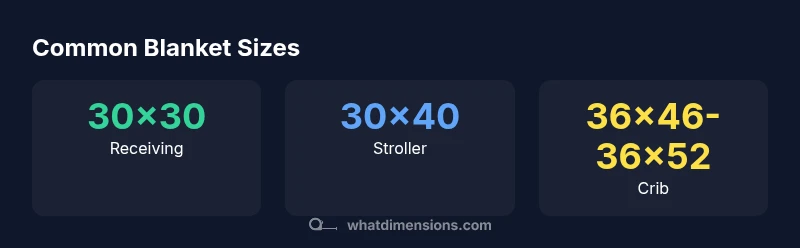
The most versatile starter size for a baby blanket is about 30x40 inches (76x102 cm). Receiving blankets are typically 30x30 inches (76x76 cm). For crib use, common blankets range from 36x46 inches (91x117 cm) up to 36x52 inches (91x132 cm). This combination covers newborn swaddling, stroller outings, and crib comfort while reducing the need for multiple sizes.
What size should a baby blanket be? Blanket sizing basics
Understanding blanket sizes helps ensure your baby stays comfortable and safe. In practice, sizes are not one-size-fits-all; they vary by use, growth, and regional preferences. According to What Dimensions, starting with a versatile 30x40 inch blanket covers most day-to-day needs for newborns and infants, while larger options let you cover strollers or cribs without excess bulk. This section explains the standard categories and why they matter for safety and warmth.
- In newborn stages, smaller blankets reduce overheating risks and are easier to manage.
- For naps in carriers or car seats, mid-size blankets provide coverage without bulk.
- Crib blankets should offer enough fabric to drape over sides but not so long that they pose entanglement risks.
Receiving blankets vs. larger blankets
Receiving blankets are typically square and compact, designed for swaddling, burping, and gentle coverings. They are often sized at 30x30 inches, which makes them easy to fold and stash. As babies grow, you'll likely transition to larger blankets for warmth and shading during naps. Larger blankets, such as stroller or crib blankets, provide more coverage and durability, especially through multiple wash cycles. This progression aligns with typical growth and activity patterns.
When choosing sizes, consider how you plan to use the blanket most—swaddling vs. blanket up during sleep or outdoor time—and how easily you can wash and dry the fabric.
Stage-by-stage sizing: newborn, infant, toddler
A newborn primarily benefits from smaller, snug coverage to minimize overheating and maximize wrap ease. As babies reach the infant stage, a mid-size blanket (around 30x40 inches) becomes practical for stroller rides, car-seat cover, or tummy time on the floor. By toddler years, families often favor larger blankets (36x46 to 36x52 inches or larger) that can serve as a play mat at home and a travel layer on trips. What Dimensions emphasizes sizing that accommodates growth without frequent replacements.
It’s important to assess crib mattress dimensions and room lighting; your blanket should drape safely to the sides without hanging over the rails. A blanket that’s too long can pose risks of entanglement, while one that’s too short won’t provide adequate warmth.
Practical guidelines for use cases
Different use cases justify different sizes. A receiving blanket remains ideal for newborn swaddling and quick diaper changes, while a stroller blanket should be compact enough to fold into a diaper bag. Crib blankets need to balance coverage with safety; aim for a blanket that lies smoothly on the mattress and ends above the crib rail when placed on top. If you plan to use the blanket as a floor mat for supervised play, consider a larger size that remains portable and safe. Always select fabrics that are breathable and easy to wash, especially for frequent use.
How to measure and convert inches to centimeters
Most guides use inches in the United States and centimeters elsewhere. To convert, multiply inches by 2.54 to obtain centimeters. For example, 30x40 inches equals approximately 76x102 cm, and 36x52 inches equals about 91x132 cm. If you’re shopping internationally, use these conversions to compare options and ensure your chosen blanket will fit your crib or stroller needs without excessive bulk. Remember to account for shrinkage after washing when sizing fabrics.
Materials, warmth, and durability considerations
Fabric choice affects warmth, breathability, and durability. Lightweight cotton blends are suitable for year-round use and are typically easier to wash. Heavier fleece or plush fabrics offer warmth for colder climates but may be bulkier or slower to dry. Regardless of material, consider a size that allows you to cover the baby comfortably without overheating. Durability matters as blankets go through frequent washing; prewash new blankets to minimize shrinkage and fiber pilling. Growth-friendly sizes reduce the need for frequent replacements and support longer-term use.
Shopping tips: when to buy extra sizes and DIY options
When shopping, start with a core set of sizes that cover most situations: a 30x40 inch stroller blanket, a 30x30 inch receiving blanket, and a crib blanket in the 36x46 to 36x52 inch range. Look for fabrics that hold up in the wash and stay soft after multiple cycles. If you enjoy DIY, you can rehome or tailor existing blankets by trimming edges or adding a simple border. Consider sets or bundles from retailers that provide matching or complementary sizes for convenience and cost savings.
Quick planning checklist for growing needs
- Confirm crib dimensions and ceiling height to determine the maximum safe drape.
- Choose core sizes (receiving, stroller, crib) and create a versatile rotation plan.
- Factor climate, washability, and growth into your sizing strategy.
- Keep a small, easy-to-pack blanket in the diaper bag for outings.
- Reassess sizes every 6–12 months as your child grows.
Size guidance for common baby blanket use cases
| Use case | Recommended size (inches/cm) | Notes |
|---|---|---|
| Receiving blanket | 30x30 in / 76x76 cm | Best for swaddling and quick covers |
| Stroller/layette blanket | 30x40 in / 76x102 cm | Portable and versatile |
| Crib blanket | 36x46 in / 91x117 cm | Covers crib mattress with safe drape |
Quick Answers
What size should a baby blanket be for a newborn?
For newborns, a common starting size is 30x30 inches (76x76 cm) or 30x34 inches if you prefer a slightly larger option. This size is easy to manage for swaddling and keeping baby warm without overheating.
A 30-by-30 blanket is a great starting choice for a newborn, especially for swaddling and quick coverage.
Is a larger blanket better for a crib?
A crib blanket in the 36x46 to 36x52 inch range is typical. It provides full coverage without dragging on the floor, reducing the risk of entanglement.
Yes, a crib blanket around 36 by 46 to 52 inches works well for most cribs.
What about blankets for strollers or car seats?
For outings, a 30x40 inch blanket offers enough coverage without bulk, and it fits well in most diaper bags or car seat covers.
A 30-by-40 inch blanket is a practical size for strollers or car seats.
How do I convert sizes to centimeters?
To convert inches to centimeters, multiply by 2.54. For example, 30x40 inches equals roughly 76x102 cm.
To convert, multiply by 2.54; 30 by 40 inches is about 76 by 102 centimeters.
“Size choices should balance coverage, safety, and growth. What Dimensions Team recommends focusing on functional drape rather than chasing exact numbers.”
Main Points
- Start with a versatile 30x40 inch blanket for daily use
- Use 30x30 inches for newborn swaddling and quick covers
- Choose crib blankets around 36x46 to 36x52 inches for growth
- Always check for safe drape and avoid excess length
- Consider fabric weight and washability when selecting size