Dimensions for a Queen Size Quilt: A Practical Size Guide
What Dimensions explains queen size quilt sizing with standard dimensions, drop lengths, and practical buying tips for homeowners, students, and designers.


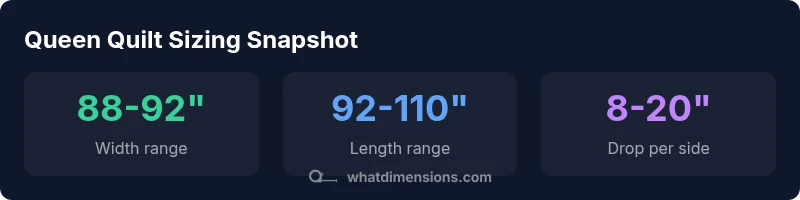
For a standard queen bed, choose a quilt around 88–92 inches wide and 92–110 inches long. This range provides comfortable side drape and a balanced look with most bed skirts and pillows. Always verify exact dimensions in product specs, since sizing varies by style and manufacturers.
What the phrase 'dimensions queen size quilt' means in practice
When shoppers talk about dimensions queen size quilt, they are typically referring to the overall width and length that will cover a standard queen bed with a comfortable drape. What Dimensions defines this concept as the combination of the bed’s footprint and the intended visual drop. In practical terms, the width is how wide the quilt sits across the side rails, while the length determines how far the fabric drapes over the footboard and down the sides. For most bedrooms, the goal is a balanced silhouette that sits evenly at the corners and creates a neat, layered look with a sheet set and pillows. Achieving this balance starts with understanding the most common queen bed dimensions, then selecting a quilt size that accommodates your mattress depth, top bedding, and any bed skirt you use. Within these parameters, retailers often publish a range of sizes to accommodate variations in mattress thickness and frame style. By focusing on width and length together, you can avoid mismatched fits and ensure your quilt complements your room’s scale and décor.
Measuring a queen bed and determining quilt size
To pick the right quilt, start with the mattress dimensions. A standard queen mattress is 60 inches wide by 80 inches long. Add your preferred drop length on both sides and at the foot, then translate that into the quilt’s width and length. A widely used target is about 8-20 inches of drape on each side, with 92-110 inches of length to cover the foot and still look balanced with pillows. For deeper mattresses or toppers, lean toward the longer end of the range to ensure the quilt clears the edges cleanly. If you plan to layer a bed skirt, be mindful of how it visually reduces the drop. When shopping online, always compare the listed dimensions—the actual product can vary by style or fabric. If you’re unsure, order a size up and evaluate the drape in your space, adjusting for decorative pillows and headboard height. In short, measure, compare, and verify the exact measurements of the quilt before purchasing.
Standard vs oversized quilts: what to expect
Most retailers present queen quilts in a standard range around 86-90 inches wide and 86-96 inches long, but there is substantial variation across brands. Oversized options, designed to create a dramatic drop or cover a bed skirt, commonly extend to 92-108 inches in length and, occasionally, slightly wider widths. The key difference is not fabric but how much fabric hangs over the sides and foot. If you want a tailored look that sits tightly over the bed rails, you may prefer the standard size; for a lush, hotel-like drape, an oversized option may be more suitable. Always check the exact measurements rather than assuming a particular label. Consider your mattress thickness, toppers, and frame design, as these influence how much fabric will touch the floor or sweep the sides. In practice, a careful review of product specs and a quick sketch of your bed in your room can save returns and disappointment later.
Drop length, overhang, and bed skirt considerations
Drop length describes how far the quilt hangs below the mattress edge. A modest drop—roughly 8-12 inches per side—works well with most bed frames and plain sheets, while deeper drops of 14-20 inches or more create a luxurious, enveloping look. If you use a bed skirt, you must account for its thickness and how it hides part of the quilt’s edge; some shoppers prefer a slightly longer drop to ensure the skirt remains visually tucked. For platform or low-profile beds, a longer drop can visually balance the bed’s height, while for tall headboards you may want a shorter drop to avoid overwhelming the lines. Always align your drop with room proportion and furniture scale. Finally, remember that quilts are not one-size-fits-all; a single size can vary by brand, so compare the exact drop length in the product specs.
Fabric, shrinkage, and care that affect final dimensions
Fabric properties influence how a quilt settles after washing. Cotton quilts often shrink a small amount, while polyester blends tend to maintain their shape more consistently. Always review the care label: washing, drying heat, and tumble-drying can affect both width and length. If you anticipate multiple washes, factor in a slight shrinkage by selecting a size at the upper end of the suggested range. Pre-washing fabric or choosing pre-shrunk materials can help. Additionally, consider quilting density; tighter stitching reduces stretch and can alter perceived dimensions. For decorative quilts with complex patterns, ensure that the design alignment remains pleasing after laundering. In summary, plan for care-induced changes and pick a size that preserves the quilt’s intended look through the life of the product.
How to compare sizes across brands and retailers
Different brands may label sizes similarly but publish distinct actual dimensions. Always read the exact width and length, not just the label; compare both numbers side by side, and note the presence or absence of a drop. Create a quick reference table that lists width, length, and drop for each quilt you consider. If possible, measure your bed frame before shopping and bring a tape measure to the showroom. Share the measurements with customer service if you’re uncertain—they can confirm whether a particular quilt will fit your bed. Finally, account for an existing duvet cover or bed skirt; these may add to perceived size and drape. In practice, a methodical comparison of specs reduces the chance of mismatch and saves time.
Buying tips: a practical checklist for dimensions queen size quilt
- Define your bed type, mattress thickness, and preferred drop.
- Record width, length, and drop in a simple notebook.
- Compare product specs from at least two brands.
- Check care instructions to anticipate shrinkage and color fastness.
- Visualize drape with a neutral room setup; if shopping online, look for customer photos.
- If in doubt, choose a size up and test the fit in your space, adjusting for pillows and headboard height.
Common mistakes and quick fixes
- Mistake: Assuming all queen quilts measure the same; Fix: Always verify exact numbers.
- Mistake: Not accounting for a bed skirt; Fix: Include drop that works with the skirt.
- Mistake: Ignoring mattress depth; Fix: Measure thickness and add to width/length calculations.
- Mistake: Skipping tests in your space; Fix: Lay the quilt on the bed conceptually or with photos to ensure proportions.
- Mistake: Disregarding care shrinkage; Fix: Choose size with future washing in mind.
Queen-size quilt sizing guide
| Aspect | Queen Quilt Size | Notes |
|---|---|---|
| Width range | 88-92 inches | Common width for standard queen quilts |
| Length range | 92-110 inches | Depends on drop and style |
| Overhang/drop | 8-20 inches per side | Varies by bed and aesthetic |
Quick Answers
What is the standard dimension range for a queen size quilt?
Most queen quilts fall within about 88-92 inches wide and 92-110 inches long, but sizes vary by brand. Always check exact specs.
Most queen quilts range roughly from eighty-eight to ninety-two inches wide and ninety-two to one hundred ten inches long.
How do I measure for a queen size quilt at home?
Measure your mattress, add your desired drop on each side, and compare to the quilt’s listed dimensions. Verify with product specs.
Measure your mattress, add the drop you want, and compare to the quilt's specs.
Do quilts shrink after washing?
Quilts may shrink slightly; follow care instructions and consider a size up if multiple washes are expected.
Quilts can shrink a bit; follow care instructions to minimize it.
What factors influence quilt drop length?
Drop length depends on mattress height, toppers, bed frame design, and whether a bed skirt is used.
Drop length depends on mattress height, toppers, and bed style.
Should I buy a quilt larger than my mattress for a drape?
Yes, many shoppers prefer more drape, but ensure the extra fabric suits your bed’s proportions and room.
Yes, many people want more drape, but check your bed's proportions.
“Sizing accuracy is essential to a polished bedside look; when dimensions align with your mattress and frame, the quilt drapes gracefully.”
Main Points
- Measure your bed first, then match quilt size.
- Expect width 88–92 in and length 92–110 in for most queen quilts.
- Account for drop length and bed skirt when choosing a size.
- Always verify exact product dimensions before buying.
- Consider fabric and care, as shrinkage affects final fit.