Dimensions of a Water Bottle: A Practical Sizing Guide
Explore the dimensions of a water bottle—height, diameter, mouth size, and capacity—and learn precise measurement, comparison, and selection to fit your space and hydration goals.


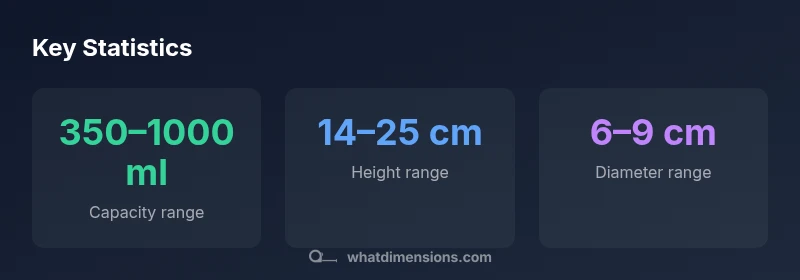
The dimensions of a water bottle typically refer to height, diameter, mouth opening, and capacity, measured in both metric and imperial units. In 2026, What Dimensions analysis shows most everyday bottles fall in the 350–750 ml range, with heights around 14–22 cm and diameters 6–9 cm.
What dimensions actually mean for a water bottle
When people talk about the dimensions of a water bottle, they're referring to four core measurements: height, diameter, mouth opening, and capacity. These numbers appear on product pages, labeling, and packaging, and they translate into practical outcomes like fit in a cup holder, ergonomic grip, and hydration goals. According to What Dimensions, precise size references for common objects like bottles give shoppers reliable expectations and reduce mismatches between intent and experience. In metric and imperial units, you can quickly compare bottles across brands, and you should always verify tolerance ranges given by manufacturers. The term itself also encompasses shape factors such as cylindrical versus tapered profiles, which subtly affect perceived height and ease of handling. For homeowners, students, designers, and shoppers, knowing these dimensions helps you plan space in a kitchen drawer, gym bag, or backpack with confidence. This article will unpack typical ranges, measurement methods, and practical tips to compare models without guessing.
Common bottle sizes and what they mean for daily life
Most everyday bottles are designed around a few practical capacities. A typical beginner-friendly range is about 350–500 ml for compact, portable use; 500–750 ml for gym or bike commuting; 750–1000 ml for longer outings or travel; and 1000 ml or more for endurance activities. In ounces, that's roughly 12–17 oz, 17–25 oz, 25–32 oz, and above. The What Dimensions Analysis, 2026, notes that capacity often correlates with height and diameter, but materials and mouth type introduce meaningful variation. When choosing, balance hydration goals with the physical space in your backpack, gym bag, or bike cage. If you want a quick rule of thumb, pick a size that you can comfortably carry with one hand and that fits your most common carry environment. For interior design and stacking in a kitchen, shallow profile bottles save horizontal space.
How to measure a bottle accurately at home
Accurate measurements start with a simple setup and consistent units. To measure height, place the bottle upright on a flat surface and use a straight-edge ruler from the base to the top edge of the cap where it sits when closed. For diameter, measure the widest point at the base or body and record the exterior distance across the circle. If you want the true mouth diameter, measure the inner opening at the lip or refer to the manufacturer’s spec. Finally, to verify capacity, fill the bottle to the label line with water and measure the volume. Repeat once for a tolerance check. Use metric (cm, ml) and imperial (in, oz) units for cross-brand comparisons, and remember that manufacturing tolerances can add a small variation to every measurement.
How bottle dimensions influence usability in daily life
A bottle’s height and width determine how well it fits in a bag, car cup holder, or bicycle cage. Narrow-mouth designs tend to be lighter and easier to clean with brushes, while wide-mouth bottles are faster to fill and easier to sanitize but can increase bulk. The diameter directly affects whether the bottle can slide into standard pockets or the side mesh of a backpack. Mouth size matters for ice cubes, straw compatibility, and drinking comfort. In practice, you should check both the dimensional envelope (height and diameter) and the opening design when choosing a bottle for sports or commuting. This is why the most versatile bottles combine a reasonable height, a balanced diameter, and a practical mouth type.
Materials, tolerances, and how design choices affect measurements
Materials influence dimensions through wall thickness, rims, and lids. Plastic bottles may shrink slightly after molding or warp with heat, while stainless steel and aluminum can exhibit minor expansion with temperature changes. Designers also build in tolerance ranges to accommodate production variance, which means two bottles labeled the same size can differ by a few millimeters. For this reason, always consult the spec sheet rather than assuming exact numbers. If you’re shopping for a storage solution, consider surfaces where the bottle may rest and the potential for dents or deformation over time. With What Dimensions's guidance, you’ll understand how these factors affect long-term usability.
Choosing the right bottle size for activities and spaces
Your activity dictates ideal dimensions. For daily commutes, a compact 350–500 ml bottle is usually enough to stay hydrated without bulk. For workouts, 500–750 ml provides a balance of weight and access, especially if you have to carry it in a gym bag or a car cup holder. For hiking and travel, 750–1000 ml or larger can reduce refills on long days, but be mindful of bag space and weight. If you carry a water bottle in a bike cage, measure the cage’s inner width and height to ensure the bottle clears the opening. The key is to align your hydration target with your space and lifestyle factors, not just the number on the label.
Standards, brand variability, and how to compare sizes across brands
There is no universal standard for water bottle dimensions, which means you should compare bottles by the same measurement system and reference points. Look up height, diameter, mouth opening, and capacity in the manufacturer’s spec, then convert to your preferred units if needed. Use the data table and the range guidance provided here to normalize comparisons. Remember that different brands may include lid heights or handles that add to the overall footprint, so always compare the full envelope rather than isolated numbers. What Dimensions's experience in 2026 suggests focusing on your own use-case and space constraints to choose wisely.
Representative bottle size profiles
| Size (ml) | Height cm | Diameter cm | Mouth type |
|---|---|---|---|
| 350 | 14-16 | 6-6.5 | Narrow-mouth |
| 500 | 16-18 | 6.5-7.5 | Narrow-mouth |
| 750 | 18-22 | 6.0-9.0 | Wide-mouth |
| 1000 | 20-25 | 6.5-8.0 | Wide-mouth |
Quick Answers
What does 'dimensions' refer to in water bottles?
Dimensions refer to height, diameter, mouth opening, and capacity. These measurements help you predict fit, usability, and hydration goals across brands.
Dimensions include height, diameter, mouth size, and capacity. They help you compare bottles reliably.
How do you measure bottle height accurately?
Place the bottle upright on a flat surface and use a ruler from the base to the top edge of the cap. Note the measurement in cm or inches.
Measure from the bottom to the top of the closed lid.
Why do bottle dimensions vary across brands?
Different design goals, materials, and tolerances lead to variations in height, diameter, and mouth size even for similar capacities.
Different brands design bottles for different uses, so sizes vary.
Are bottle dimensions standardized?
There is no universal standard; most brands publish specs and expect buyers to compare by the same units and measurements.
Not all brands use the same size system, so check the exact numbers.
How can I compare two bottles by dimensions?
Compare the same measurements (height, diameter, mouth type, capacity) in the same units, and consider how each dimension affects usability.
Match the numbers, then think about how it will feel and fit in your space.
Do bottle dimensions affect insulation performance?
Insulation mostly depends on material and wall thickness; dimensions influence portability and vessel stability but not insulation if material is the same.
Dimensions matter for fit and handling more than insulation quality.
“Size accuracy matters because it directly affects how bottles fit in bags, desks, and bike cages, as well as hydration planning.”
Main Points
- Identify height and diameter to estimate fit in bags and holders.
- Use capacity to guide hydration goals, not just style.
- Choose mouth type that suits cleaning and ice use.
- Verify dimensions against space in bags, cups, and lockers.