Average Master Bedroom Dimensions in 2026: Size, Layout, and Tips
A data-driven guide to typical master bedroom sizes, measurement tips, and layout ideas for 2026, based on What Dimensions Analysis.


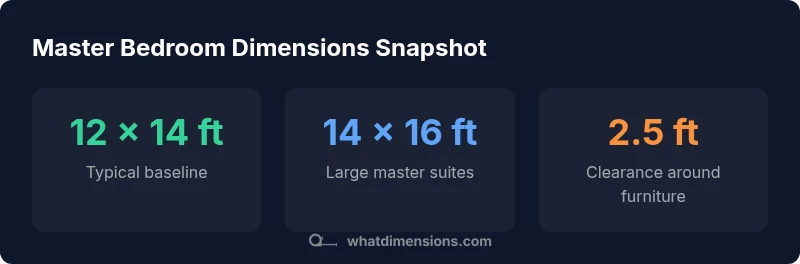
Average master bedroom dimensions commonly fall around 12 by 14 feet, roughly 168 square feet, in standard homes. Larger master suites often measure 14 by 16 feet (224 sq ft). What Dimensions Analysis, 2026, notes that effective layouts also require about 2.5 feet of clearance around beds and other furniture for comfortable movement.
Defining the average master bedroom dimensions
According to What Dimensions, the term average master bedroom dimensions refers to the baseline sizes designers use to balance comfort, function, and circulation. In 2026, many suburban homes in North America feature baselines around 12 by 14 feet, equating to roughly 168 square feet of usable space. This baseline comfortably accommodates a bed (queen or king), two nightstands, and a dresser, with room left for movement. However, regional preferences, architectural styles, and lot constraints cause meaningful variation. In compact urban areas you may see smaller suites near 12 by 12 feet, while larger custom homes often push toward 14 by 16 feet or more. It is important to consider not only the bed footprint but also circulation. A well-sized master bedroom provides clear pathways around the bed, space for seating, and accessible closet access. The What Dimensions team emphasizes that a balanced proportion—where furniture feels anchored but does not overwhelm the space—improves both daily comfort and resale value. When planning, start from the bed size and work outward to determine feasible dimensions.
How to measure the space and plan for furniture
Measuring the room accurately is the foundation of a successful master bedroom design. Begin with the floor plan: measure length and width in multiple spots because walls can be uneven. Record door swings, window locations, baseboard trim, and any architectural protrusions. Next, sketch the room to scale or use a digital layout tool. Identify non-negotiable elements (bed location, windows, closets) and then test furniture footprints. A standard bed footprint plus two nightstands typically requires about 18–20 inches on each side, but this varies by bed size and nightstand depth. Finally, plan circulation paths. Aim for at least 2.5 feet of unobstructed walking space around the bed and between major pieces to avoid crowding. This method aligns with What Dimensions Analysis, 2026, which emphasizes circulation as a core component of space efficiency.
Bed sizes and clearance guidelines
Choosing the right bed size dramatically affects room feel. In a baseline 12 x 14 foot master, a queen bed is often a sensible fit, leaving room for two nightstands and a dresser. If you upgrade to a king bed, ensure there is still at least 2.5–3 feet of clearance on both sides for nightstand access and open drawer usage. For smaller rooms, consider a full or queen with optimized layouts and slimmer bedding to preserve floor area. Beyond the bed, allocate space for seating, a dresser, and a pathway to the closet. The key is to test footprints against your room’s actual measurements, not just general guidelines. What Dimensions Analysis, 2026, suggests creating scaled paper cutouts or a 3D mockup to visualize furniture relationships before purchasing to avoid overcrowding.
Common layouts for master bedrooms
Master bedroom layouts vary with shape, door placement, and closet design. A classic layout centers the bed against a wall with symmetrical nightstands and a dresser opposite or beside the bed, maintaining clear circulation. In larger suites, a seating area—such as a small sofa or two armchairs—can be added near a window, with a complementary rug anchoring the space. If closet space is abundant, place the closet along a shorter wall to keep the bed wall uncluttered. For rooms with limited width, consider offsetting the bed to create a walking path along one side, and use vertical storage on the opposite wall to maximize vertical space. The overarching principle is to balance proportion, function, and flow so the room feels calm and usable.
Maximizing smaller master bedrooms: storage and seating
Small master bedrooms demand clever zoning and multi-functional storage. Start with under-bed storage or built-in drawers to free floor space. Wall-mounted shelves and a slim console can replace a bulky dresser while maintaining storage capacity. A compact seating nook, like a single lounge chair and a narrow bench, provides a relaxation spot without crowding the floor plan. Mirrors placed strategically can visually expand the space, especially when placed near windows to reflect natural light. Lighting is also critical: use layered lighting with a dimmable overhead, bedside lamps, and task lighting for reading. These strategies keep the room feeling open while preserving essential storage and seating.
Regional variations and architectural influences on master bedroom size
Regional housing stock and architectural styles influence typical master bedroom dimensions. Suburban norms often skew larger, with generous closets and dedicated seating zones. In urban and multi-family contexts, suites tend to be smaller but thoughtfully designed to maximize floor efficiency. Historic homes may present irregular shapes that require custom-fitting furniture. Regardless of regional differences, the goal remains consistent: proportionate layouts that support ease of movement and a sense of calm. What Dimensions Analysis, 2026, notes that a well-planned suite uses proportion rather than raw square footage to achieve comfort.
Case study: example layout for a 12 x 14 ft master
Consider a 12 x 14 ft master with a queen bed placed against the short wall and centered between two nightstands. A dresser sits opposite the bed, leaving a clear 2.5-foot walkway around the bed. Add a small window seat or lounge chair near a window to create a gentle seating area without crowding the room. A compact wardrobe or a built-in closet along the remaining wall completes the space. This configuration demonstrates how the baseline dimensions can support practical storage, comfortable circulation, and a touch of luxury without expanding the footprint. What Dimensions Analysis, 2026, emphasizes testing layouts with paper templates or software before buying furniture.
Master bedroom size components
| Aspect | Typical size | Notes |
|---|---|---|
| Bed area footprint | 18x20 | Approximate space for bed, one nightstand per side, and clearance |
| Overall room size baseline | 12x14 | Starting point for most designs |
| Walk-in closet area | 6x8 | Additional storage adjacent to bedroom |
Quick Answers
What is the standard master bedroom size?
A common baseline in many homes is about 12 x 14 feet, which comfortably accommodates a bed, two nightstands, and a dresser while leaving walking space. Regional differences can shift this baseline.
A typical starter size is around 12 by 14 feet, with regional variations.
How much clearance should be around the bed?
Aim for at least 2.5 feet of clearance on both sides of the bed and at the foot where possible, increasing to 3 feet for larger beds or bulky nightstands. This ensures easy movement and access to storage.
At least two and a half feet around the bed keeps the room comfortable.
Do master bedroom sizes vary by region?
Yes. Urban designs tend to be smaller due to footprint constraints, while suburban and rural homes often afford larger master suites. Design choices reflect housing stock, climate, and lifestyle preferences.
Regional style affects typical sizes, with urban spaces usually smaller.
Is a seating area worth including in a master suite?
If space allows, a small seating area adds comfort and value, but ensure it doesn’t compromise circulation or closet access. In tighter rooms, prioritize storage and bed clearance.
A seating area is nice if you can fit it without crowding the room.
What about walk-in closets in master bedrooms?
Walk-in closets add storage and can elevate perceived value. Plan closet access so it doesn’t block pathways or reduce the bed area. Consider built-ins to maximize space.
Walk-in closets are great when space allows, but plan access carefully.
How should I measure before remodeling?
Take precise measurements of walls, door openings, and window locations; assess furniture footprints; test layouts with paper cutouts or software; then finalize measurements before purchasing. This reduces costly misfits.
Measure accurately, test layouts, then decide on furniture sizes.
“Space planning is about proportion and circulation as much as square footage. Even modest layout tweaks can improve daily comfort.”
Main Points
- Start with a 12 x 14 ft baseline for most master bedrooms.
- Maintain at least 2.5 ft clearance around major furniture pieces.
- Consider larger suites (14 x 16 ft) if space allows for seating or a walk-in closet.
- Regional design influences vary, but proportion and circulation drive comfort.
- Measure early, test layouts, and iterate before selecting furniture and finishes.