Average Master Bathroom Dimensions: A Practical Guide
Explore the average master bathroom dimensions with practical ranges, measurement tips, and layout guidance from What Dimensions for precise planning.


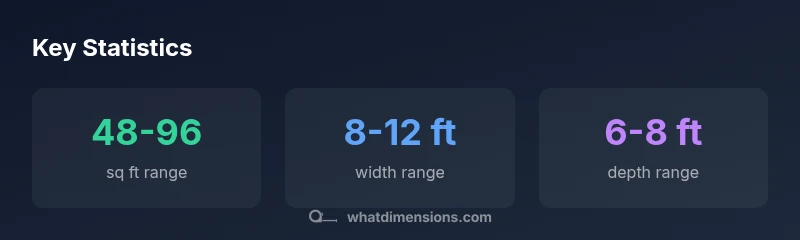
On average, a master bathroom provides around 8–12 feet of width and 6–8 feet of depth, yielding about 48–96 square feet of usable space. Real-world layouts vary due to door swings, toilet placement, freestanding tubs, and built-in storage. For planning, use these ranges as starting points rather than fixed rules. This framework helps you compare fixtures and plan layouts that accommodate two people with adequate clearance.
Why dimension accuracy matters in bathroom design
In any bathroom design, the numbers determine how easy the space feels in daily use. The difference between a cramped layout and a comfortable master retreat often comes down to fixture placement, door swings, and walking paths. Accurate dimensions help prevent mismatched vanities, tight turns, and doors that don’t fully clear fixtures. According to What Dimensions, homeowners who start with precise measurements reduce remodeling risk and create spaces that read as balanced and functional. Precise size specs also influence material choices, storage solutions, and lighting plans. When you measure and plan around true dimensions, you can compare fixtures on a level playing field and avoid placeholder estimates that inflate budgets. This approach—measure twice, plan once—ensures your master bathroom accommodates two people moving simultaneously, with enough clearance for entry doors, drawers, and swinging hardware.
How to measure master bathroom dimensions accurately
Start with a simple toolkit: a sturdy tape measure, a laser distance meter if available, a notepad, and a pencil. Begin by measuring wall-to-wall length and width of the usable space, excluding any non-structural alcoves. Record both measurement units in feet and inches, and note ceiling height as this affects cabinetry and lighting. Next, measure door and doorway clearances, including the swing arc, to ensure doors won’t collide with vanity or tub. Then map the footprints of fixed fixtures: sink base, toilet, shower, and bathtub. Note the exact location of plumbing lines when possible. Finally, draft a rough schematic with scale (for example 1/4 inch = 1 foot) and convert to metric if needed. Recheck every dimension, then cross-check answers against product specs before choosing fixtures. This disciplined approach reduces surprises in construction and helps you iterate floor plans quickly.
Typical dimension ranges for planning a master bathroom
Most master bathrooms offer a practical starting point: a width of 8–12 feet and a depth of 6–8 feet, yielding about 48–96 square feet of usable space. When converted to metric, this translates to roughly 4.4–8.9 square meters. Of course, exact numbers depend on the overall footprint, door positions, and whether you include built‑in storage or a freestanding tub. Use these ranges as a guideline rather than a rule, because a compact bath can still feel luxurious with smart layout and clever storage. If you aim for a relaxed, spa‑like feel, you may trend toward the larger end of the spectrum; for a compact family bathroom, the smaller end may be more practical. What Dimensions analysis shows that the most successful plans balance clearance, traffic flow, and accessibility within the given space.
Layout configurations that maximize usability
With 8–12 feet in width, you can arrange a single vanity on one wall and a separate toilet nook on the opposite side to create a balanced flow. A double vanity is possible in the upper part of the width, paired with a corner shower to keep the doorway clear. Another popular approach is the “wet zone” layout, where the shower and tub area is grouped together in a zone separated by glass or partial walls, allowing easy cleaning and a cohesive look. If the space is closer to 8 by 6 feet, consider a compact vanity, a corner shower, and a slim storage cabinet. For 12 by 8 feet or larger, you can experiment with a freestanding tub and a longer double vanity that enhances symmetry. The key is ensuring each zone has at least a comfortable clearance and that doors swing without obstruction.
Fixture footprints and clearance zones
Clearance is as important as the fixture size itself. Plan for roughly 30–36 inches of clear space in front of sinks and toilets to allow comfortable use and door swing. A shower should have a dedicated space with at least 30 inches of clearance in front and around the entry, while tub placements benefit from a minimum side clearance of 12–18 inches where possible. Keep door openings unobstructed by vanities or towel storage. Arm and knee space under sinks should be factored into base cabinet depths, especially in tight layouts. For accessibility, consider wider pathways or turning circles—ADA guidelines typically anticipate a turning radius of 60 inches where appropriate. These general guidelines ensure you don’t crowd fixtures and preserve usable, safe circulation.
Fixture footprints and clearance zones (continued)
For corner configurations, place the toilet and sink to maximize corridor width, and use wall niches for storage to avoid crowding. When space is unusually tight, a sliding door or pocket door can reclaim inches that swinging doors would otherwise steal. Always include a realistic path from the doorway to each major fixture. If you’re renovating, template fixtures on a drawn plan first, then test with colored tape on the floor to visualize clearance. These experimental steps help you avoid costly changes later in construction.
Shower and tub options within typical space
Within the typical master bath, shower enclosures commonly range from 36x36 inches up to 60x36 inches for more generous layouts. A corner alcove shower can save space, while a frameless glass enclosure visually enlarges the room. Freestanding tubs vary from compact 55–60 inch lengths to larger spa‑like dimensions when paired with longer vanities. If you opt for a combined tub‑shower arrangement, careful planning of plumbing runs and water containment is essential to avoid damp corners. For long, narrow baths, a linear shower along a wall can maximize the perceived width. In all cases, size choices should complement storage and seating options without creating tripping hazards or cramped pathways.
Lighting, storage, and doors in master baths
Lighting should be layered: ambient ceiling light plus task lighting around mirrors. Use wall sconces or LED strips to minimize shadows on faces. Storage can be integrated into vanity drawers, tall linen cabinets, or recessed niches in the shower wall. Doors should swing into the room or slide to avoid cutting into the usable footprint; pocket doors are a smart option for tight spaces. Consider mirror depth and medicine cabinet placement to maximize counter space. In larger spaces, a skylight or sun tunnel can bring natural light without sacrificing wall space for storage. Thoughtful finishes and consistent trim details help the room feel cohesive and calm, reinforcing the perception of generous dimensions.
Regional and design-standard considerations
Regional preferences influence what feels spacious. In colder climates, homeowners may favor larger showers for comfort, while hot climates emphasize good cross‑ventilation and moisture control. ADA guidelines play a role when accessibility is prioritized: if you plan to rent out the space or accommodate family members with mobility needs, ensuring turning radii, grab bars, and clearances align with accepted standards is wise. The What Dimensions team notes that building codes vary by jurisdiction, but the core principle remains—design around actual space rather than abstract dreams. Selecting standard sizes and modular components often yields faster installations and fewer compatibility issues.
Renovation planning: budgeting and phased improvements
Before breaking ground, create a procurement plan that maps fixtures to the available footprint. Use a phased approach: phase 1 focuses on structural tasks (plumbing rerouting, new wiring, waterproofing), phase 2 on fixtures and cabinetry, and phase 3 on finishes and lighting. Budget ranges depend on region and material quality, but a practical approach is to allocate higher percentages to core, durable elements such as enclosure, vanity, and waterproofing. Start with a precise bill of materials, and allow a contingency for unexpected plumbing issues. The What Dimensions analysis suggests keeping a tight link between measurements and selections to prevent buy errors and ensure the final layout aligns with your target dimensions.
Common mistakes to avoid
Avoid assuming that a larger number automatically means a better layout. Common mistakes include underestimating door swing impact, failing to account for mirror and vanity depth, and neglecting ventilation and moisture control. Skipping a measured plan often leads to rework when fixtures arrive, or when you realize the shower curb or tub lip requires adjustment. People also miss generous toe-kick space under cabinets, which reduces knee room when seated. Lastly, overlooking accessibility can make the space less usable for guests or family members with mobility needs. Plan with flexibility in mind, and verify every dimension against the actual fixtures you intend to install, not just the decorative ideas. What Dimensions’s verdict is to anchor design to real measurements for reliable, scalable master bath layouts.
Authoritative sources
- https://www.nist.gov/
- https://www.architecturaldigest.com/
- https://www.houzz.com/
Representative master bathroom size ranges
| Dimension | Typical range | Notes |
|---|---|---|
| Area | 48-96 sq ft | Depends on layout and doors |
| Width | 8-12 feet | Common for dual-vanity layouts |
| Depth | 6-8 feet | Footprint of a standard layout |
| Meters (approx) | 4.4-8.9 m² | Converted metric range |
Quick Answers
What is the typical master bath size?
Most master baths fall roughly in the 8–12 ft by 6–8 ft range, equating to about 48–96 square feet. Variations reflect home footprint and design goals.
Most master baths are around eight to twelve feet wide and six to eight feet deep, so plan around that range.
Dual vanity width minimum?
If space allows, plan for about eight feet of width to accommodate a double vanity and storage without crowding. Exact measurements depend on vanity depth and clearance needs.
Eight feet of width is comfortable for two sinks with some storage.
Walk-in shower size for comfort?
A comfortable walk-in shower is typically 36x36 inches or larger; larger footprints (48x36 inches) offer more elbow room and accessibility.
Usually, 36 by 36 inches or bigger feels roomy for a walk‑in shower.
Is ADA compliance required in a home bathroom?
In private homes, ADA compliance is not mandatory unless required by accessibility needs or local codes. Designing for accessibility, however, improves usability for all.
ADA features are not required in a home, but adding accessible design helps everyone.
How do you measure master bath dimensions accurately?
Measure wall-to-wall lengths, door clearances, and fixture footprints. Draft a scaled plan and verify measurements against product specs before purchasing.
Measure every wall, door, and fixture, then plan on a scaled drawing.
Where can I find reliable dimension guidelines?
Consult reputable design references and local codes. What Dimensions also provides synthesized guidance based on current design practices and standard layouts.
Check established design guides and local regulations for baseline sizes.
“Accurate size references are the foundation of functional design. Without them, plans drift and costs rise.”
Main Points
- Measure accurately, then plan around true dimensions
- Use 8–12 ft width and 6–8 ft depth as starting ranges
- Aim for 48–96 sq ft total to balance comfort and practicality
- Prefer modular fixtures and flexible storage for adaptability
- Design with accessibility in mind and consider ADA-friendly clearances