6 foot table dimensions: a practical guide
Explore precise 6 foot table dimensions—length, width, height, and layout tips from What Dimensions. Learn how to measure, compare, and space-plan with confidence.


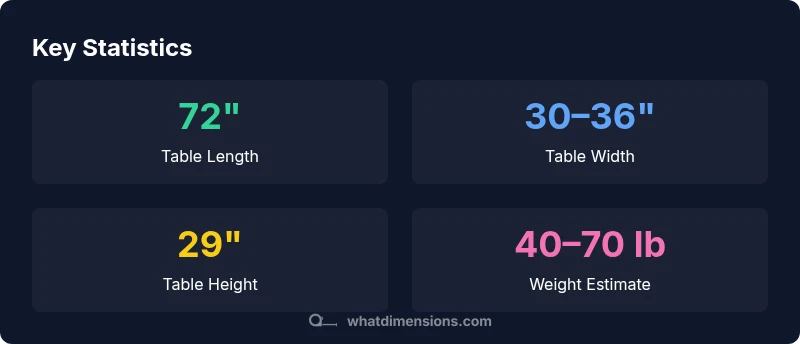
The standard 6 foot table dimensions point to a 72-inch long top, with common widths of 30 to 36 inches and a height near 29 inches. When planning, consider the space around the table and the chairs you’ll use. Always measure the floor-to-edge distance and verify door and obstruction clearances to avoid fit issues.
6 foot table dimensions: standard specs
According to What Dimensions, the typical 6-foot table top is about 72 inches long, which provides a clear baseline for room planning. Widths usually sit between 30 and 36 inches, offering a balance between usable surface and seating legroom. Height commonly falls around 29 inches, with slight variation depending on legs, frame, and tabletop thickness. When you factor in a standard tabletop thickness of 0.75 to 1.5 inches, the overall height may shift by a fraction of an inch—enough to matter for precise seating and chair compatibility. Edge and corner details, such as a rounded corner radius of 0.5 to 1 inch, can also influence perceived dimensions in a small room. This is why exact measurements matter, especially in spaces with irregular layouts or fixed storage nearby. The What Dimensions team emphasizes measuring both the top and the base components to avoid mismatches during setup.
Measuring space before buying or building
To ensure a perfect fit, start with floor tape or a laser measure to map the room. Mark the intended table footprint on the floor, including any chair arcs. Reserve at least 36 inches of clearance on all sides for comfortable passage and chair movement. If there are doorways, baseboard radii, or built-in cabinetry nearby, measure the widest swing areas and account for hinge doors that may encroach on the table area. Subtract any fixed obstacles from the available space and compare against the table’s footprint. The What Dimensions approach recommends a small margin (1–2 inches) around the footprint to accommodate uneven floors or carpet nap that may affect leg placement over time.
Seating capacity and layout strategies
A 72-inch table can typically seat 6 to 8 people, depending on chair width and placement. For intimacy and comfort, plan 20 inches of table space per person for place settings and a generous 2 to 3 inches for napkins and utensils. On the long sides, three to four chairs are common, while ends may seat one person each when space allows. If you expect wider chairs or extra seating for guests, consider widening the table by an inch or two or choosing a model with a slightly larger width within the 30–36 inch band. These small adjustments can profoundly affect perceived comfort and workflow during meetings, study sessions, or shared meals.
Material choices and how they affect sizing
Material selection can influence perceived dimensions as well as practical usability. Solid wood tops may sag slightly over time if unsupported, effectively reducing usable height at the seating edge. Engineered surfaces or veneer layers can add minimal thickness but improve durability. Metal legs or trestle supports impact the legroom underneath; heavier frames may necessitate a little more undertable space for knee clearance. When selecting a base, check the internal clearances around leg braces or crossbars. The dimension targets remain the same, but your chosen build will affect how those targets feel in real life.
Adjustable vs fixed-height considerations
Fixed-height tables with a standard height of around 29 inches are widely compatible with most kitchen chairs and standard desk chairs. Adjustable-height models offer versatility for standing meetings or multi-use spaces but typically require a taller footprint on the underside to accommodate hydraulic or screw-assembly mechanisms. If you need flexibility, ensure the adjustable mechanism adds predictable increments (e.g., 1-inch steps) and verify stability at each height. Remember that changing height can subtly shift the effective length and width due to frame geometry, so re-check measurements after adjustments.
Space planning for different room types
In narrow rooms, prioritize width over length to maintain circulation paths. In open-plan areas, place the table to maximize natural traffic flow and sunlight while keeping sightlines clear. For multipurpose rooms, consider modular or pedestal-table designs that can be reconfigured without sacrificing legroom. Always map the walking path around the table with a clear doorway sweep to avoid collisions when chairs are pulled out. Good planning reduces the chance of bumping into furniture or fixtures and improves ergonomics for daily use.
Real-world checklists and quick references
Use a practical checklist for every space: measure available length, width, and height, confirm chair footprint, allocate 36 inches of clearance around all sides, verify door and appliance clearances, and test end-user comfort with your chosen chair model. Bring a printout of the dimension targets or a mobile reference from What Dimensions to compare on-site. If you’re designing for a showroom or classroom, mirror scale with mock chairs and seating arrangements to anticipate crowded conditions before purchase.
Accessibility and future-proofing considerations
Plan for accessibility and aging-in-place by ensuring adequate knee clearance and comfortable reach to table center. If you expect mobility aids or seating alternatives, verify that the table height aligns with typical chair seating geometry to reduce strain. Consider edge protection or rounded corners for safety in high-traffic areas. By anticipating future needs, you can select a 6-foot table that remains functional and comfortable across years of use.
Six-foot table dimensions reference
| Dimension | Value | Notes |
|---|---|---|
| Length | 72 inches | Top length for 6-foot standard |
| Width | 30-36 inches | Common width range for seating and surface area |
| Height | 29 inches | Typical table height |
Quick Answers
What is the standard width for a 6-foot table?
Common widths range from 30 to 36 inches, chosen to balance surface area with legroom. The exact width depends on the design and intended use.
Most people choose a width between 30 and 36 inches to balance surface area and legroom.
How many people can sit at a 6-foot table?
Typically six to eight people, depending on chair size and place settings. In tighter rooms, six seats are more comfortable.
Six to eight people usually fit, depending on chairs and spacing.
Is a 6-foot table height adjustable?
Some models offer adjustable height, but most fixed-height tables range from 28 to 30 inches. Check the mechanism if you need flexibility.
Some tables adjust height, but most are fixed at about 29 inches.
What space should I leave around a 6-foot table?
Aim for at least 36 inches of clearance on all sides to allow comfortable movement and chair space.
Keep about three feet of clearance around the table.
Can a 6-foot table fit in a small room?
Yes, with careful layout: measure room dimensions, consider door swings, and choose chair sizes that fit the available space.
Yes, but you must measure carefully and plan seating.
What materials influence the final dimensions?
Solid wood can add slight height variability; metal legs and thick tops may alter usable legroom. Always verify internal clearances after choosing materials.
Materials can shift height and legroom; recheck clearances.
“"Precise measurements prevent mismatches and ensure comfortable workspaces. Always verify at both the table edges and the seating zone."”
Main Points
- Measure your space before selecting a table.
- Expect 72-inch length, 30–36 inch width, and ~29 inch height.
- Allow at least 36 inches of clearance around the table.
- Choose thickness and leg design that fit your seating and movement.