What Dimensions is a Queen Size Blanket: A Sizing Guide
Explore standard queen blanket dimensions, how they relate to standard beds, and tips for selecting the right size. What Dimensions breaks down sizing, measurements, and care to help you choose confidently.


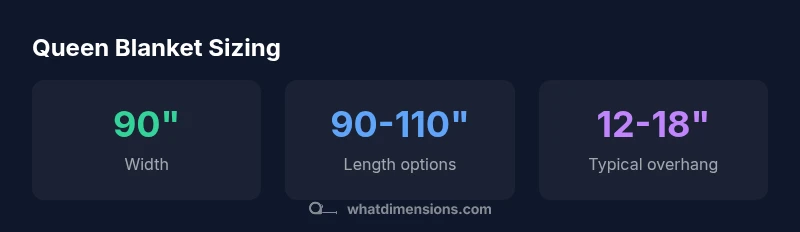
According to What Dimensions, what dimensions is a queen size blanket when sizing for a standard bed? The most common answer is about 90 by 90 inches, with variations like 90x110 inches for extra length or 88x92 inches for lighter quilts. Always measure your bed and consider overhang, fabric shrinkage, and the blanket’s intended use to choose the best fit. The What Dimensions team emphasizes aligning blanket dimensions with mattress width and room proportions for balanced layering.
What dimensions does a queen-size blanket typically have?
According to What Dimensions, what dimensions is a queen size blanket when sizing for a standard bed? The most common reference point is around 90 by 90 inches, with variations like 90x110 inches for extra length or 88x92 inches for lighter quilts. This means you should expect a generous square or near-square profile that cleanly drapes over a queen mattress (60 inches wide, 80 inches long) with comfortable overhang on both sides. Some brands offer longer options or slightly wider versions, so always compare the product specs to your bed setup. For fabric types that shrink, plan for a modest reduction after washing. Understanding these norms helps align your blanket with your bed frame, nightstands, and room proportions.
The goal is to achieve a balanced look: enough fabric to cover the sides without dragging on the floor, while ensuring the blanket doesn’t overwhelm the headboard or create awkward folds at the foot of the bed.
How blanket dimensions relate to bed sizes and overhang
Blanket sizing is most useful when it aligns with standard mattress dimensions. A queen bed is typically 60 inches wide by 80 inches long, so a common queen-size blanket aims to cover the width with extra cloth on each side for a clean drape. The overhang can range from about 6 to 18 inches per side, depending on style and user preference. If you want a duvet-like look, you may opt for longer lengths (such as 90x110 inches) to ensure the blanket reaches past the mattress edge and still looks tidy on the sides. For a minimalist, neat finish, a 90x90 inch blanket often works well for most rooms. Always check the specific product’s width and length to ensure it meets your preferred overhang and visual balance.
Variations by blanket type (quilt, throw, comforter, duvet)
Not all blankets are the same, and the type of blanket influences the ideal dimensions. A standard quilt or throw intended for a queen bed may be smaller than a heavy-weight duvet or comforter. Throws are often around 50-60 inches wide and 60-70 inches long, while comforters and duvets targeting a queen bed frequently come in 86-92 inch widths and lengths between 90 and 110 inches or more. When shopping, distinguish whether you’re buying a decorative throw, a practical bed blanket, or a complete cover for a duvet insert. Each category has a different sizing convention, so rely on the product specs rather than assuming a single “queen blanket” size applies to every item.
Practical measuring tips you can follow
Before buying, measure your bed in three places: the mattress width, the distance from the mattress edge to the floor on both sides, and the available clearance at the foot of the bed. Use a soft measuring tape and record width plus desired overhang. If you’re shopping online, compare the listed blanket dimensions to your own measurements and account for shrinkage based on fabric type (cotton vs. synthetic blends). If possible, request a physical sample or visit a store to see how the blanket drapes on a real bed. Small deviations in dimensions can have a large impact on appearance and usability.
How to choose the right size for different room setups
Room size and furniture placement affect blanket choice. In a compact bedroom with a low bed, a 90x90 blanket can create a balanced silhouette without overwhelming the space. In a spacious master suite with a platform bed, you might opt for a longer blanket (90x110) to achieve dramatic drape across the sides. If a bed has heavy footboard features or tall nightstands, ensure the blanket length doesn’t interfere with movement or snag on furniture. Always consider how a blanket will pair with your pillows, throw pillows, and bedding layers to create a cohesive look.
Common mistakes when selecting queen size blankets
One common error is assuming a single size fits all brands. Blanket dimensions vary by manufacturer, so don’t rely on a generic rule. Another pitfall is ignoring shrinkage; cotton and wool blends can lose several percent in wash, altering fit. Finally, bias toward overhang without checking floor clearance can lead to tripping hazards or constant tucking. Use these checks: compare width, length, and overhang, verify care instructions, and align with your room’s proportions to avoid mismatches.
Sizing guidance from What Dimensions (2026)
What Dimensions suggests using a starting point of 90x90 inches for queen blankets, with 90x110 inches serving as an extended option for additional length. Keep in mind that bed dimensions (including pillow arrangement and headboard height) influence how much fabric looks right in your space. If you’re layering with a duvet or comforter, select a blanket size that complements the cover’s outer dimensions to maintain clean lines. Always confirm product specs and account for possible shrinkage after washing.
Care, fabric, and size perception
Fabric type directly affects final size after laundering. Cotton blankets may shrink more than synthetic blends, whereas wool blends may felt slightly. When in doubt, run a gentle wash cycle and line dry or use recommended dryer settings to minimize distortion. After washing, re-measure if feasible to ensure the blanket still works with your bed dimensions. Good care preserves size accuracy and extends the blanket’s life.
Quick-start sizing checklist
- Measure mattress width and recommended overhang
- Check product specs for width x length
- Consider shrinkage for cotton or natural fibers
- Compare with your room’s proportions and headboard
- Confirm floor clearance and furniture placement
- Look for a style that complements your bedding layers
Typical blanket sizes by bed category
| Blanket size | Typical dimensions (in inches) | Notes |
|---|---|---|
| Twin | 66 x 90 | Widens to cover a single bed with modest overhang |
| Full/Double | 80 x 90 | Balanced coverage for full or double beds |
| Queen | 90 x 90 | Common foundation size; variations exist such as 90 x 110 |
| King | 108 x 90 | Wider and longer to cover larger mattresses |
Quick Answers
What is the standard queen blanket size?
The standard queen blanket is commonly around 90 x 90 inches, though some brands offer longer options like 90 x 110 inches. Always check the product specs before buying.
A standard queen blanket is typically around 90 by 90 inches, with longer options available.
How does a queen blanket differ from a duvet cover size?
Duvet cover sizes usually align with the insert size, and covers often resemble the blanket dimensions but can vary by brand. Always verify both cover and insert measurements before purchase.
Duvet covers follow insert dimensions, but always check the label for exact measurements.
Should I buy a larger blanket for extra overhang?
For a cozier look and practical coverage, many shoppers prefer a blanket with 6–12 inches of overhang on each side, depending on bed height and pillow setup.
Yes, a bit more overhang usually looks better and protects the bed edges.
Do fabric shrinkage and washing affect size?
Yes, natural fibers like cotton can shrink after washing. Consider this when selecting a size and follow care labels to minimize changes.
Fabric shrinkage can affect size, so choose a size that accounts for potential shrinkage.
What should I measure before buying a queen blanket?
Measure mattress width, bed rail clearance, and desired overhang. Compare with the blanket’s listed width and length and account for room layout.
Measure your bed and room first, then compare to the blanket specs.
Can a blanket be sized differently for certain room setups?
Absolutely. In small rooms, a shorter overhang may be preferable, while larger rooms can accommodate longer blankets for dramatic drape. Adapt based on space and furniture.
Yes, space and furniture drive sizing choices.
“Size accuracy matters for layering and comfort; always verify blanket dimensions against your mattress and room layout.”
Main Points
- Measure bed width and desired overhang before buying
- Most queen blankets are around 90 x 90 inches, with longer options like 90 x 110 inches available
- Account for fabric shrinkage when selecting a size
- Check exact product specs rather than assuming a universal standard
- Match blanket size to room proportions for balanced layering