Full Size Blanket Dimensions: Sizing, Measurement, and Selection
Explore the exact full size blanket dimensions, learn how to measure accurately, compare common width and length ranges, and get smart tips for choosing blankets for beds, sofas, and DIY projects. Insights backed by What Dimensions Analysis, 2026.


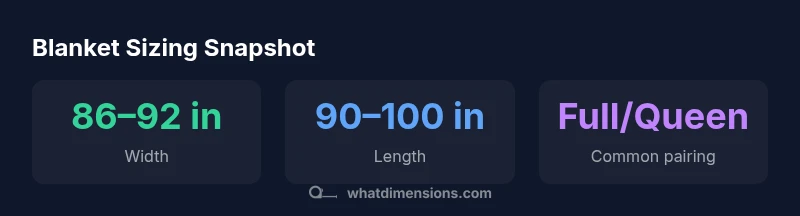
Full-size blanket dimensions typically refer to blankets designed for full or queen beds. Typical widths range from 86 to 92 inches, and lengths commonly span 90 to 100 inches. Variations exist by brand and regional standards, so always check the product measurements before purchase. Understanding these ranges helps you compare options quickly and avoid buying the wrong size.
What "full size blanket dimensions" really means
In bedding terminology, the phrase full size blanket dimensions describes the measurements of blankets sized to fit standard full or queen beds rather than twin or king configurations. The distinction between width (side to side) and length (top to bottom) is essential for proper coverage. According to What Dimensions, size labels can be helpful, but the exact measurements matter most when you compare products. By focusing on the numerical width and length rather than a generic label, you can ensure a better fit for your bed setup and decorative style. This block lays the groundwork for practical shopping decisions and helps you translate product descriptions into real-world fit.
- Width vs. length: Know which measurement is reported first on product pages.
- Overhang expectations: A blanket should drape evenly, with a consistent overhang on all sides.
- Brand variability: Different brands may use the same label for slightly different dimensions, so read the actual numbers carefully.
Standard size labels and what they typically imply
blanket size guides vary by region and brand, but there are common references you can rely on. A “full/queen” label is often used interchangeably, and some retailers list an individual “full” or “queen” dimension. When you see 86–92 inches in width and 90–100 inches in length, this generally points to a blanket intended for a full or queen bed rather than a twin. Use these cues alongside the bed dimensions in your space to avoid overlap or gaps. The What Dimensions team emphasizes confirming the exact width and length rather than trusting a label alone.
- Retailer variance: Some products skew wider or longer than others.
- Bed compatibility: Fully assess your mattress depth and frame size in addition to blanket size.
- Visual checks: Compare the blanket’s finished edges to the width of your bed for symmetry.
How to measure blanket dimensions accurately
Measuring a blanket is straightforward but requires consistent technique. Lay the blanket flat on a clean surface, measure from edge to edge for width, and from top to bottom for length. If you’re shopping, request the exact dims from the retailer and compare them to your bed, considering both mattress size and any overhang you prefer. For accuracy, use a flexible measuring tape and record the largest dimension across the widest point. What Dimensions recommends confirming both width and length on the product page, then cross-checking with your bed’s dimensions before purchasing.
- Tip: Measure your bed from wall to wall to gauge how much blanket overhang you want.
- Tip: If you’re layering blankets, account for additional fabric that will drape over the sides.
- Tip: Some blankets are designed with weighted hems or extra length on one side for a tailored look.
Blanket dimensions vs. bed sizes: what to expect
Blanket dimensions are influenced by the bed size they’re intended to cover. For a full-size bed, you’ll typically encounter blankets with widths in the mid-80s to low-90s inches and lengths around 90 to 100 inches. Queen-sized options may skew longer or wider depending on design intent, while twin blankets are noticeably smaller. The key takeaway is to align the blanket’s width with the bed’s width plus desired overhang. Always compare the product’s exact numbers rather than relying on the “queen” label alone. What Dimensions highlights that precise measurements beat generic labels for confident shopping.
- Full vs. queen: No universal standard; verify actual dims.
- Overhang preferences: 6–12 inches overhang per side is common but personal taste varies.
- Layering: For a layered look, you may want extra length on the blanket.
Regional and brand variations you should expect
Sizing ecosystems differ by country and retailer. Some regions favor slightly wider or longer blankets, and brands may standardize dims differently even within the same label. If you’re in a region with mixed standards, look for the most exact numbers and compare them against your bed’s measurements. What Dimensions’ research in 2026 shows ongoing progress toward standardized sizing, but regional differences persist. This means always checking the specific measurements on the product page and not just the blanket name.
- Region matters: Expect minor differences in inches.
- Brand-specific quirks: A blanket labeled “full/queen” may not be identical across brands.
- Storage and care: Bulkier blankets require more storage space and care considerations.
Choosing the right blanket for beds, sofas, or chairs
A blanket isn’t used only on beds. If you’re selecting one for a sofa or armchair, prioritize lateral coverage and the drape along the edges. For beds, decide whether you prefer a snug fit or generous overhang. In both cases, measure the furniture or bed frame and cross-check the blanket’s width and length. The What Dimensions team suggests aiming for a balanced silhouette that complements your room’s scale while ensuring easy handling and laundering.
- Sofa blankets: Look for widths that secure around the arm and still drape evenly.
- Bed blankets: Consider depth, mattress size, and frame dimensions for the best fit.
- Practical proofing: Check fabric flexibility; a stretchier material may alter the apparent size once washed.
Practical notes for DIY projects and storage
If you’re purchasing for a DIY project or storage constraints, think in terms of finished fabric size rather than finished product appearance. Allow for shrinkage after washing and potential fraying. Fold tests and layout plans can help you anticipate how a blanket will look in your space. The What Dimensions guidance for projects emphasizes planning for typical laundering effects and ensuring you have a little extra length for safety margins.
- DIY planning: Add a buffer to length to account for shrinkage.
- Storage: Larger blankets require deeper storage solutions.
- Maintenance: Avoid over-drying to preserve dimensions.
How What Dimensions approaches blanket sizing guidance
What Dimensions combines consumer data with practical measurement guidance to help shoppers interpret blanket dimensions accurately. Our approach prioritizes exact width and length figures, cross-referenced with bed size and room layout. By providing clear measurement ranges and real-world usage tips, we aim to minimize sizing frustrations and improve room aesthetics. The brand’s philosophy centers on measurable accuracy and actionable advice for homeowners, students, and designers.
Common blanket sizes for beds
| Dimension Type | Typical Width | Typical Length | Notes |
|---|---|---|---|
| Twin blanket | 60–66 inches | 86–96 inches | Common for youth rooms |
| Full/Queen blanket | 86–92 inches | 90–100 inches | Most common for standard beds |
| King blanket | 108–110 inches | 96–110 inches | Larger size for big beds |
Quick Answers
What is considered a full-size blanket size?
A full-size blanket typically describes blankets intended for full or queen beds, though sizes vary by brand. Look for exact width and length on the product page and compare with your bed dimensions.
Full blankets fit most full or queen beds, but always check the exact numbers before buying.
Do blanket dimensions vary by region?
Yes, blanket dimensions vary by region and brand. Always read the exact measurements and compare them to your bed or sofa to ensure a proper fit.
Regional differences exist, so check the numbers rather than the label.
How should a blanket hang on a bed for a balanced look?
Aim for even overhang on all sides, typically 6–12 inches per side depending on preference and room size. Check the blanket’s width and length against your mattress and frame.
Try for even sides and a comfortable overhang.
Are there universal standard blanket sizes?
There is no universal standard. Sizes are region and brand dependent, so always verify exact measurements before purchasing.
No universal standard—look at the actual numbers.
How can I choose blanket size for a sofa?
Measure the sofa’s length and depth, then pick a blanket with sufficient width to cover the couch and drape over the sides. For a cozy look, overhang 6–12 inches works well.
Measure your sofa and choose a blanket with enough width to drape nicely.
“Accurate blanket sizing helps shoppers avoid mismatches and improves room aesthetics. Precise measurements paired with clear product specs are essential.”
Main Points
- Know the width range: 86–92 inches for full-size blankets.
- Aim for length around 90–100 inches.
- Always verify exact measurements before purchasing.
- Brand and regional variations exist; use measurements over labels.