Quilt Dimensions: A Practical Guide to Sizes and Measurements
Explore quilt dimensions, standard sizes, how to measure finished quilts, and tips for calculating border and binding allowances to achieve accurate drape and fabric use.


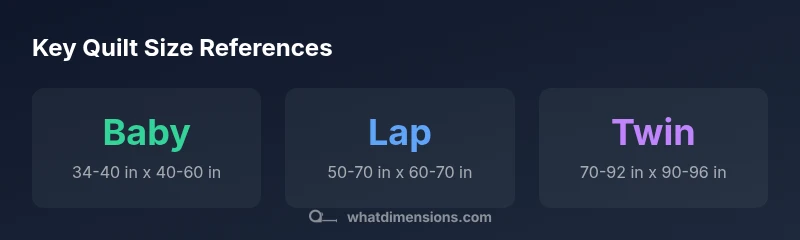
Quilt dimensions typically range from 34 x 40 inches for baby quilts up to 108 x 120 inches for king-size quilts. Common midpoints include lap quilts at 50 x 70 inches and twin quilts around 70 x 92 inches. When planning, remember to include border allowances and binding. For precise sizing, measure the finished quilt edge-to-edge after blocking and pressing.
What quilt dimensions mean in practice
When hobbyists and designers plan a quilt, the phrase quilt dimensions refers to the finished measurements that describe how long and wide the quilt will be, including any borders and bindings. The essential distinction is between the pattern size you cut and the final, quilted size that will drape over a bed or chair. In practice, you typically design around a target bed or display space, then adjust the pattern to accommodate seam allowances and binding. Remember that a border adds to both width and length, while binding reduces an effective usable area inside the edge. In this section, we explore how to translate a verbal size goal into concrete measurements you can cut for and sew, using What Dimensions guidelines for consistent results.
Why finished dimensions matter
Finished quilt dimensions determine drape, warmth, and usability. A quilt that is too small may leave gaps on a bed; one that is too large can overwhelm a room and complicate laundering. By starting with a target size and working backward—subtracting seam allowances and deducting border widths—you can avoid common misfits. This approach also supports efficient fabric planning, minimizing waste while ensuring the final piece lines up with your design intent.
How to visualize size on a design floor
Lay your fabric on a flat surface and place a ruler or tape measure along the edges. Use chalk or removable fabric markers to mark the intended finished edges. If you’re working with a pattern, compare the pattern’s finished size to your space and add the border allowances as you build the quilt top. Visual checks during planning help reduce late-stage adjustments and yield a more predictable final product.
qualityScore”:null,
authorNotes”:null,
contentStrategyNotes”:null,
endnotes”:null],
Common quilt sizes and how they relate to bed sizes
| Size Category | Approximate Quilt Dimensions | Common Bed Coverage |
|---|---|---|
| Baby/Cradle | 34-40 in x 40-60 in | Fits standard crib or toddler bed |
| Lap Quilt | 50-70 in x 60-70 in | Covers lap and can drape over chair |
| Twin/Single | 70-92 in x 90-96 in | Fits most twin beds with generous drape |
| Queen/King | 90-110 in x 100-120 in | Covers queen or king beds with generous drape |
Quick Answers
What are the standard quilt dimensions for common sizes?
Common quilts span a spectrum from baby quilts around 34×40 inches to king-size quilts around 108×120 inches. Most projects fall into lap, twin, full, queen, or king categories, with borders and bindings adding to the edge measurements. Always reference your pattern and hardware measurements for final fabric needs.
Common sizes range from baby quilts to king, with borders adding a few inches to the edges.
How do I measure a quilt finish accurately?
Lay the quilt flat, smooth out wrinkles, measure edge to edge along the longest and widest points, and record both width and length. Subtract any planned seam allowances before cutting future projects. If possible, measure after blocking and pressing for the final dimensions.
Lay it flat, measure across the widest and longest parts, and note the finished size.
What’s the difference between quilt dimensions and bed sizes?
Quilt dimensions describe the fabric's finished measurements, including borders. Bed sizes are the mattress dimensions; a quilt should drape beyond the mattress to achieve a balanced look. You tailor quilt dimensions to the bed size to ensure proper coverage and a pleasing drape.
Quilt size is about finished edges; bed size is about the mattress itself.
Do borders affect finished size, and by how much?
Yes. Borders add to both width and length. Typical borders range from 2-4 inches per side, but many designers add 4-6 inches total per edge to achieve the desired frame and drape.
Borders add inches to the quilt’s edges, affecting overall size.
Are quilt sizes consistent across regions or patterns?
Not always. Quilt sizes vary by pattern, era, and region. Vintage and contemporary patterns may use different finished sizes, so always compare with the specific pattern’s finished dimensions and account for border options.
Sizes can vary by pattern and region, so check the specific pattern you’re using.
How do I estimate fabric yardage for a given quilt size?
Start with the finished dimensions, subtract seam allowances for the top, then add border yardage. Pattern charts and calculators can help convert inches to yards, but always buy a little extra to accommodate border widths or mistakes.
Use pattern charts to convert finished size to yardage, adding a bit extra for borders.
“Precise quilt dimensions help prevent fabric waste and ensure the finished quilt drapes correctly on a bed or display space.”
Main Points
- Measure finished edges after borders and binding to confirm a true quilt size
- Start with target bed or space, then add seam allowances and borders
- Use standard size categories to guide pattern selection and yardage planning
- Block and press finished quilts to ensure dimensions stay true
- Consult a sizing checklist before cutting to minimize waste