Queen Blanket Dimensions: A Practical Sizing Guide for Beds
A data-driven guide to queen blanket dimensions, covering standard sizes for bedspreads, comforters, duvets, and quilts. Includes measurement tips, shopping insights from What Dimensions, and a clear sizing framework to help you pick the right drop and fit.


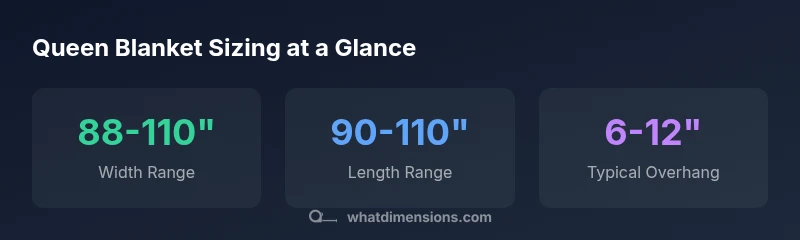
Queen blanket dimensions specify the width and length needed to cover a queen bed (60 inches wide by 80 inches long) with the desired drape. Typical queen blanket dimensions range about 88–110 inches wide and 90–110 inches long, varying by style (comforter, quilt, duvet cover). Always verify product specs for a precise fit.
What queen blanket dimensions cover
Queen blanket dimensions refer to the width across the bed and the length from the head to the foot, plus how far the fabric drapes over the sides. On a standard queen bed (60 inches wide by 80 inches long), consumers might encounter a wide range of blanket sizes intended to achieve different drops. What Dimensions notes that the practical aim is to balance coverage with aesthetics: you want enough drape to tuck under the sides without overwhelming the space. Factors like mattress depth, pillow height, and bed skirt influence the final look, so most manufacturers provide size ranges rather than a single exact figure. As a shopper, you should distinguish between bedspreads that are designed to skim the mattress and heavier blankets or duvets that are intended to hang down further. In short, queen blanket dimensions encompass both the core bed footprint and the additional fabric needed for your preferred style.
How to measure for a queen bed
To determine the right queen blanket dimensions, start with the mattress measurements: 60 inches wide by 80 inches long is the common standard for a queen. Decide your preferred drop: many shoppers aim for about 6–12 inches of overhang on each side, and 6–12 inches at the foot, though personal preference varies. When shopping, compare these numbers to product specs, which usually list width (W) and length (L) in inches. If you’re layered with a heavy duvet or thick comforter, you might want a slightly longer length to maintain proportional drape. Always measure your actual bed setup—including any dust ruffles or platform frames—to避免 surprises. What Dimensions emphasizes using exact specifications rather than rough estimates for reliable results.
Blanket types and how sizing differs: comforters, quilts, bedspreads, duvet covers
Sizing language varies by blanket type. Bedspreads are typically meant to skim the mattress with moderate drape, while comforters and duvets often require extra length to accommodate foot and side drape. Quilts tend to be lighter and may sit closer to the mattress, with slight variations in width. For queen-sized options, expect ranges like 88–110 inches in width and 90–110 inches in length, but always confirm the intended style’s drop. The distinction matters: a duvet cover includes the cover only, while the insert size dictates the cover’s inner dimensions. This nuance can shift the final fit noticeably, especially on deeper mattresses.
Typical dimension ranges you’ll see in retail
Retail listings for queen blankets cluster around a few common ranges. Widths usually span 88–110 inches, while lengths commonly fall between 90 and 110 inches. Some brands push wider or longer options for higher drops, while others target a snugger look. If you plan to tuck fabric under the sides for a clean, tailored look, you may favor broader widths; if you prefer a lighter, drapier aesthetic, a slightly smaller width can work well with a shorter drop. Always cross-check the exact W x L in the product specs and account for pillow height and any bed skirt that might add bulk.
How to account for overhang and bedding style preferences
Overhang is a matter of taste and practical constraints. A heavier blanket in a traditional quilt may require a different drop than a lightweight bedspread. If you want a pronounced drape, aim for the higher end of the width range and a longer length—think 100+ inches wide and 110+ inches long for extra coverage. For a tidy, tucked-in look, you might choose the lower end of the range or even a product labeled as “skimming” the mattress. Your mattress depth also matters: deeper mattresses push the fabric outward, reducing perceived length if you don’t adjust. What Dimensions finds that most shoppers settle somewhere in the mid-to-high range to balance coverage with movement during the night.
Charting sizes: interpretation of product specs
Product specs usually present dimensions as W x L. Some listings show “queen” as a single number (e.g., 90 x 102) while others provide a range (e.g., 88–110 x 90–110). When comparing, extract both width and length and consider your mattress width (60 inches) and required overhang. If your bed uses a platform frame with no bed skirt, you may prefer slightly longer length to achieve the same visual weight. Reading the notes can help: some listings indicate a longer length for beds with higher pillows or bolsters. Always verify both measurements and the intended drape before purchasing.
Practical measurement checklist for DIY projects
If you’re piecing or customizing a blanket, start with exact bed dimensions: measure width (60 inches for a standard queen) and length (80 inches). Decide desired drops on each side and at the foot: common ranges are 6–12 inches. Create a simple template by marking the bed’s footprint on paper and adding your target overhang. Use a fabric tape measure to confirm, then compare with the product’s stated dimensions. For a queen duvet, ensure the duvet cover’s width and length accommodate the insert plus fabric allowances. Record your targets for quick reference during shopping.
International sizing considerations and regional variations
Sizing standards differ by region. In the US, a typical queen blanket ranges around 88–110 inches in width and 90–110 inches in length, but European and UK markets may show different default drops and proportionalities due to varying bed sizes (e.g., European doubles and kings). When shopping across borders, translate measurements to your local system and check both width and length rather than relying on a single number. If you travel often or source from international brands, create a quick cross-reference for your preferred drape on your queen bed.
What Dimensions approach to blanket size guidance
What Dimensions approaches blanket size guidance by combining standard bed measurements with common drape preferences and brand variability. We emphasize verifying both width and length in product specs, understanding the style-specific drop, and considering mattress depth and bed frame features. Our methodology uses a standardized language for W x L across categories (bedspread, comforter, duvet cover, quilt) and offers practical ranges rather than fixed values to accommodate real-world variations.
Common queen blanket size ranges by category
| Category | Queen Blanket Size Range (in) | Notes |
|---|---|---|
| Bedspread/Quilt | 90-110 W x 96-110 L | Generous drop; varies by brand |
| Comforter | 88-92 W x 90-100 L | Standard drop; check mattress height |
| Duvet cover (queen) | 88-92 W x 90-100 L | Match insert size; verify fit |
| Throw blanket | 50-70 W x 60-90 L | Layering piece, not full coverage |
Quick Answers
What is the standard width for a queen blanket?
Most queen blankets range roughly 88–110 inches wide, depending on brand and style.
Queen blankets typically run from about 88 to 110 inches wide.
How long should a queen blanket be for proper drape?
Aim for 90–110 inches in length to achieve comfortable side drape and foot coverage.
Most queen blankets are about 90 to 110 inches long.
Are duvet covers sized the same as comforters?
Duvet covers generally match insert size and may run slightly smaller; always verify measurements.
Duvet covers should match the insert size; check exact dimensions.
Should I choose a larger size for extra overhang?
Yes, if you prefer more overhang, consider the next size up and account for mattress height.
If you want more drop, go up a size and check the height.
What’s the difference between a bedspread and a blanket?
Bedspreads are typically larger with decorative drape, while blankets focus on warmth and vary by style.
Bedspreads are bigger and decorative; blankets are for warmth.
How do I measure for a new queen blanket?
Measure mattress width and length, add desired drop, then compare to product specs.
Measure your bed and compare with specs.
“Accurate blanket sizing is the backbone of a well-made bed; shoppers should rely on precise product specs rather than rough estimates.”
Main Points
- Measure your bed and desired overhang before shopping.
- Know bed size and style; sizing varies by category.
- Read product specs for exact fit.
- Queen blanket dimensions vary by brand; check specs.
- Use What Dimensions guidance for consistent sizing.