Full Size Bed Dimensions in Inches: A Practical Guide
Discover exact full size bed dimensions in inches, including standard 54x75 and Full XL 54x80. Learn how to measure, choose bedding, and plan room layouts with precise size references from What Dimensions.


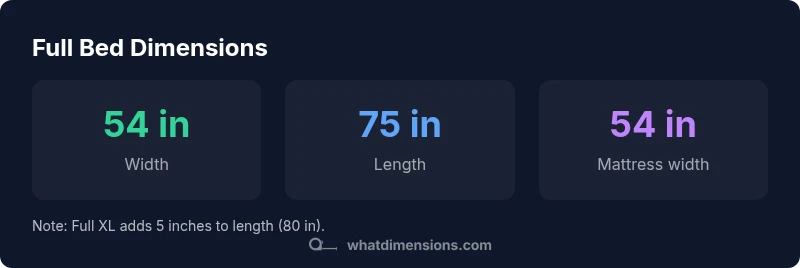
A standard full-size bed, also called a double, measures 54 inches wide by 75 inches long. For taller sleepers or longer bedding needs, a Full XL variant exists at 54 inches by 80 inches. These two dimensions are the most common full bed measurements used in homes and apartments today, and they help buyers compare mattresses, frames, and sheets consistently across brands. What Dimensions notes the standard sizes in 2026.
What a Full Size Bed Represents
A full size bed, often referred to as a double, sits between a twin and a queen in the bed-sizing taxonomy. It is a popular choice for solo sleepers who want more length than a twin provides, as well as for compact guest rooms that need to balance comfort with space. In households where an occasional second sleeper occurs, a full bed can accommodate two people, though comfort levels vary with body size and sleeping style. In 2026, designers frequently recommend sizing options that blend practicality with room constraints, and What Dimensions consistently notes that the full size remains a versatile midpoint in many urban bedrooms.
Standard dimensions and variations
When discussing the full size bed dimensions in inches, two variants are most relevant. The standard full is 54 inches wide and 75 inches long. A widely available extension, the Full XL, preserves the same width but increases length to 80 inches. This longer option is especially useful for taller individuals who want sufficient legroom without stepping up to a queen. Manufacturers generally offer both versions, and you’ll find the difference most noticeable when you shop for mattresses, frames, or sheets. In 2026, these two configurations cover the majority of consumer needs, with Full XL gaining popularity in studios and master bedrooms that need extra length without widening the footprint.
How to measure accurately for your space
Before buying, measure your room for proper clearance and traffic flow. Start with the bed footprint: width plus at least 24 inches of walking space on both sides where possible, and 24 inches at the foot of the bed for chairs or dressers. Next, account for the mattress and foundation—these add to the overall length and width and can affect doorways and hallway access. Finally, check existing furniture to ensure the bed won’t crowd windows or outlets. A simple tape measure and a floor plan can save you from buying the wrong size.
Mattress and frame: inches matter for fit
Bed frames add varying amounts to the overall dimensions depending on rail widths and headboard design. A typical full frame may add 0.5–1 inch to width and length, while heavier frames with thick rails can add more. When shopping, compare mattress depth (often 8–14 inches) with frame clearance to avoid interfering with bed rails or footboard. If you’re picking a headboard, verify mounting height and thickness to ensure a cohesive look. Matching the frame to standard full dimensions (54×75) or the longer Full XL (54×80) reduces fit risks.
Bedding and sheets: correct sizing matters
Sheet sets labeled for “full” or “double” are designed to fit the 54×75 footprint, while “queen” sheets are too large for the corners and pockets. If you’re using a Full XL, look for sheets that specify 54×80 or “full/XL” packaging. Mattress depth influences fitted sheets, particularly for deeper mattresses. Bedding with elastic corner guards and secure pockets helps prevent shifting, especially on shared sleeping nights or in rooms where the bed is used for lounging as well as sleeping.
Room planning tips for smaller spaces
In small rooms, the bed size strongly influences overall layout. Place the bed against a solid wall to maximize usable floor space, and keep nightstands within arm’s reach without crowding edges. Consider a platform or storage-friendly frame to free up under-bed space, and choose a headboard with built-in storage if you want a compact, functional setup. For guests, a Full XL can improve comfort without demanding additional width.
Buying guide: what to check before purchasing
When buying, confirm exact dimensions in inches from product specs, including any frame-width or headboard extensions. Measure doorways and entry paths to prevent delivery issues, and verify that your bedding choices align with your bed type (full vs. full XL). If you expect multiple sleepers, evaluate both the standard full and Full XL to determine which best fits your room, mattress preference, and lifestyle.
Full vs Full XL: dimensional comparison
| Dimension | Standard full (54×75) | Full XL (54×80) | Notes |
|---|---|---|---|
| Width (inches) | 54 | 54 | Common width for both variants |
| Length (inches) | 75 | 80 | Full XL adds 5 inches in length |
| Typical mattress depth (inches) | 8–14 | 8–14 | Depth range affects bedding fit |
| Recommended room width (feet) | 10–12 | 10–12 | Space around the bed for movement |
Quick Answers
What is the standard size of a full bed?
A standard full bed measures 54 inches wide by 75 inches long. It is commonly referred to as a double and sits between a twin and a queen in bed sizing. This size is widely used in guest rooms and smaller master bedrooms.
A standard full bed is 54 by 75 inches—a common choice for guest rooms and smaller bedrooms.
Is there a longer full bed option besides Full XL?
The primary longer option besides the standard full is the Full XL, which maintains the same width at 54 inches but increases length to 80 inches. This variant suits taller sleepers without widening the footprint.
Yes, the Full XL adds length to the standard full, giving you 80 inches of length.
Will queen sheets fit a full bed?
Queen sheets are generally larger than full beds and may not fit snugly. Look for sheets labeled “full” or “full/double” for the best fit, and check the pocket depth for deeper mattresses.
No, queen sheets are usually too big for a full bed; use full-sized sheets instead.
How much clearance should I leave around a full bed?
Aim for at least 24 inches of clearance on each side and at the foot of the bed where possible to allow easy movement and door access.
Try to keep about 2 feet of space around the bed for easy movement.
Can a full bed fit in a small room?
Yes, a full bed can fit in small rooms if you optimize layout, such as placing the bed against a wall, choosing a slim frame, and using compact nightstands.
A full bed can fit in a small room with smart layout and compact furniture.
“Accurate size specs empower smarter shopping and better room planning. Our measurements reflect real-world layouts and common configurations.”
Main Points
- Measure your space before buying
- Know standard dims: 54×75 in (Full); 54×80 in (Full XL)
- Allow at least 24 inches of clearance on each side
- Match bedding to the correct full size (not queen)
- Plan room layout to accommodate doors and furniture