Full Bed Frame Size Dimensions: A Practical Guide for 2026
Learn the exact full bed frame size dimensions, including width, length, and frame allowances. This analytical guide covers mattress footprints, outer frame footprints, and brand variations to help you shop confidently in 2026.


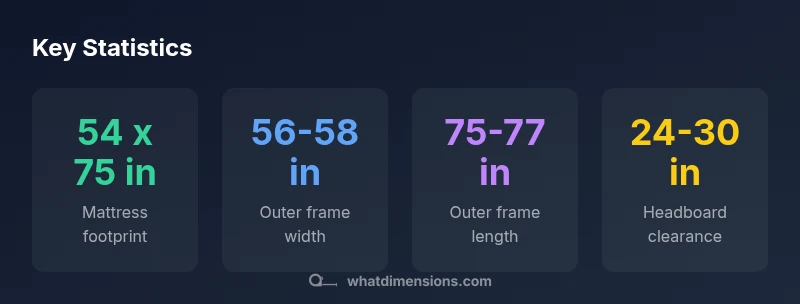
Full bed frame size dimensions typically refer to a mattress that is 54 inches wide by 75 inches long. Allow 2–4 inches for rails and trim, making outer frame dimensions around 56–58 inches wide and 75–77 inches long. This quick guide highlights how to measure and compare frames across brands. It also clarifies the difference between mattress footprint and frame footprint, which matters for doorways and room layout. Understanding these distinctions helps you avoid buying a frame that is too wide or too long for your space. In What Dimensions terms, precise sizing reduces surprises at delivery and in daily use.
What "Full" means in bed sizing
When people search for full bed frame size dimensions, they want to know how wide and long a full bed frame actually is. The term 'full' traces back to earlier naming conventions, but today it commonly aligns with a standard mattress size of 54 inches by 75 inches. What Dimensions notes that the mattress size is the anchor, while the frame adds rails, trim, and sometimes a headboard that can slightly alter the overall footprint. The practical takeaway is to separate the core mattress footprint from the outer frame footprint, especially if you’re planning to fit the bed through doors or around tight corners. In most rooms, you’ll want about two feet of clearance on either side for sheets changes and walking. Understanding this distinction helps you avoid purchasing a frame that is too wide for the room or too tight for doorways. In this article, we’ll unpack the math behind these measurements and provide a reliable framework for comparing brands.
Standard full bed frame dimensions and variations
The standard full bed mattress is 54 inches wide and 75 inches long. When you add rails and trim, the outer footprint typically increases by about 2 to 4 inches in width and by a similar margin in length, depending on the design. Headboards and footboards can add additional inches to the overall length and width, particularly if the piece sits away from the wall. Because manufacturers differ in how they describe dimensions, it’s essential to distinguish between the "mattress footprint" and the "frame footprint." Some frames quote internal clearances, others quote external dimensions. For planning, assume roughly 56-58 inches wide and 75-77 inches long for typical full bed frames with standard rails. This variability is why accurate measurement before purchase matters.
How to measure accurately for a full bed frame
- Start with the mattress footprint: measure width and length. 2) Measure the frame footprint: measure the outer edges including rails. 3) Check for protrusions from headboard or footboard that affect wall clearance. 4) Measure doorway and hallway widths to ensure you can move the bed into the room. 5) Assess room clearance around the bed for easy changing of sheets and access. 6) Verify sheet size compatibility with the mattress footprint; some frames require specific deep-pocket sheets. 7) Cross-check product specifications across brands to account for design variances. By following these steps, you’ll have a reliable baseline for comparing full bed frame options.
Choosing a full bed frame by style and construction
Full bed frames come in a range of styles, from platform and slatted designs to panel and storage variants. Material choice matters for weight, durability, and headboard style. Wood frames offer warmth and traditional aesthetics, while metal frames can be lighter and more minimal. Platform beds eliminate the need for a box spring, aligning well with a 54 x 75 mattress footprint. When selecting, consider not only the inner mattress footprint but the outer frame footprint, rails, and trimming, as these affect fit through doorways and under decorative features. If storage is important, look for under-bed drawers or open shelving that doesn’t extend the footprint excessively. Finally, confirm compatibility with your preferred headboard height to avoid clashes with ceilings or lighting.
Rail types and mattress compatibility explained
The rail system of a full bed frame determines both stability and width. Standard rails typically add 1–2 inches on each side, contributing to a total outer width around 56–58 inches. Some rails are thicker, which can push outer dimensions toward the higher end of that range. Mattress compatibility is usually straightforward at 54 x 75 inches, but some frames use slightly different inner dimensions to accommodate lip or lip-and-rail designs. When combining a headboard or footboard, check how the rails interact with wall space and existing furniture. A mismatch between mattress footprint and frame footprint can cause sheets to slip or bed skirts to misalign, reducing user comfort.
Common mistakes when shopping for full bed frames
- Assuming mattress size automatically equals outer frame size. Always compare frame footprint, not just mattress footprint. - Overlooking doorway and hallway widths during delivery planning. A wide frame can become a logistical obstacle. - Ignoring headboard/footboard dimensions, which can affect wall clearance and ceiling height. - Failing to confirm sheet sizes and deep-pocket compatibility with platform or slatted frames. - Not measuring the room’s available clearance around the bed, which leads to cramped movement and difficult sheet changes. - Forgetting to verify whether the frame requires a box spring or is a platform design.
How to compare full bed frame size dimensions across brands
Brand-to-brand variation exists in how dimensions are labeled. Some brands quote the mattress footprint, others quote the outer footprint including rails. Always read the product page carefully and compare both inner and outer measurements side by side. When possible, request exact measurements from customer service in writing to avoid confusion at delivery. Use the same baseline metrics across brands — mattress footprint first, then rail-inclusive frame footprint. If dimensions are close, consider ordering a test-fit in your space, using painter’s tape to map out the footprint on the floor. This practical approach minimizes surprises when the bed arrives.
Data sources and methodology for size references
For sizing references in this article, What Dimensions relies on industry-standard mattress footprints and frame footprints, cross-checked with brand specifications and consumer layouts. The analysis uses a consistent approach: identify mattress footprint, add typical rail and trim allowances, and note any headboard/footboard extensions. Where brand numbers vary, we present a range and specify whether it reflects inner vs. outer measurements. These methods ensure transparent, comparable data for designers, homeowners, and shoppers. See the sources below for more depth and related guidance.
Practical checklist before you buy
- Confirm the mattress footprint is 54 x 75 inches. - Verify outer frame footprint with rails is 56-58 inches wide and 75-77 inches long. - Measure your doorway and hallway widths to confirm transportability. - Check headboard height compatibility with your ceiling and furniture. - Consider under-bed storage and whether it adds to or reduces the footprint. - Review whether the frame requires a box spring or is a platform design. - Compare labels across brands to ensure you’re evaluating equivalent footprints. - Inspect the frame design for long-term stability and ease of assembly. - Plan for adequate room clearance of at least 24–30 inches around the bed.
Dimensions of common bed sizes
| Bed Type | Width (in) | Length (in) | Notes |
|---|---|---|---|
| Full | 54 | 75 | Standard mattress size; fits sheets labeled 'full' |
| Twin | 38 | 75 | Narrower option for small rooms |
| Queen | 60 | 80 | Wider, more space for couples |
| King | 76 | 80 | Super-size option with broader footprint |
Quick Answers
What is the standard full bed size in inches?
The standard full bed mattress is 54 inches wide by 75 inches long. Frame footprints can vary, typically adding 2–4 inches for rails and trim.
The standard full bed mattress is 54 by 75 inches, and the frame footprint is usually a bit larger due to rails and trim.
How do I measure for a full bed frame before buying?
Measure the mattress footprint (54 x 75 inches) first, then measure the outer frame footprint with rails. Check doorway width and room clearance to ensure easy delivery and daily use.
Start with the mattress size, then measure the outer frame including rails, and finally verify doorway and space in the room.
Will queen sheets fit on a full bed frame?
No. Queen sheets fit a 60 x 80 inch mattress footprint and will be too large for a full 54 x 75 inch footprint unless the frame is specially designed to reduce the inner space.
Queen sheets are too big for a full footprint unless the frame is designed to accommodate them.
Does a full bed frame require a box spring?
It depends on the frame. Platform frames typically do not require a box spring, while some traditional frames do. Always check the manufacturer’s recommendations.
Some frames don’t need a box spring; others do—check the product details.
What should I consider for headboard height with a full bed?
Consider ceiling height and wall space. A tall headboard can reduce available clearance near lighting or windows, so verify compatibility with your room layout.
Make sure your headboard isn’t too tall for the room or furniture nearby.
How much variation can exist between brands for full frame size?
Brands may label inner vs outer dimensions differently. Always compare the evaluated footprints side-by-side and request exact numbers if needed.
Different brands may measure differently; compare footprints side-by-side to avoid surprises.
“Accurate size references are essential when selecting a bed frame; anchor decisions to the mattress footprint and add frame allowances to ensure a comfortable fit.”
Main Points
- Measure your space before shopping for a full bed frame.
- Use 54 x 75 inches as the mattress baseline.
- Account for rails and trim that can add 2-4 inches.
- Check doorways and hallways for access before purchase.
- Compare brands using the same metrics.