Double Bed Dimensions in Inches: A Practical Guide
Learn exact double bed dimensions in inches (54x75 standard, 54x80 Full XL), regional variations, and practical guidance on sheets, frames, and room planning.


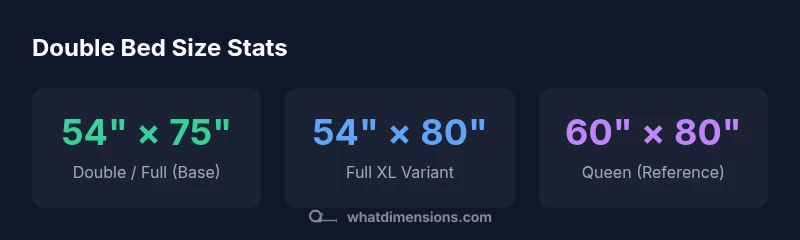
The standard double bed dimensions in inches are 54 inches wide by 75 inches long, commonly labeled Full. Some brands offer Full XL at 54 x 80 inches for taller sleepers. For accuracy, always check product listings because minor variations exist across regions and manufacturers.
What "Double Bed" Means Across Regions\n\nThe term "double bed" is used differently around the world, which can lead to confusion when comparing furniture and linens. In the United States, what many brands call a "Full" bed is typically 54 inches wide and 75 inches long. In other markets, the same bed size may be labeled "double" with similar or slightly different length expectations. Always cross-check the listed dimensions on a product page or label, especially when shopping across brands or countries. For designers and students cataloging spaces, using the standard 54 x 75 frame as a baseline enables consistent planning while accommodating regional naming conventions.\n
Standard Dimensions to Reference\n\nBelow are the most commonly cited core sizes you’ll encounter in product specs and linens:\n- Double / Full: 54 inches wide × 75 inches long (about 137 cm × 191 cm)\n- Full XL: 54 inches wide × 80 inches long (about 137 cm × 203 cm)\n- Twin / Twin XL (for context): 38 inches × 75 inches and 38 inches × 80 inches, respectively, useful when comparing guest-room configurations and bunk setups.\n- Queen as a benchmark: 60 inches × 80 inches (not the same as a double, but helpful for layout planning).\nRemember that actual product dimensions can vary slightly by brand, especially around edge finishes and mattress toppers.\n
How to choose a mattress and frame for a double bed\n\nChoosing a mattress and frame that fit a 54 × 75 base requires aligning the core size with your bedding and furniture. When buying a mattress, confirm the length and width are exactly 54 × 75 inches. If you opt for a taller sleeper, consider the Full XL option at 54 × 80 for additional length. Frames and foundations should accommodate the width and imply enough room for bedding overhang without crowding nightstands or doors. Platform beds with integrated slats can often affect clearance, so verify base thickness and any built-in storage. Always measure your room before purchasing to ensure door swing space and walking paths remain unobstructed.\n
Bedding and linens compatibility\n\nSheet and comforter sets that advertise as "Full/Double-ready" are typically sized for 54 × 75 inches. If you choose Full XL, seek sheets labeled "54 × 80" or those explicitly marked for XL or tall configurations. Deep-pocket sheets can accommodate thicker mattresses or toppers but may reduce the available fitted depth for a standard 75-inch mattress. Duvet covers and comforters should align with the bed height to avoid pooling on the floor. For fitted sheets, check pocket depth and elastic corner seams to ensure a snug fit around corners without popping off.\n
Regional variations and XL options\n\nIn some regions, the double bed is synonymous with a "full-sized" bed, while in others, the standard size persists but naming conventions shift. The Full XL variant (54 × 80) is increasingly popular in spaces that favor longer sleepers, taller occupants, or guest rooms that double as small studios where ceiling height and bed access require extra length. If you’re shopping internationally, compare the core dimensions rather than relying exclusively on the label. This reduces mismatches when purchasing sheets, frames, and toppers from different suppliers.\n
Data-driven sizing guidance for interiors\n\nInterior planning benefits from treating 54 × 75 as a baseline. What Dimensions Analysis (2026) shows that most homeowners and designers reference this standard when sketching floor plans and choosing adjacent furniture. When space is limited, you may opt for a narrower bed footprint (e.g., twin or double with under-bed storage) to maintain circulation. Conversely, if you need more length for taller sleepers, Full XL at 54 × 80 offers a practical compromise between width consistency and added length. These decisions should be anchored by room dimensions, door clearance, and the intended use of the room.\n
Measuring and planning: step-by-step\n\nTake a simple measurement approach: (1) measure the wall-to-wall width, (2) measure the wall-to-door clearance, (3) add at least 24 inches of clearance on each side for easy access, (4) verify corner and dresser clearance, and (5) confirm that your chosen mattress and frame align to 54 × 75 or 54 × 80, depending on preference. Keep a simple floor plan with a scale to test furniture placement before purchasing. This minimizes mismatches between the bed and surrounding furniture.\n
Common mistakes and quick fixes\n\nMistake: assuming all Full sheets fit a double bed without checking pocket depth. Fix: verify the sheet depth and corner fit against your mattress thickness. Mistake: neglecting door swing space. Fix: map out a 24-inch clearance path; consider a bed frame with adjustable headboard height to optimize clearance. Mistake: mixing twin and double labels. Fix: rely on actual dimensions (54 × 75 or 54 × 80) rather than the label.
Standard double bed sizes vs common alternatives
| Bed Type | Dimensions (inches) | Typical Uses |
|---|---|---|
| Double/Full | 54 x 75 | Guest rooms, small master bedrooms |
| Full XL | 54 x 80 | Tall sleepers, rooms with longer layouts |
| Queen | 60 x 80 | Most master bedrooms |
Quick Answers
What are the standard double bed dimensions in inches?
In the United States, a standard double bed is 54 inches wide and 75 inches long, commonly labeled as Full. Some brands offer a taller Full XL at 54 x 80 inches. Always confirm exact measurements on product pages before purchasing.
Most doubles are 54 by 75 inches, with Full XL at 54 by 80 inches for taller sleepers.
Is a double bed the same as a full bed?
Yes. In US terminology, a double bed corresponds to a Full size, typically 54 inches wide by 75 inches long. Some regions may use the term differently, but the dimensions are generally the same.
Yes, double usually equals Full in inches.
Do standard bed sheets fit a double bed?
Most standard Full sheets are designed for 54 x 75 inches. If you choose a Full XL (54 x 80), look for sheets labeled for XL or tall beds. Always verify pocket depth for fitted sheets.
Yes, most Full sheets fit, but check XL options if you have the longer 80-inch version.
What size should I choose for a small room?
A double/Full bed can fit in many small rooms, but you’ll want to measure carefully and leave at least 24 inches of clearance around the sides for movement. In very tight rooms, consider a twin or daybed layout.
A double fits in small rooms with careful planning; leave space to move.
What is Full XL and when would I choose it?
Full XL is 54 x 80 inches, offering extra length for taller sleepers without increasing width. It’s useful in rooms with extra length or where a taller sleeper needs more legroom.
Full XL is 54 by 80 for taller sleepers.
How do I measure a space for a double bed?
Measure wall-to-wall width and length, ensure at least 24 inches of clearance on each side, and account for door swings and furniture. Compare your measurements to 54 x 75 or 54 x 80 before buying.
Measure the space and compare to the bed’s dimensions.
“Accurate bed dimensions are the backbone of thoughtful interior planning; consistency across brands reduces misfits and returns.”
Main Points
- Know standard sizes: 54 x 75 inches for Double/Full
- Full XL adds 5 inches of length: 54 x 80 inches
- Check bed space and ensure at least 24 inches of clearance
- Verify sheet and frame compatibility before purchase