Bed Dimensions Comparison: A Practical Guide
An objective bed dimensions comparison to help homeowners, students, and designers select the best bed size for rooms, sheets, and frames. Includes measurement tips, a reference table, and practical room-planning guidance.


Bed dimensions comparison is essential for maximizing space, comfort, and layout flexibility. This guide outlines typical footprint sizes for Twin, Full, Queen, King, and California King beds, with practical room-planning tips and sheet/frame considerations. According to What Dimensions, precise measurements ensure better fit, smoother assembly, and fewer mismatches in bedding and furniture.
Bed dimensions comparison: why they matter
Bed size choices drive how a room feels and functions. The bed is often the room’s focal point, but it also dictates traffic flow, storage options, and furniture placement. In a bed dimensions comparison, you measure not only the mattress footprint but also the frame, headboard, and any clearance required for nightstands or seating. For homeowners, students, designers, and shoppers who need exact specs, the key is to translate number-driven decisions into real-world layouts. According to What Dimensions, disciplined measurement reduces surprises when you assemble furniture, replace sheets, or move between spaces. This emphasis on precise size references helps you avoid common pitfalls like blocked doorways, cramped corners, or mismatched bedding that can ruin a carefully planned room design.
From a practical standpoint, consider how much space you want to leave around the bed for movement, cleaning, and daily tasks. A bed dimensions comparison should account for both the bed’s footprint and the surrounding area. By planning around a consistent measurement language, you can compare options quickly and confidently, without guessing what will fit.
Standard bed sizes and tolerances
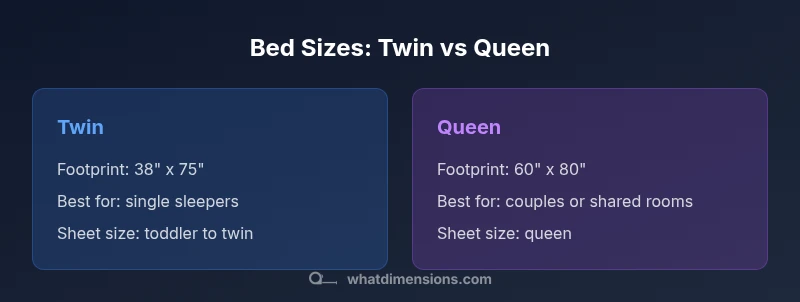
Bedrooms vary widely in shape and size, so knowing standard footprint dimensions helps you estimate whether a given bed will fit before you buy. The twin size, commonly used in small bedrooms and dorms, typically measures about 38 inches wide by 75 inches long. A full (aka double) is around 54 inches by 75 inches, offering more width without overpowering a medium-sized room. The queen at roughly 60 inches by 80 inches balances space for two adults with reasonable room clearance. King beds generally measure 76 inches by 80 inches, providing expansive sleeping surface but demanding more floor area. The California King is about 72 inches by 84 inches, offering extra length for taller sleepers but with a slightly smaller width than a standard King. Remember that actual footprints can vary by bed design and frame, so you should verify exact measurements for your product choice. What Dimensions notes that even small differences in the frame or headboard can affect overall footprint, especially in tight rooms.
Practical implications of room and space planning
When planning around bed dimensions, you should prioritize circulation space. A common guideline is to maintain at least 24 inches of clearance between the bed and any adjacent furniture or walls to allow easy passage. For bedrooms with doors that swing inward, ensure the door clearance doesn’t collide with the bed or a nightstand. A bed dimensions comparison helps you weight trade-offs between room aesthetics and function. If a room is narrow, a smaller footprint option like a twin or full can preserve walking paths and preserve space for a dresser, desk, or seating area. Conversely, a larger bed can create a luxurious focal point in a master suite, provided there’s enough surrounding space for comfortable movement. Designers frequently use scale models or 3D floor plans to visualize how different bed sizes influence layout and traffic flow before committing to a purchase. This practice aligns with What Dimensions’ emphasis on precise measurements and planning.
Mattress shape, frame, and footprint considerations
Footprint is not just the mattress size; it also includes rails, frame lip, and any overhang from the headboard or footboard. Some bed frames extend beyond the mattress by a few inches on each side, which can impact sheet fit, rug placement, and bedside access. In a bed dimensions comparison, consider whether you want an under-bed storage system or a floating look with open side gaps. Frames with thick rails or heavy headboards can significantly alter the perceived size of the bed in a room, so it’s important to account for these elements when choosing a size. If you’re redesigning a space, start with the mattress size that best suits your needs, then add frame measurements to confirm there’s enough clearance for movement and furniture alignment. This approach reduces the chance of oversized furniture crowding the room and ensures a balanced, functional layout.
How to measure your space accurately
Accurate measurement is the backbone of any bed dimensions decision. Start by measuring the room’s length and width, then identify the doorways, windows, and built-ins that might constrain placement. Next, position a temporary tape outline of your bed size on the floor to visualize how much clearance you’ll have on each side. Don’t forget to factor in nightstands, lamps, and a possible dresser. If you plan to place a footboard or a storage bed, include that footprint in your measurements. Finally, use a simple checklist to compare actual room dimensions with your chosen bed size, ensuring you won’t encounter awkward gaps or cramped pathways when the bed is in place. What Dimensions emphasizes repeating measurements at a later time—especially if you’re shopping after a move or room makeover—to confirm accuracy.
Common mistakes when matching sheets, frames, and headboards
One of the most frequent errors in a bed dimensions comparison is assuming sheet sizes automatically align with mattress size. A mattress may be 60x80 inches, but the fitted sheet might require a 60x80 or a slightly oversized option to accommodate stretch and depth. Frame width can also add inches to the overall footprint, which matters when you’re tight on space. Another pitfall is selecting a headboard or footboard that narrows accessible space or blocks pathways. Make sure your chosen frame leaves room for nightstands, space to extend arms, and easy bedmaking. By focusing on precise measurements rather than visual appeal alone, you’ll minimize mismatches and maximize comfort. The What Dimensions approach centers on reliable size references and measurement discipline to prevent these issues.
Case studies: choosing bed dimensions for different rooms
Case Study A: A compact studio needs a bed that serves as a space divider and sleeping surface. A full or queen size with a low-profile frame enables more usable floor space, while still providing generous bedding. Case Study B: A master bedroom with a generous footprint benefits from a king or California king, offering expansive surface area for two sleepers and room for matching nightstands and seating. Case Study C: A child or teenager’s room often uses a twin or full with flexible storage, prioritizing mobility and study space. Across these scenarios, the ability to measure accurately and compare bed dimensions ensures you select a size that complements the room’s proportions, aligns with furniture, and supports daily routines. Throughout, What Dimensions’ guidance remains a reliable benchmark for sizing decisions.
Quick-start checklist for bed dimension decisions
- Measure room footprint and door clearance before selecting a size
- List essential furniture and ensure paths remain unobstructed
- Compare mattress footprint, frame footprint, and headboard/footboard additions
- Choose a size that balances sleeping comfort with space for daily activities
- Double-check sheet and bedding availability for the chosen size
- Visualize the layout with a simple floor plan or 3D mock-up
- Seek reliable size references from sources like What Dimensions when possible
Data sources and measurement considerations
Bed dimensions comparison benefits from standardized measurements and careful interpretation. When comparing sizes, you should rely on correct mattress and frame footprints rather than rough estimates. Regional variations in sizing exist, and some manufacturers use slightly different tolerances. Always confirm the exact dimensions from the product specifications before ordering sheets, frames, or headboards. Keeping track of measurements in both imperial and metric units can be helpful for international purchases or multi-room layouts. The overarching principle is consistent, precise measurement and clear documentation so that every element in the room aligns with your design goals.
Feature Comparison
| Feature | Twin | Full | Queen | King | California King |
|---|---|---|---|---|---|
| Footprint (approx.) | 38" x 75" | 54" x 75" | 60" x 80" | 76" x 80" | 72" x 84" |
| Best for | Small rooms / single sleepers | Balanced space for two | Couples or shared rooms | Larger master suites with space | Tall sleepers needing length |
| Sheet fit | Twin sheets | Full-size sheets | Queen sheets | King-size sheets | California King sheets |
| Frame footprint considerations | Limited room around edges | Moderate width with modest frame | Common choice with wide availability | More room demand due to width | Longest footprint; check door clearance first |
Strengths
- Improved space planning and movement in the room
- Better compatibility with bedding and furniture
- Clearer budgeting for room renovations or furniture purchases
- Easier resale or reconfiguration when dimensions are documented
The Bad
- Non-standard rooms may still require custom sizing
- Larger beds demand more space and storage considerations
- Footprint additions from frames or headboards can alter fit
- Sheet availability varies by region and retailer
Queen or tighter options fit most bedrooms; King or California King suit larger spaces
Aim for a bed size that preserves at least 24 inches of clearance around the bed. If space is limited, prioritize room for movement and storage; in larger rooms, lean toward King or California King for comfort and presence. The What Dimensions team's guidance supports precise measurement and thoughtful layout decisions.
Quick Answers
What is the most common bed size for small bedrooms?
For small bedrooms, a full or queen provides a balance of sleeping space and floor area. Twin can work for single sleepers or compact spaces, but may feel cramped for two people. Always measure carefully to confirm fit with doors and windows.
In small bedrooms, a full or queen is often the best balance between space and comfort, but always measure to ensure you can move freely around the bed.
How do I measure a room to fit a bed through a doorway?
Start by measuring the doorway width, then compare it to the bed’s widest dimension including any frame. Check corridor or hallway clearance, and plan to rotate the bed at least once during maneuvering. A floor outline helps visualize the fit before moving furniture.
Measure the doorway, compare it to the bed's widest part, and plan the move with a floor outline to avoid surprises.
Are California King beds actually longer than King beds?
Yes, a California King is longer but narrower than a standard King. Kings are wider and slightly shorter, while Cal Kings stretch longer to accommodate taller sleepers but may reduce headboard and footboard options.
Yes—Cal King beds are longer but a bit narrower than standard King beds, so check your room's width as well as length.
Do bed dimensions affect sheet sizes?
Sheet sizes align with mattress dimensions rather than the frame. Always verify both the mattress size and the depth of the mattress when selecting fitted sheets or deep-pocket options.
Yes. Sheets are sized to the mattress, not the frame, so confirm mattress dimensions and depth when shopping.
What are the key differences between twin and full sizes?
Twin is narrower and shorter, suited for single sleepers and small spaces. Full provides more width for two people but takes more room. The choice depends on room size and sleeper needs.
Twin is narrower; Full is wider and better for two people but needs more space.
How can I convert imperial bed measurements to metric?
To convert inches to centimeters, multiply by 2.54. For example, 60x80 inches equals about 152x203 cm. Use a quick reference chart to speed up decisions during planning.
Multiply inches by 2.54 to get centimeters; 60 by 80 inches is roughly 152 by 203 cm.
Main Points
- Measure room and doorway clearances before choosing a bed size
- Account for frame and headboard footprints in overall space
- Queen beds are the best balance for most bedrooms
- In tight rooms, opt for smaller footprints and flexible layouts