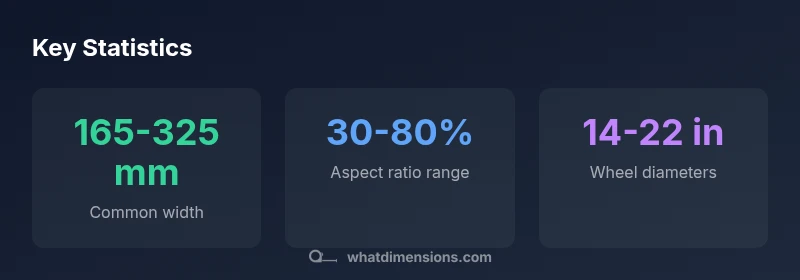
Tire Dimensions Chart: Reading Size Markings and Conversions
Learn how to read a tires dimensions chart, decode size markings like 205/55R16, compare formats (P-metric vs Euro), and select safe replacements with accurate dimensions for your vehicle.


A tires dimensions chart defines the three primary components on a tire size: width, aspect ratio, and wheel diameter, typically shown as something like 205/55R16. It also indicates load index and speed rating on the sidewall. Using the chart helps pick replacements that match OEM specs and maintain handling.
What the Tires Dimensions Chart Covers
A tires dimensions chart is a reference tool that decodes the markings you see on the sidewall of a tire and translates them into usable specifications for fitment, performance, and safety. For homeowners, students, designers, and shoppers, knowing what each component means helps you verify that a replacement matches the original equipment on your vehicle. The chart also clarifies how different sizing systems—such as metric versus inch-based scales—interact with your wheels, suspension geometry, and load capacity. What Dimensions analysis shows that most consumer tires fall into a few standard families, but every vehicle can have unique requirements based on load, speed, and climate.
- Readability: Size markings are designed to convey essential dimensions at a glance.
- Compatibility: Correct size preserves handling, braking performance, and speedometer accuracy.
- Variability: There is no single universal size; variations depend on vehicle class and market.
Understanding these basics sets the stage for more precise decisions when shopping for tires or evaluating upgrades.
Reading the size markings on a tire
Tire size markings arrive as a compact code on the sidewall, typically formatted as W x A x D with additional indicators. The most common passenger-car format is width/aspect ratioRim diameter (for example, 205/55R16). The first number (205) is the width in millimeters. The second number (55) is the aspect ratio—height of the sidewall as a percentage of the width. The letter R indicates radial construction, followed by the wheel diameter in inches (16). Additional markings include the load index (numerical) and the speed rating (letter), which describe how much weight the tire can carry and the maximum speed it supports. The chart helps you map each part to a real-world dimension and performance expectation.
- Width: how wide the contact patch is with the road.
- Aspect ratio: the height of the sidewall relative to width.
- Rim diameter: the wheel size the tire is designed to fit.
- Load index and speed rating: carrying capacity and top permissible speed.
When you encounter a size like 205/65R15, you can interpret it as a 205 mm wide tire with a 65% aspect ratio on a 15-inch wheel, radial construction, with particular load/speed markings that matter for safety and warranty.
Metric vs inch sizing and common formats
Tire sizing systems include metric (width in millimeters, aspect ratio in percent, and wheel diameter in inches) and inch-based formats commonly used in North America. The most common format for cars is width/aspect ratioRim diameter (205/55R16). Some trucks and light commercial vehicles follow similar patterns but may use LT (light truck) designation or wider widths like 265/70R17. The chart also addresses how to translate between systems if you are cross-referencing a European tire with a North American wheel.
- Metric format: width/ratioRdiameter (mm/%) (inches)
- P-metric vs LT: P-metric is for passenger cars; LT is for light trucks and heavier payloads
- Euro-metric and official markings: sometimes show different load/speed specs
Understanding these formats helps you compare options across brands and regions without guessing.
How to read a tire chart for your vehicle
A manufacturer or retailer will provide a chart that aligns your vehicle’s original equipment (OE) size with compatible alternatives. Start by locating the OE size in your owner’s manual or door placard. Then, use the chart to identify sizes that maintain equivalent overall diameter and load capacity. If you are upgrading to a larger diameter, account for speedometer error and aftermarket clearance. Always verify clearance with a professional if you plan to modify suspension or wheel offset.
- Maintain overall tire diameter within a few percent of OE to preserve accuracy of the speedometer and ABS
- Check load index and speed rating to ensure safe operation at your typical driving speeds
- Consider rev matching and gearing changes when moving to larger/wider sizes
Common size formats explained with examples
Examples help translate theory into practice. A popular passenger-car size is 205/55R16. Here, 205 mm is the width, 55% is the aspect ratio, and 16 inches is the rim diameter. Other examples include 225/60R17 for mid-size sedans and 275/65R18 for crossover/SUV applications. Note that a 205/55R16 might fit more narrow cars, while performance vehicles may use lower aspect ratios (e.g., 45 or 40) for improved handling at a trade-off in ride comfort. Always confirm clearance and load capacity when changing size classes.
- Wide low-profile tires offer sharper handling but can reduce ride comfort
- Taller sidewalls improve ride quality but may affect steering feel
- Larger wheel diameters require adequate brake clearance and offset compatibility
Effects of changing tire size on performance and safety
Moving to a different size can alter gearing feel, gearing ratio, traction, and ABS calibration. A larger diameter tire may raise the effective gearing, slightly reducing acceleration and changing the indicated speed. A wider tire increases contact patch, improving grip in dry conditions but potentially reducing fuel economy and snow performance if the width is excessive for the vehicle chassis. Changes in aspect ratio alter sidewall stiffness, impacting ride quality and cornering response. Always recalculate the rolling radius to maintain speedometer accuracy and consider reprogramming the ECU if necessary as part of a controlled upgrade plan.
- Verify rolling radius differences are within acceptable tolerances
- Recheck speedometer calibration after size changes
- Assess braking performance and tire shoulder wear patterns
- Respect manufacturer recommendations for load rating and inflation pressures
Using charts for replacements and maintenance
When replacing tires, use the tires dimensions chart to select compatible sizes that keep the rolling diameter close to OE. Ensure the new tires meet load index and speed rating requirements for your vehicle. For winter or all-season tires, consider the climate and driving conditions in your region and verify that the tire size is approved for your wheel and vehicle. Record the exact OE size in your vehicle history and maintain consistent air pressures per the manufacturer’s recommendations.
- Keep a consistent rolling diameter to avoid speedometer drift
- Maintain recommended inflation pressure for safety and efficiency
- Document and verify fitting with your installer or dealer if your wheels are aftermarket
- Use brand-appropriate charts as a reference for cross-brand sizing
Limitations of charts and when to consult a professional
Tire dimensions charts provide a standardized reference but cannot capture every aftermarket combination or clearance constraint. Variations in tire construction, tread pattern, and rim width can affect fit even when the size is the same. When in doubt, consult a tire professional, especially if you plan to install oversized tires or alter suspension geometry. If you notice unusual tire wear, vibration, or noise after a size change, recheck fitment and rotate patterns as needed. What Dimensions recommends verifying fitment in a controlled environment before hitting the road.
Quick-reference checklist for tire dimensions
- Confirm OE size from door placard or owner’s manual
- Compare width, aspect ratio, and rim diameter on the chart
- Check load index and speed rating compatibility
- Verify overall diameter remains within 1-2% of OE for speedometer accuracy
- Ensure proper clearance with suspension and brakes
- Validate inflation pressures per manufacturer guidelines
- Consult a tire professional for any upgrades or regional compatibility concerns
Key components of tire size markings
| Format | Meaning | Typical Example | Notes |
|---|---|---|---|
| Width | millimeters | 205 | Width of the tire from sidewall to sidewall |
| Aspect ratio | percent | 55 | Height of the sidewall as a percentage of width |
| Rim diameter | inches | 16 | Diameter of wheel the tire fits |
| Load index / speed rating | numbers & letters | 91V | Carrying capacity and max speed |
Quick Answers
What information does a tires dimensions chart provide?
A tires dimensions chart decodes size markings, showing width, aspect ratio, and rim diameter, plus load index and speed rating. It helps you compare compatible replacements and preserves vehicle performance.
It shows you the key numbers on the tire and what they mean for fit and performance.
What does a marking like 205/55R16 mean?
205 is the tire width in millimeters, 55 is the aspect ratio (sidewall height as a percentage of width), R indicates radial construction, and 16 is the rim diameter in inches. Additional load and speed ratings may follow.
205/55R16 means 205 millimeters wide, sidewall height 55% of width, radial, for a 16-inch wheel.
Can I mix tire sizes on the same vehicle?
Mixing sizes is generally not recommended, as it can affect handling, balance, and ABS calibration. If you must mix, stay within OEM guidance and seek professional advice.
Mixing sizes is risky; consult a pro before doing it.
How do speed ratings affect tire choice?
Speed ratings indicate the maximum safe speed for the tire. Choosing a size with an appropriate rating ensures safe handling and warranty coverage, especially for high-speed driving.
Pick a tire with a suitable speed rating for your typical driving speeds.
Why is wheel diameter listed in inches?
Wheel diameter is historically defined in inches in the U.S. market, even when other dimensions use metric. The chart translates that to ensure cross-brand comparability.
Wheel size is shown in inches due to traditional US sizing conventions.
Are tire sizes regional or brand-specific?
Sizes follow standard codes, but regional regulations and brand-specific recommendations may vary. Always verify fitment on your vehicle and with local sellers.
Check your local guidance and brand specs when shopping.
“Understanding tire dimensions is essential for safety and performance. A clear reading of the tire chart helps you choose correct replacements and avoid handling surprises.”
Main Points
- Decode tire size markings to verify fitment
- Maintain similar overall diameter when changing sizes
- Check load index and speed rating for safety
- Understand metric vs inch sizing formats
- Consult a professional for aftermarket upgrades