Which Size for Apple Watch: A Practical Sizing Guide
Discover how to pick the right Apple Watch size with a clear, evidence-based framework. Learn how wrist measurements, readability, comfort, and band options influence your choice, with practical steps and examples from What Dimensions.


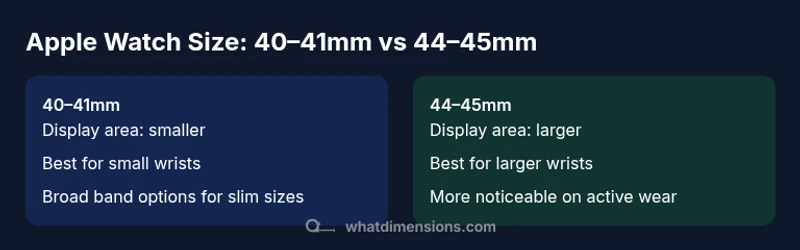
Which size for Apple Watch? The right choice depends on your wrist and how you plan to use it. Generally, 40–41mm fits smaller wrists for comfort and subtle wear, while 44–45mm offers larger readability and a sportier presence. What Dimensions analysis recommends testing both sizes with your usual bands before deciding.
Which size for Apple Watch: sizing basics
If you’re asking which size for apple watch, the answer centers on your wrist circumference, daily usage, and comfort threshold. Apple presents multiple case sizes, and each size brings distinct trade-offs in readability, bulk, and band compatibility. This section outlines how wrist size translates into perceived fit and how the balance between display readability and device bulk influences everyday use. According to What Dimensions, wrist measurements are the starting point for a good fit, but practical wear—like how you text, type, and read notifications—matters just as much. By the end, you’ll have a structured way to compare 40–41mm versus 44–45mm options and decide with confidence.
Measuring your wrist and choosing a size up front
The first step is a precise wrist measurement. Use a flexible tape measure at the wrist bone, not on the underside. Note your measurement in inches or centimeters, then compare it to your preferred wear feel: do you want a watch that sits flush and discreet, or one that makes a statement and offers easier readability? This section translates those numbers into a sizing decision framework you can apply across models and bands, ensuring the final choice aligns with both utility and aesthetics.
Display readability versus bulk: how daily tasks are affected
Display readability is often the decisive factor for power users, readers, and those who rely on quick glances at notifications. A larger case tends to provide a bigger display and bigger controls, which can speed up onboarding and reduce eye strain in busy moments. However, increased bulk may hinder comfort during workouts or all-day wear. What Dimensions analyses show that users who frequently read messages, use maps, or glance at health metrics may favor the larger 44–45mm size for readability, while those seeking a lightweight everyday partner might lean toward 40–41mm.
Comfort and weight: balancing feel on the wrist
Comfort is more than weight; it’s how the watch distributes pressure and how the band interacts with your skin. A smaller casing often feels lighter and less obtrusive, which helps for all-day wear, while a larger case can feel more present on the wrist, especially with thicker bands. In practice, try both sizes around a typical workday or gym session to gauge comfort under your usual activities. What Dimensions finds that comfort is highly personal, so user testing is essential.
Strap compatibility and lug width considerations
Bands are a major factor in the sizing equation. Some bands are narrower and better suited to smaller cases, while others are designed for larger cases. Compatibility also depends on the band style and lug design—bands may be exchanged easily, but ensure the width and attachment method align with your chosen case size. This section covers common strap types and how to verify that a band you own will work with the size you’re considering.
How to test sizing at home: a step-by-step method
Create a controlled at-home test: wear both sizes for a full day, compare readability, comfort, and practical tasks, and rotate through your regular band collection. Take note of any irritation, pinching, or distraction caused by the watch’s presence. If possible, perform a side-by-side comparison using the same band, so you assess size impact without changing variables. What Dimensions emphasizes documenting your impressions to inform a final purchase decision.
Real-world scenarios by wrist range: small, medium, large
People with small wrists often report greater comfort with 40–41mm, while those with larger wrists may prefer 44–45mm for better screen visibility during workouts or navigation. This section outlines typical scenarios—from students managing daily schedules to designers testing on-site maps—and maps them to the most suitable size range. The goal is a practical, experience-based guide that helps you mirror real-life usage rather than rely on theoretical metrics.
Quick-reference sizing table and decision flow
A compact decision flow helps you translate measurements into action. Start with your wrist size, consider daily tasks, then decide between the two core sizes. Use the table to compare readability, comfort, and band options at a glance. This section functions as a portable cheat sheet you can refer to before buying or while shopping.
Practical decision checklist and next steps
Conclude with a concise checklist: measure, test, compare bands, and verify compatibility with your preferred accessories. If you’re choosing for someone else, repeat the process with their wrist and usage patterns. This final section reinforces a repeatable approach you can reuse for future Apple Watch model updates.
mainTopicQuery":"apple watch sizing"
Comparison
| Feature | 40–41mm Apple Watch | 44–45mm Apple Watch | |
|---|---|---|---|
| Display area | Smaller display with compact layout | Larger display with easier readability | |
| Wrist fit | Better for small to medium wrists | Better for larger wrists or those who prioritize readability | |
| Band compatibility | Common narrow bands; wider compatibility varies by model | Typically supports a broader range of bands due to larger lug area | |
| Weight feel | Lighter feel on the wrist | Heavier feel but more presence during activities | |
| Ideal use case | Everyday wear on petite frames | Active use and readability-focused tasks | |
| Cost considerations | Typically similar within model generations; check configuration | Pricing varies by generation and configuration; larger sizes may carry different options |
Strengths
- Better fit for small wrists and discreet wear
- Enhanced readability for larger wrists and tasks
- More band and accessory options with broader size presence
- Clearer on-screen controls in daily use
- Keeps options consistent across activity types
The Bad
- Smaller displays can hinder readability for long messages
- Larger size can feel bulkier during workouts or all-day wear
- Band alignment may require different accessories
- Not all features scale identically across sizes
Size choice comes down to wrist and daily usage, not fashion alone
The 40–41mm option suits smaller wrists and a lighter daily wear, while 44–45mm offers easier readability for larger wrists and active use. Test both sizes with your regular bands to confirm comfort and legibility before purchasing.
Quick Answers
What are the main differences between the 40–41mm and 44–45mm Apple Watch sizes?
The two sizes differ primarily in display area and overall presence on the wrist. The smaller 40–41mm option sits more discreetly and is usually lighter, while the larger 44–45mm size provides a bigger display and easier interaction for notifications and apps. Your wrist size and typical tasks should drive the choice.
The 40–41mm is more discreet; the 44–45mm is easier to read and interact with. Try both to feel which suits you best.
Can I switch to a different Apple Watch size after purchase?
You can switch by purchasing a different watch case size, and you’ll need to move your data to the new device. Bands often swap across sizes if compatible, but confirm lug width and band type before buying. This is a common consideration when updating models.
You’ll usually need a new watch case for a different size, but many bands can transfer if the attachment styles match.
Do straps fit both sizes, or do I need new bands?
Strap compatibility depends on the specific band design and lug alignment. Some bands are designed to work with both sizes, while others require a different width. Check the band’s product details and verify compatibility with the intended size before purchasing.
Check the band details—some work for both sizes, others need a matching width.
Is there a recommended size for kids or teens?
For younger wearers, a smaller size like 40–41mm is often more comfortable and practical, but fit depends on wrist circumference and activity level. Always measure and test with age-appropriate bands and watch usages.
Kids usually do better with the smaller size, but test to be sure.
How can I verify fit without returning the product?
Use the try-at-home method: wear both sizes with your usual bands for a day, note comfort and readability, and compare. If possible, borrow a friend’s band to test compatibility. This minimizes post-purchase regret.
Test at home with your bands first; that’s the best way to verify fit.
Main Points
- Measure your wrist accurately before choosing
- Test both sizes with your everyday bands
- Prioritize readability if you do frequent scrolling or maps
- Choose the smaller size for petite wrists and subtle wear
- Choose the larger size for enhanced display visibility and active use