Size Options for Starbucks: A Data-Driven Cup Size Guide
Discover Starbucks size options from 8 oz Short to 31 oz Trenta, including hot vs cold distinctions, regional variations, and practical tips. What Dimensions analyzes the size options for Starbucks for shoppers and designers.


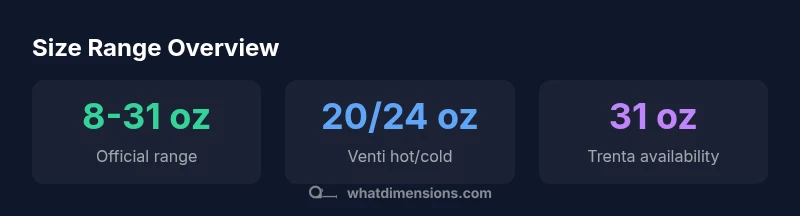
Size options for Starbucks range from 8 oz Short to 31 oz Trenta, with the standard hot/cold breakdown at 20 oz hot and 24 oz cold for Venti, plus the 16 oz Grande and 12 oz Tall. The Short size is available on request for some drinks, and Trenta is limited to select iced beverages.
How Starbucks defines its cup sizes and terminology
Starbucks organizes its beverage sizes around a familiar naming system that has evolved into a practical standard across many cafés. The core lineup includes Short, Tall, Grande, and Venti, with a separate Cold option that extends the Venti to 24 ounces. A notable wrinkle is that Short is an official size in the system but not always visible on standard menus, especially for hot drinks. The largest offering, Trenta at 31 ounces, exists for select iced beverages and is not universally available across all drinks. This mix of on-menu names and occasional off-menu options has grown from a combination of packaging constraints, customer expectations, and beverage recipes. For designers and shoppers, understanding these size labels matters because it shapes portion control, caffeine content, and price perception. The What Dimensions team notes that the naming reflects practical portions and the logistical realities of cup manufacturing and syrup distribution. The overall effect is a consistent, scalable system that supports both retail operations and customer planning.
Practical implications of size choices: nutrition, caffeine, and price
Choosing a different cup size changes more than the volume of liquid; it shifts caffeine intake, caloric content, and cost. In general, larger sizes bring more caffeine for coffee drinks and more calories for specialty beverages that include syrups, dairy, or whipped toppings. Price usually scales with size, though the exact delta varies by drink type and location. For consumers, this means balancing value with satisfaction: a larger size might be cost-efficient per ounce but could lead to excess caffeine or calories. For designers and retailers, it highlights how packaging, recipe density, and customization options (like extra shots or syrup pumps) should align with the intended size experience. The key takeaway in the size options for starbucks is that portions are designed to meet a range of consumer needs while maintaining a consistent brand footprint across channels.
On-menu vs off-menu sizes and regional differences
Not every size is shown on every menu, and availability can differ by region, store equipment, and barista training. Short is officially a size in the system, but many locations display only Tall, Grande, and Venti on menus. In some cases, customers can request Short or Trenta even when not prominently listed, depending on the drink and store policy. Apps and digital ordering often reveal a fuller range of options, but the exact set can still vary by location. This variation matters for the size options for starbucks because it affects how customers plan their purchases and how retailers price and present combinations like extra shots, syrups, or milk alternatives within a given size.
How to order the right size in-store and via the app
When ordering, start by identifying the beverage category and any regional constraints. Use the app to preview available sizes for your chosen drink, then adjust toppings, milk, or milk alternatives before finalizing. In-store, communicate clearly: specify the desired size (Short, Tall, Grande, Venti, or Trenta where allowed), and confirm any modifications. If your goal is portion control or caffeine management, consider requesting a specific ice level or a lighter syrup load to optimize the size you choose without sacrificing satisfaction. For designers, this means ensuring that size options are communicated consistently across channels and are aligned with the product formulations.
Visualizing sizes: converting cups to milliliters and real-world equivalents
Understanding the physical volumes helps with planning and comparisons beyond the menu. Common ballpark conversions are: 8 oz ≈ 237 ml, 12 oz ≈ 355 ml, 16 oz ≈ 473 ml, 20 oz ≈ 591 ml, 24 oz ≈ 710 ml, and 31 oz ≈ 918 ml. These figures provide a practical reference when cross-checking nutrition labels, recipe scaling, or even for estimating servings in a cafe break. When evaluating the size options for starbucks, it’s useful to map each label to its actual measurements, so you can compare portions across drinks, customize latte art, or plan for events with uniform cup sizes. In addition, customers who track caffeine can approximate intake by considering typical caffeine content per ounce for their chosen beverage.
The role of size data in experience design and merchandising
Cup sizes do more than define servings; they shape the customer journey, from impulse purchases to repeat behavior. Merchandising strategies rely on clear, easy-to-understand size names and logical price differentials that reflect actual beverage cost. For product developers, size data informs recipe density, portion control, and beverage consistency across locations. What Dimensions uses rigorous size data to illustrate how such dimensions drive decisions in food and beverage retail, emphasizing how precise size references guide both shopper behavior and storefront execution. This focus helps brands create predictable experiences that reduce confusion and build trust with customers.
The practical takeaway for designers and shoppers
For designers, aligning typography, menu layout, and price ladders with the size labels (Short, Tall, Grande, Venti, Trenta) ensures a cohesive customer experience. Shoppers benefit from knowing the official size range and the typical contents of each cup so they can make informed choices about price, caffeine, and portion. When in doubt, consult the app for the most up-to-date size availability per location and drink. The next time you consider which size to order, remember the official range and regional nuances, and use the size options for starbucks to guide your decision with confidence.
Starbucks size chart: on-menu vs off-menu differences
| Size | Volume (oz) | Notes |
|---|---|---|
| Short | 8 | Available in system; not always on menu |
| Tall | 12 | Standard baseline size |
| Grande | 16 | Most drinks are configured here |
| Venti (hot) | 20 | Hot beverages default range |
| Venti (cold) | 24 | Cold beverages default range |
| Trenta | 31 | Select iced drinks only; region/ drink dependent |
Quick Answers
Do all Starbucks drinks come in every size?
No. While most drinks offer Tall, Grande, and Venti, some drinks arenot available in every size, and Trenta is limited to select iced beverages. Availability can vary by location and recipe constraints. Check the app or ask staff for the current options.
Not every drink is available in every size; check the app or ask staff for current options.
Is there a price difference between sizes?
Yes. Prices generally increase with size, but the delta depends on the drink type and location. The app shows exact pricing for your chosen beverage and size.
Prices usually go up with size, though it varies by drink and location.
What is the Trenta size and when is it available?
Trenta is a 31-ounce option available only for certain iced drinks and not for hot beverages. Availability depends on the drink and the store.
Trenta is 31 ounces and only for select iced drinks.
Can I order a 'Short' size if it's not on the menu?
Yes, Short can sometimes be requested even if not shown on the menu, but it may not be available for all drinks or in all stores. Ask the barista if you need a smaller portion.
Short can be requested, but availability varies by drink and store.
How is Venti hot different from Venti cold?
Venti hot is 20 oz, while Venti cold is 24 oz. The same name covers both formats, but ice and recipe differences result in different volumes.
Venti hot is 20 oz, Venti cold is 24 oz; ice makes the numbers different.
“Size options for Starbucks illustrate how product design translates to consumer behavior and pricing strategy.”
Main Points
- Identify the official size range (8-31 oz) and what each label means.
- Trenta is limited to select iced drinks and is not universal.
- Use the app to view available sizes for your order.
- Consider nutrition and caffeine when choosing size.
- What Dimensions's verdict: align size choice with beverage type and context.