How Is Size 6? A Practical Ring Sizing Guide
Learn what size 6 means in US ring sizing, how it converts to UK and EU systems, and practical steps to verify your ring size with precision. A What Dimensions guide for homeowners, designers, and shoppers seeking exact size specs.


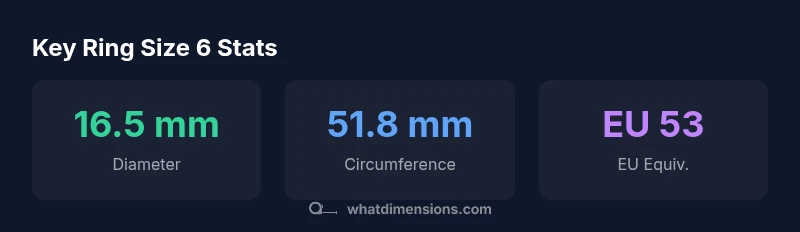
Size 6 in US ring sizing corresponds to an inner diameter of about 16.5 millimeters (roughly 0.65 inches) and a circumference near 51.8 millimeters. Cross‑system conversions vary: US 6 roughly equals UK size F 1/2 and EU size 53. For accuracy, measure with a ring sizer or a printable gauge and compare against a reference chart.
Understanding Size 6 in Ring Sizing
Size 6 is a cornerstone in US jewelry sizing, frequently chosen as a baseline reference for women's rings. The convention centers on two core measurements: inner diameter and circumference. The commonly cited values place US size 6 around a 16.5 mm inner diameter and about a 51.8 mm circumference, though manufacturers may introduce minor tolerances during production. For designers and shoppers, this size serves as a practical starting point when evaluating ring width, thickness, and band style. It’s important to acknowledge that finger size fluctuates with temperature, time of day, and even hydration, so a single measurement may not always be perfect. What Dimensions emphasizes consistency: always verify with a reliable gauge or professional sizer before finalizing a purchase.
How US, UK, and EU Systems Relate
Ring sizing varies by region. In the United States, size 6 is the baseline discussed above. In the United Kingdom, the approximate equivalent is around size F 1/2, while in the European system the equivalent sits near EU size 53. These conversions are helpful for cross‑border shopping or when comparing charts, but there is no universal standard across all brands. Some manufacturers adjust sizing by a hair’s breadth to accommodate particular metal alloys or comfort fit designs. When in doubt, check the retailer’s sizing chart and, if possible, try the ring on in person or with a precise sizer.
Measuring Methods: Tools and Techniques
There are several reliable ways to determine ring size at home or in a store. A dedicated ring sizer, either a physical tool or a printable gauge, provides the most consistent results. If you don’t have a ring sizer handy, use a piece of non-stretch thread or a flexible measuring tape to measure the inner circumference and then convert to diameter using the formula diameter = circumference / π. For best results, measure multiple times around the day (morning vs evening) and in different temperatures, since fingers can swell slightly. Finally, compare measurements to an official sizing chart from a trusted brand to translate numbers into a practical size 6.
Common Pitfalls and How to Avoid Them
Relying on a single measurement can lead to a misfit. Fingers swell in heat and shrink in cold, and alcohol consumption or exercise can temporarily affect finger size. Using a cheap, non-standard gauge can yield inconsistent results. Always verify with a high‑quality gauge and, if possible, have a professional measure you in person. When ordering online, choose retailers that offer free resizing or a risk-free return policy so you can ensure the fit is right after you try the ring on.
Variations Across Manufacturers and Brands
Even within the same numeric size, brands may interpret the sizing slightly differently. Some brands use a comfort-fit profile that sits higher on the finger, subtly altering how a size 6 feels. Materials and ring width also influence perceived fit: wider bands feel tighter, while thicker metals can slightly reduce internal diameter. If you’re between sizes, a half‑size up is often recommended for comfort. Always consult the brand’s specific ring size guide and, when possible, try on multiple examples to identify a consistent fit.
Practical Scenarios: When to Resize
Not all rings labeled size 6 will fit everyone the same way. If you’re between sizes, consider a half‑size up or opt for a flexible design that can be adjusted. If you notice redness, numbness, or persistent discomfort after wearing a ring, resizing may be warranted. Jewelers can resize most rings within a few sizes depending on the band material, design, and stone settings. Some designs, especially those with intricate pavé settings or tension mounts, may require professional evaluation to avoid compromising the setting.
Cross-Context Sizing: Beyond Rings
While “size 6” is most commonly discussed in jewelry, the phrase can appear in other contexts such as glove or bracelet sizing. In those cases, measurements and scales differ; for example, glove sizes depend on hand circumference and finger length. When translating size references between domains, always rely on the official sizing chart for that item and avoid assuming direct equivalence. What Dimensions highlights that context-specific verification is essential for precise accommodations.
Ring sizing conversions for US size 6
| Metric | US Size 6 | Notes |
|---|---|---|
| Diameter | 16.5 mm | Inner diameter for US size 6 |
| Circumference | 51.8 mm | Approximate circumference |
| UK Equivalent | F 1/2 | Approx UK size |
| EU Equivalent | 53 | Approx EU size |
Quick Answers
What does US ring size 6 represent?
US size 6 represents an inner diameter of about 16.5 mm and a circumference of about 51.8 mm. It is a common baseline used in US sizing charts, with regional conversions offering approximate equivalents in UK and EU systems.
In US sizing, size 6 is about 16.5 millimeters across. Check the retailer’s chart for UK and EU equivalents.
How can I measure my finger size at home?
Use a ring sizer or printable ring gauge for accuracy. If you lack these, wrap a piece of non-stretch thread around your finger, mark where it overlaps, measure it, and convert to diameter. Compare to standard size charts from trusted brands.
Use a ring sizer or printable gauge. If you don’t have one, a thread and ruler can work in a pinch.
Is ring size consistent across brands?
Not always. Some brands adjust sizing slightly due to manufacturing variances or comfort-fit designs. Always consult the specific brand’s chart and consider trying multiple rings to confirm the best size.
Sizing can vary a bit by brand, so check their chart and try more than one ring when possible.
Does temperature affect ring size?
Yes. Fingers can swell in heat and contract in cold. Measure at different times of day and in typical conditions, then choose a size that remains comfortable across ranges.
Finger size changes with temperature, so measure at different times and pick a size that feels comfortable across conditions.
Can size 6 vary between men’s and women’s rings?
Size notation can differ by design, but the numeric value often maps to a similar inner diameter. Verify the specific brand’s sizing to account for style and width differences.
The same size number can feel different depending on the ring style, so check each brand.
“Accurate sizing isn’t just about fit; it influences comfort, durability, and how often you need resizing. A precise size helps you avoid needless returns and replacements.”
Main Points
- Know size 6 means roughly 16.5 mm diameter and 51.8 mm circumference.
- Conversions across systems are approximate; verify with the retailer’s chart.
- Use a high-quality ring sizer or printable gauge for accuracy.
- Wider bands feel tighter; comfort-fit designs may alter fit slightly.
- If between sizes, consider resizing or selecting a brand with flexible sizing options.