Chain Dimensions Chart: A Practical Guide to Jewelry Sizing
Explore how a chain dimensions chart translates necklace and bracelet lengths into accurate sizing. Learn measurement methods, practical tips, and brand-aware guidance for precise, confident shopping.


A chain dimensions chart translates necklace and bracelet lengths into typical fit expectations, helping shoppers pick the right length, verify existing pieces, and estimate drape. This What Dimensions analysis explains common length ranges, measurement steps, and how to read charts accurately for reliable jewelry sizing.
What a chain dimensions chart is and how it translates measurements
A chain dimensions chart translates a numeric length into expected fit for necklaces and bracelets. It maps measurements to typical necklines and wrist sizes, enabling shoppers to gauge how a chain will look around the neck or wrist. For jewelry professionals, a chart standardizes product specs across brands and simplifies comparisons. What Dimensions notes that standardized charts reduce guesswork and improve shopping confidence. The chart uses inches and centimeters, with common ranges such as chokers around 14–16 inches and princess-length necklaces near 18 inches, plus longer options for formal wear. Using a chart alongside personal measurements improves accuracy and reduces post-purchase returns.
How to read the chart: units, ranges, and fit cues
Most chain charts present both inches and centimeters side by side, so you can switch between systems easily. Start with your base measurement—neck or wrist—and look for a range that brackets that measurement. Remember that the same length may drape differently on different body shapes due to neck thickness, posture, and clothing. When evaluating a chart, pay attention to model height and shoulder width in sample images; this helps translate a shown length into your own fit. These cues align with What Dimensions’ methods for practical sizing.
Necklace lengths by occasion and style
Choker (14–16 in, 35–40 cm) sits tightly at the collarbone. Princess length (18 in, 45 cm) falls just below the chin for many wearers. Matinee (20–24 in, 50–60 cm) drapes to mid-chest. Opera (28–34 in, 70–85 cm) reaches lower chest. When selecting, consider pendant length and chain thickness; thicker chains may require shorter lengths to maintain a balanced look. For layered looks, start with a shorter base chain and add longer pieces in 2–4 inch increments.
Bracelet lengths and layering considerations
Standard bracelet size is around 7 inches for many adults; adjust for wrist circumference. For larger wrists, add 0.5–1 inch; for slender wrists, subtract about 0.5 inch. When layering bracelets, avoid crowding by varying widths and lengths; a 2–3 inch spread between pieces creates visual balance. Chart interpretations help you plan multiple bracelet sets quickly and accurately.
How to measure accurately at home
Tools: a soft measuring tape or a piece of string and a ruler. Steps: measure bare neck at the base where a chain would sit, or measure around the wrist for bracelets. If possible, wear a typical top to see how fabric and neckline affect drape. Compare measurements to chart ranges; always cross-check with your own fit preference. If you cannot measure precisely, start with a mid-length option like 18 inches and adjust after trying on.
Common mistakes when using chain charts
Relying on a single chart without considering pendant size; ignoring posture; not accounting for clasp placement can change drape. Also, charts from different brands may differ by a half-inch; compare side-by-side. Our advice at What Dimensions is to combine chart data with a physical try-on whenever possible to ensure the true fit.
Chart variations across brands and what to trust
Some brands publish numeric inches only, others show cm; some specify model height. Cross-check at least two sources; prefer charts that align with measured neck circumference and wrist size. When in doubt, ask for adjustable or extension options. What Dimensions emphasizes evaluating charts for consistency across units and for fit guidance rather than raw numbers alone.
Practical tips for designers, retailers, and shoppers
Designers should publish multiple length options and offer adjustable chains; retailers can feature a simple, in-page chain dimensions chart with images; shoppers should measure and compare, then test with a known piece. Regularly revisit chart accuracy as product lines change, and consider adding a quick-sizing widget to product pages.
Chain length sizing reference
| Item | Measurement | Notes |
|---|---|---|
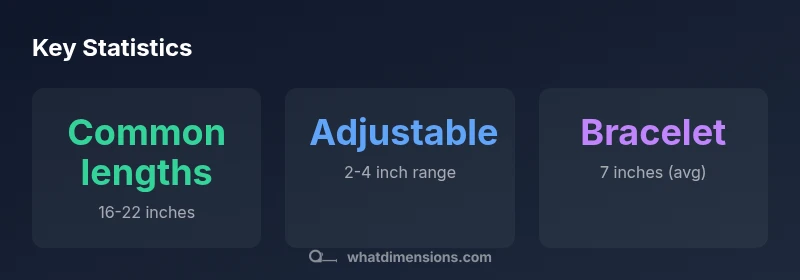
| Common necklace lengths | 16-22 inches | Standard ranges for most wearers |
| Bracelet sizes | 7 inches (average) | Adjust for wrist circumference |
| Measuring method | Use tape or string | Cross-check with chart ranges |
Quick Answers
What is a chain dimensions chart?
A chain dimensions chart is a reference tool that translates necklace and bracelet lengths into fit guidance. It helps shoppers pick lengths that suit their anatomy and a pendant’s position. It also standardizes product specs across brands.
A chain dimensions chart helps you pick the right length by translating measurements into fit guidance.
What measurements do I need to use a chain dimensions chart?
You’ll typically need neck or wrist measurements. For necklaces, measure where the chain should sit; for bracelets, measure around the wrist. Compare these measurements to the chart’s length ranges in inches and centimeters.
Measure your neck or wrist, then compare to the chart in inches and cm.
What length is best for a pendant?
Pendant position depends on personal style and neck anatomy. Shorter lengths place pendants higher on the chest, while longer lengths position pendants lower. Use chart guidance to align pendant position with your desired look.
Shorter lengths push the pendant higher; longer lengths drop it lower.
Do different brands use different length charts?
Yes. Some brands use inches only, others centimeters; chart ranges may vary slightly. Always cross-check against your actual measurements and consider adjustable options.
Brand charts vary; compare measurements and try adjustable options when unsure.
Can a chain dimensions chart be used for bracelets too?
Chain dimension charts typically cover both necklaces and bracelets. For bracelets, ensure you use wrist circumference and consider clasp and closure when selecting lengths.
Yes, many charts cover bracelets—measure your wrist for accuracy.
What should I do if I’m between lengths?
Choose the shorter length for pendants with heavy stones or thick chains, or select an adjustable chain to fine-tune fit.
If between lengths, start with the shorter option or pick adjustable.
“Accurate sizing comes from mapping measurements to standardized ranges; a reliable chain dimensions chart reduces confusion and returns.”
Main Points
- Use multiple length options for balance and versatility
- Measure accurately with a soft tape or string
- Cross-check with both inches and centimeters
- Consider pendant size and layering when choosing lengths