Flat Queen Sheet Dimensions: Size Guide
Learn the exact flat queen sheet dimensions, standard baselines, measurement tips, and how to read labels. This What Dimensions guide covers size ranges, brand variations, and practical buying tips for a perfect queen bed make-over.


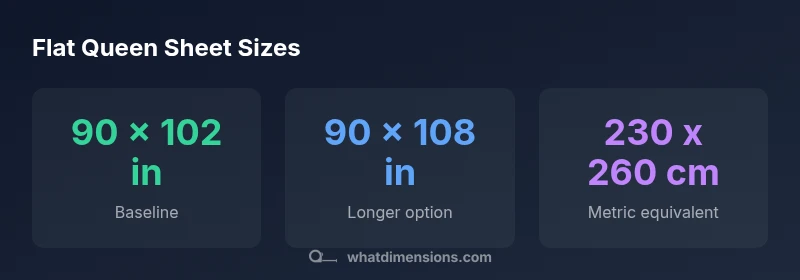
Flat queen sheet dimensions describe the width by length of a flat sheet designed for a standard queen mattress. Most brands use around 90 inches by 102 inches, with some offering up to 108 inches in length for deeper beds. Because brands vary, always check the label for exact measurements and account for fabric finish and hems.
Understanding flat queen sheet dimensions
According to What Dimensions, understanding flat queen sheet dimensions starts with recognizing the distinction between a flat sheet and a fitted sheet. A flat sheet is a single rectangle designed to cover the mattress surface and drape over the sides; it is meant to be tucked under the mattress or left to hang for a more relaxed look. The measurement notation is usually width by length and is commonly given in inches in the United States. For a standard queen bed, the baseline width is about 90 inches and the baseline length around 102 inches. Different brands may print the numbers in the opposite order (length by width), or list the sheet size using garment-like fabric widths, so always check the labeling. The size you choose should account for your mattress depth, pillow-top additions, and your preferred tuck and drape. A slightly larger sheet can provide extra fabric to work with, while a smaller one can lead to tugging and an uneven finish. In short, knowing the exact flat queen sheet dimensions helps you avoid mismatches, reduces frustration during laundry, and ensures a neat, hotel-like finish on your bed. When you buy, look for clear measurements on the package and, if possible, measure your own bed to confirm the fit.
Typical measurements and variations by fabric
Most households rely on a baseline queen flat sheet of 90 inches in width by 102 inches in length. This baseline remains the standard for many brands, though some manufacturers extend the length to 108 inches to accommodate thicker mattresses or deeper toppers. In practice, you will encounter labels that read 90×102 or 90×108, with the width seldom changing. For customers outside the U.S., metric conversions provide helpful context: roughly 230 cm wide by 260 cm long. When shopping, expect variation across brands and fabric finishes. Cotton sheets may feel stiffer at first but become cozy after washing, while blends may drape differently. The Content and weave (percale, sateen, or brushed) affect how the sheet settles on the mattress and how much slack remains at the corners. Reading these nuances helps explain why a baseline 90×102 may still not fit perfectly if the fabric is oversized in its final state. What Dimensions analysis shows is that the baseline is persistent across markets, but brands add length at times for better coverage on taller beds.
How to measure correctly for a queen bed
Start by measuring the flat area of the mattress, not the box spring. Measure the width from the outer edge of one side to the outer edge of the opposite side, then measure the length from the head to the foot of the mattress. Include any topper if present, as this increases the surface you need the sheet to cover. If you plan to tuck the sheet under the mattress, pull the fabric taut to simulate a typical finished look and note how much length and width is required for a clean tuck. Compare your measurements with the label on the sheet packaging. If your bed has a pillow-top or a raised edge, consider going up one size or choosing a sheet that explicitly mentions extra length. Finally, wash-test a sample if you can; some fabrics shrink slightly, changing the final fit after laundering.
How fabric type affects sheet dimensions and fit
Fabric type matters for final fit, since cotton may shrink slightly after washing, while blends might retain their dimensions more consistently. A pre-washed or pre-shrunk sheet generally provides a more predictable fit across multiple launderings. Heavier fabrics, like brushed cotton, may feel bulkier and require more fabric to achieve the same tuck. Conversely, lightweight cotton or microfiber blends can drape more loosely, affecting how evenly the sheet sits on the corners. When selecting a flat queen sheet, consider not just the printed dimensions but how the fabric will behave after first wash. If you expect frequent washing, you might prefer a slightly larger size or a brand that clearly states shrinkage characteristics. According to What Dimensions, understanding the fabric behavior helps explain why two sheets labeled the same size can fit differently on identical mattresses.
Reading labels and comparing brands
Label literacy is essential. Look for width by length where possible and note whether the packaging lists inches or centimeters. Some brands print dimensions in a nonstandard order, so cross-check the product description. Also pay attention to the finish (plain weave vs. sateen) and whether the sheet is “oversized” for extra drape. If you own a taller mattress or a prominent pillow-top, you may benefit from choosing a longer length option, such as 90×108, rather than the baseline 90×102. Reading multiple brands helps you understand typical tolerances and how much variation exists between manufacturers. In practice, the best approach is to verify exact measurements on the packaging and to consider the mattress height and topper when evaluating fit.
Practical buying tips and common mistakes
Before buying, measure your mattress and check the sheet’s label. Don’t assume a brand’s stated size will perfectly match another; sheet dimensions can vary with fabric, weave, and finishing processes. If possible, choose a sheet that explicitly lists a clear width and length in inches and note whether the length is designed to accommodate taller mattresses. Avoid buying sheets that are visibly shorter than your mattress; even a few inches of overhang can affect the tuck and finish. When washed, assess the fit again to confirm minimal shrinkage or alteration. Finally, keep a note of the dimension standards you prefer—90×102 inches is a common baseline for queen flat sheets, but you may see 90×108 inches as an alternative.
Common flat queen sheet dimensions by size
| Sheet Size | Dimensions (inches) | Notes |
|---|---|---|
| Standard Queen Flat Sheet | 90 x 102 | Common baseline; verify exact label |
| Long Queen Flat Sheet | 90 x 108 | Better for taller mattresses; check brand specifics |
Quick Answers
What are flat queen sheet dimensions?
Flat queen sheet dimensions refer to the width and length of a flat sheet designed for a queen bed. The most common baseline is 90 inches wide by 102 inches long, though some brands offer 90 x 108 inches for taller mattresses. Always check the label for exact measurements.
Flat queen sheet dimensions usually run about 90 by 102 inches, with some brands offering longer options. Check the label to be sure.
How should I measure for a flat queen sheet?
Measure the mattress width and length, including any toppers, then compare to the sheet’s labeled dimensions. If you tuck under the sides, test the tuck with the sheet pulled taut. Verify after washing, as fabric can change.
Measure width and length, account for toppers, and test the tuck with the sheet taut.
Do all brands use the same queen flat sheet size?
No. While 90 x 102 inches is the common baseline, some brands offer longer lengths like 90 x 108 inches. Variations exist due to fabric, weave, and finish, so always check the packaging.
There’s variation; check the packaging for exact size.
What is the difference between flat and fitted sheets for queen beds?
Flat sheets are rectangles intended to drape over the mattress with tuck-in fabric. Fitted sheets have elasticized corners that wrap snugly around the mattress. The two sizes are not interchangeable, so ensure you’re buying the correct type for your bed.
Flat sheets drape and tuck; fitted sheets wrap around the corners.
Why might a sheet not fit properly after washing?
Some fabrics shrink after washing, especially non-pre-shrunk cotton. Pre-shrunk blends may shrink less. If you’re between sizes, consider choosing the larger option or testing a sample wash.
Fabric shrinkage can affect fit after washing; pre-shrunk fabrics fit more predictably.
“Accurate flat sheet dimensions ensure a clean fit and comfortable drape on queen beds.”
Main Points
- Measure your mattress before buying
- Use 90 x 102 as baseline, with 90 x 108 as an option
- Always verify exact measurements on packaging
- Consider fabric type and potential shrinkage
- Brand variation exists; read labels carefully