Dimensions of Twin vs Full: A Comprehensive Comparison
Explore the dimensions of twin vs full mattresses, space implications, bedding compatibility, and practical planning tips for bedrooms, dorms, and guest rooms. Learn how size choices impact layout, comfort, and pricing with insights from What Dimensions.


Understanding the dimensions of twin vs full mattresses is essential for room planning and bedding decisions. Twin saves floor space and is ideal for small rooms or dorms, while full offers more sleeping width for solo sleepers or guests. This quick comparison highlights how size affects layout, costs, and usability. We also cover length options and bed frame compatibility. We reference What Dimensions analysis, 2026, to ground these factors in real-world measurements.
Why the dimensions of twin vs full matter for space planning
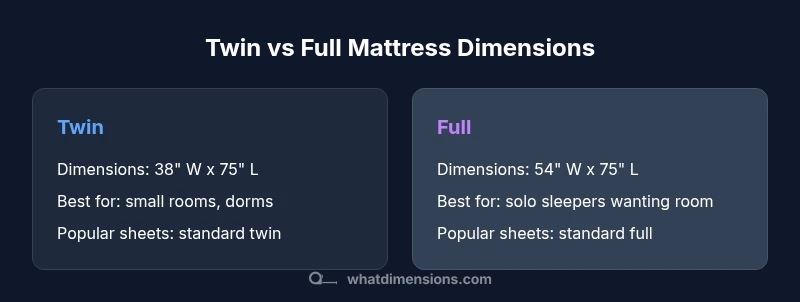
When you start the decision process with the dimensions of twin vs full, you’re not just choosing a sleeping surface—you’re shaping the entire layout of a room. In tight apartments, student dorms, or multi-use guest spaces, every inch of footprint matters. The twin bed (38 inches wide by 75 inches long) fits more easily into narrow rooms, while the full size (54 inches wide by 75 inches long) can dramatically improve side-to-side comfort for a single sleeper. The What Dimensions team emphasizes that the trade-off between footprint and comfort should be evaluated alongside doorway clearances, wardrobe space, and the flow of foot traffic. If you’re redesigning a studio or a small bedroom, start by sketching the bed area to test clearance for door swings, nightstands, and seating. The dimensions of twin vs full often determine whether you can squeeze in a dresser or a desk without compromising circulation. This planning step helps ensure you don’t buy a mattress that looks right on paper but feels cramped in practice.
Understanding standard dimensions: twin vs full in practice
Key measurements shape everything from bedding to frame compatibility. The twin mattress is commonly 38 inches wide and 75 inches long, while the full mattress is 54 inches wide and 75 inches long. These dimensions create different sleeping surfaces and influence how you arrange adjacent furniture. What Dimensions analysis, 2026, notes that many households consider a twin in shared rooms with stacked storage or a loft, but the full size becomes increasingly attractive when a solo sleeper wants more shoulder room or when a guest occasionally shares the bed. Remember that variation exists by brand and model; always verify exact measurements before purchasing sheets, protectors, and frames. This block explains how these standard numbers translate into real rooms and why one size may unlock more flexible furniture layouts than the other.
Sleep surface and occupancy: comfort implications of size
The core question for the dimensions of twin vs full is how much width you have for movement during sleep. A twin offers 38 inches of blanket width, which suffices for a single sleeper but can feel constrained for restless movers. A full increases that width to 54 inches, giving a noticeable cushion for side sleeping and shifting positions. Solo sleepers who prioritize space will often prefer full, especially in small bedrooms where a wider bed can free up space for a chair or small desk. For students, a full bed provides a more comfortable study-and-sleep zone without demanding a larger room. In both cases, the depth of your mattress height and the frame’s headboard can affect perceived space, so factor those elements into your layout.
Bedding and sheets compatibility: sizing matters
Matching the right sheets to the dimensions of twin vs full is essential to avoid a sagging or ill-fitting finish. Twin sheet sets are widely available and typically cost less than full sets, reflecting the smaller footprint. Full sheets are also common but may require slightly deeper pockets or standard fit around a 9- to 12-inch mattress height, depending on the brand. The What Dimensions guidance encourages buyers to confirm corner fit with fitted sheets and to verify whether a shared bed in a dorm or guest room benefits more from a snug twin sheet setup versus a more generous full set. If you’re buying indirectly through a retailer, bring a tape measure and confirm the pocket depth and corner fit to ensure a clean, wrinkle-free look.
Room-by-room planning: where twin shines and where full wins
In dorm rooms, a twin bed can maximize closet space and create a study nook in a compact footprint. In a small studio or one-bedroom apartment, a full-size bed usually offers a more comfortable night’s sleep while still allowing space for a sofa or a compact dining area. When the room doubles as a guest space, a full bed often provides universal appeal—guests tend to appreciate the extra width for a restful night. Designers consider traffic flow, storage access, and lighting to determine whether the tighter twin footprint or the broader full sleeping area best serves the space’s purpose. The dimensions of twin vs full are a practical lens to evaluate these layout decisions.
Cost considerations and value by size
Price guidance for twin vs full can vary with brand, materials, and regional availability. Generally, twins are less expensive upfront due to smaller materials and manufacturing costs, while fulls represent a moderate step up in price due to the wider sleeping surface. Over time, bedding costs (sheets, protectors, and toppers) can also reflect size. From a value perspective, the full size often yields better long-term comfort for a solo sleeper and can still fit into mid-sized rooms, whereas the twin excels when you must maximize living floor area. When budgeting, weigh the immediate savings of a twin against the potential upgrade value of a full, especially in spaces used daily for sleeping and work.
Frames, headboards, and furniture integration: what to know
Bed frames must match mattress width, so twin frames and full frames require different rail spans. If you’re upgrading a room’s furniture layout, verify headboard width, footboard clearance, and slat spacing compatibility with the bed size. In general, a twin frame is more common for youth rooms and guest nooks, while a full frame is widely supported by a broader range of platform and panel designs. If you have an existing bed with a non-standard frame, you may need adapters or a new frame to accommodate the size switch. The dimensions of twin vs full directly affect which frames and furniture configurations will integrate cleanly in any given space.
Myths vs reality: common setup myths debunked
One common myth about the dimensions of twin vs full is that the only difference is width. In reality, the combination of width, length consistency, frame compatibility, and sheet fit creates a nuanced decision. For example, some dorms standardize on twin XL for longer occupants, whereas many adults prefer full for extra shoulder space. The reality is that your room’s dimensions and your sleeping habits should drive the choice, not assumptions about cost alone. By grounding decisions in exact measurements and a clear furniture plan, you can achieve a balanced setup that feels right in practice, not just on paper.
Decision checklist: how to choose between twin and full
To reach a confident decision, create a simple checklist. 1) Measure the room to confirm door swings and furniture clearance. 2) Consider how much space you need for other daily activities (study desk, seating). 3) Evaluate your sleep habits and whether extra width matters for you. 4) Compare sheet and accessory availability for both sizes. 5) Factor in resale value or potential move downsizing in future years. By following this checklist, you’ll translate the abstract numbers of the dimensions of twin vs full into a practical, real-world choice that supports your lifestyle.
Final guidance: what What Dimensions recommends
In the end, the decision hinges on space and comfort: twin for compact rooms and fast-moving layouts, full for enhanced sleeping width and adaptable room design. The What Dimensions team advises homeowners, students, designers, and shoppers to quantify room space, test furniture layouts, and verify bedding compatibility before purchase. When you align the dimensions with daily use and future plans, you’ll choose the size that truly fits your space and routines.
Comparison
| Feature | Twin | Full |
|---|---|---|
| Dimensions (W x L) | 38 in x 75 in | 54 in x 75 in |
| Sleeping width | 38 inches | 54 inches |
| Bedding availability | Wide selection of twin sheets and toppers | Extensively stocked full sheets and toppers |
| Best for | Small rooms, dorms, or bunk setups | Solo sleepers who want more width or guest rooms |
| Frame compatibility notes | Twin-specific frames; check clearance with nightstands | Full-compatible frames with broader selection |
Strengths
- Space-efficient footprint in tight rooms
- Lower upfront cost for twin setups
- Wide bedding and accessory availability
- Flexible use in dorms or guest spaces
The Bad
- Less sleeping width for solo sleepers who value space
- Limited comfort for couples sharing in tight rooms
- Potential need for frame upgrades when upgrading size
- The double upgrade may not be ideal in very small bedrooms
Twin suits small spaces; full suits comfort in modestly larger rooms
Choose twin to maximize floor area in compact rooms or dorms. Choose full for greater sleeping width and flexibility in rooms where space permits.
Quick Answers
What are the standard dimensions for twin and full mattresses?
Twin mattresses are typically 38 inches wide by 75 inches long, while full mattresses are 54 inches wide by 75 inches long. These are the most common sizes, but always verify exact measurements from the manufacturer before purchasing sheets or frames.
Twin is 38 by 75, full is 54 by 75; always confirm measurements with the retailer before buying sheets or frames.
Is a twin mattress suitable for two people?
A twin mattress is generally not suitable for two adults due to limited width. In pinch, it might work for short-term or children, but for two adults, a full is typically recommended for comfort and space.
A twin is usually too narrow for two adults; consider a full for shared use or longer-term comfort.
What bedding sizes fit each bed?
Twin beds use standard twin sheets, while full beds use standard full sheets. Depending on height, you may need deep-pocket versions. Always check pocket depth and corner fit to avoid wrinkles.
Twin uses twin sheets; full uses full sheets. Check pocket depth for the best fit.
Does a twin XL differ from a standard twin?
Yes. A twin XL is the same width as a standard twin (38 inches) but longer at 80 inches, making it a better option for taller sleepers while still fitting in many twin frames and rooms.
Twin XL is longer (80 inches) than standard twin but same width, good for taller sleepers.
Which size is better for a small apartment?
In very small apartments, a twin can free floor space for living areas, while a full option remains viable if you value extra width and occasional guest comfort. The decision depends on how you use the room daily.
In tiny spaces, twin saves space; full is better if you value extra width and guest comfort.
How easy is it to upgrade from twin to full in a shared room?
Upgrading from twin to full in a shared room typically requires assessing frame compatibility and room layout changes. It can be straightforward if you have a flexible bed frame and sufficient floor space for new bedding and furniture.
Upgrading depends on frame compatibility and room space; plan layouts carefully.
Main Points
- Measure your room before choosing size
- Consider both sleep comfort and floor plan impact
- Twin saves space; full adds width
- Check bedding and frame compatibility early