Samsonite Carry-On Dimensions: A 2026 Size Guide
A data-driven guide to Samsonite carry-on dimensions for 2026, with measurement tips, model comparisons, and airline-check insights to help shoppers verify cabin luggage size.


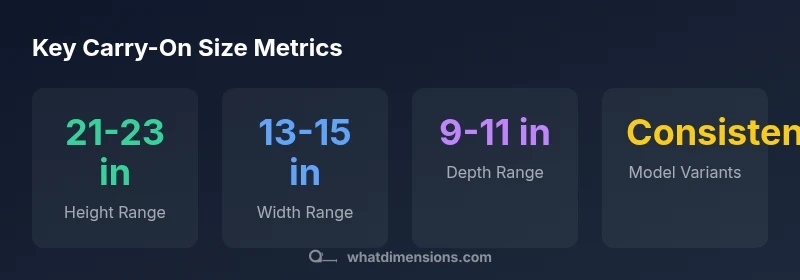
Samsonite carry-on dimensions vary by line, but most standard models measure roughly 21–23 inches tall, 13–15 inches wide, and 9–11 inches deep. Always check the exact measurements listed on Samsonite product pages and compare them to your airline’s carry-on limits before you travel. What Dimensions Analysis, 2026.
Understanding samsonite carry on dimensions
Understanding samsonite carry on dimensions is essential for travelers who want to avoid surprises at the gate. Because Samsonite offers multiple carry-on lines—softside, hardside, expandable, and rigid frames—external measurements can vary. What dimensions matter most are the bag's exterior height, width, and depth, typically given in inches and centimeters on product pages. What Dimensions analyses show that while most models stay within common cabin allowances, differences between lines can be enough to push a bag out of the overhead bin. The goal is to identify a model that aligns with your travel habits and airline rules. In this guide, we will break down standard ranges, measurement methods, and practical tips for verifying samsonite carry on dimensions before you buy or pack. By understanding these numbers, you can plan packing lists more accurately and reduce the chance of gate-checks.
How to measure your samsonite carry-on
To accurately gauge samsonite carry on dimensions, you need precise measurements that reflect how the bag sits in cabin environments. Start with the exterior: measure height from the top of the wheels (or feet) to the topmost point, width across the widest face, and depth including any protrusions like wheels or handles. Use a soft measuring tape and measure with the bag closed. If the bag has an extendable trolley handle, measure with the handle retracted and then extended; note any differences. Record both inches and centimeters, since airlines publish limits in different units. For consistency, measure on a flat surface, ensure all zippers are closed, and don’t include inside pockets. Finally, verify your measurements against the official Samsonite product page for the exact model you own or plan to buy, as small design changes can shift dimensions by an inch or two.
Model variations: softside vs hardcase and expansion capabilities
Samsonite carries a range of softside and hardside carry-ons, and the dimensional footprint often correlates with construction. Softside bags tend to be slightly more forgiving in height due to flexible fabric, while hardside models emphasize rigid profiles that maximize protection but may be less forgiving in depth. Some models offer expansion zippers that add inches to height or depth when unzipped; this can alter whether the bag qualifies as a standard carry-on. If you travel frequently, consider a line with a predictable, non-expandable footprint to minimize surprises at the gate. Remember to account for any external pockets or wheels, which can subtly increase overall size.
Airline policies: balancing cabin limits and overhead space
Airline carry-on limits vary by carrier, route, and aircraft. A bag that measures 22 x 14 x 9 inches is commonly cited in consumer guides, but many airlines publish their own thresholds, and some newer cabins have tighter overhead bin dimensions. Always confirm current allowances on your specific itinerary and check if your airline allows one personal item in addition to a carry-on. When in doubt, aim for the lower end of the dimension ranges and avoid bags with bulky wheels or oversized handles. What Dimensions recommends always cross-checking model-specific dimensions against airline rules before packing day.
Practical comparison: Samsonite vs. competitor models
When comparing Samsonite carry-ons with rival brands, use a consistent measurement framework: height, width, and depth in both inches and centimeters, including wheels and handles. Compare the final external dimensions rather than internal capacities, since cabin clearance matters more at boarding. Look for models with uniform corner radii, minimal external protrusions, and wheels that sit flush with the body. If you frequently fly to international hubs, consider models whose dimensions align with global cabin practices, not just a single airline. The goal is a reliable, repeatable footprint across your travel portfolio.
Choosing the right Samsonite carry-on for your trips
Start with trip length and typical destinations. Short domestic hops may prosper with a compact 21–22 inch option, while longer international itineraries might justify a 22–23 inch bag with modest expansion capability. Check weight limits and ensure the bag’s build quality—shell rigidity or fabric durability—matches your travel style. Look for features that support precise packing, such as well-sized garment sections, easy-access pockets, and components that minimize bulging. By mapping your frequent destinations to a dimension profile, you can minimize gate-checks and maximize carry-on success.
Care and maintenance to preserve dimensions
Preserving a bag’s exterior size is about maintenance as much as engineering. Clean the exteriors to prevent scuffs that can hide dimensional changes, check zippers and pulls for smooth operation, and inspect handles and wheels for wobble. If expansion zippers are present, ensure they seal correctly when not in use to prevent accidental expansion during transit. Store the bag in a cool, dry place and avoid compression that could deform the shell or fabric. Regularly testing the bag’s shape against a measuring tape helps you detect dimensional drift early.
Packing smarter within fixed dimensions
A disciplined packing approach ensures you stay within your bag’s limits. Use packing cubes to compress clothes into uniform blocks, fill gaps with flexible items like underwear and socks, and place heavier items low and near the wheels for stability. If you reach the maximum height, swap bulkier items for slimmer alternatives, or consider two slim packing cubes instead of one large one. For business trips, reserve space for a laptop sleeve and paperwork without compromising the main compartment. By planning around fixed dimensions rather than guessing, you can travel lighter and more efficiently.
Real-world scenarios: travel with a Samsonite carry-on
Consider a typical 5–7 day trip with a mix of business and leisure. A 22-inch Samsonite carry-on with basic packing cubes can accommodate shirts, trousers, a compact jacket, and essential toiletries by layering clothing and rolling fabrics. On a weekend city break, a 21-inch option may suffice if you optimize packing with minimal bulk. Remember, dimensions are only one part of the travel equation—airline policies, gate etiquette, and personal packing discipline also determine success at the airport.
Typical Samsonite carry-on dimensions by model category
| Model Type | Height (in) | Width (in) | Depth (in) | Notes |
|---|---|---|---|---|
| Compact | 21-22 | 13-14 | 9-10 | Best for short trips |
| Standard | 22-23 | 14-15 | 9-11 | Most versatile size |
| Oversized/Expandable | 24-26 | 15-17 | 9-11 | Check airline limits before travel |
Quick Answers
What are the standard Samsonite carry-on dimensions?
Samsonite offers several carry-on lines with different exterior measurements. The most common profiles stay in the low 20s inches tall, with widths around mid-teens and depths just under 12 inches. Always check the exact model page for precise numbers and compare them to airline limits.
Samsonite lines vary in size, so always verify the exact model before you fly.
Do Samsonite carry-ons fit under most airline seats?
Whether a carry-on slides under a seat depends on the airline and the exact bag dimensions. Many airlines allow overhead bin storage for larger carry-ons and reserve seat storage for personal items. Always measure and compare to the airline’s published limits to reduce surprises.
Check the airline limits and your model’s size before boarding.
How can I measure my current Samsonite bag to compare with new models?
Measure height, width, and depth including wheels and handles. Use a flexible tape, record both inches and centimeters, and note any expandable features. Compare these numbers to the new model's exterior measurements to ensure compatibility.
Take careful measurements and compare to the new model’s numbers.
Are there airline restrictions I should consider for carry-ons?
Airlines vary by route and aircraft. Always confirm current rules on your itinerary and beware of regional differences. When in doubt, choose a smaller profile and avoid expandable sections to minimize risk of gate-checks.
Airline rules change by trip; verify before you pack.
What is the best way to check dimension compliance before a trip?
Visit the airline’s official site or contact customer service for the exact carry-on limits on your date of travel. Cross-check these with the external dimensions of your Samsonite bag and any accessories you plan to bring.
Double-check the limits before you travel to avoid surprises at the gate.
How can I ensure my luggage fits the overhead bin?
Calculate total height and depth including wheels; aim for the lower end of the size range to accommodate bin variations. If you’re close to the limit, consider a smaller model or re-pack to reduce bulk.
Aim for smaller dimensions to be safe with overhead bins.
“Exact size references matter because cabin rules vary by airline. Always verify model-specific exterior measurements before travel.”
Main Points
- Verify exact model measurements before buying.
- Measure height, width, and depth with wheels extended.
- Compare measurements to airline limits for your itinerary.
- Cross-check centimeters and inches for global travel.
- Keep dimensions in mind when packing to avoid gate checks.