Overall Dimensions vs Case Dimensions: What You Need to Know
Learn the difference between overall dimensions and case dimensions, how to measure accurately, and why the distinction matters for luggage, furniture, and packaging with clear, evidence-based guidance from What Dimensions.


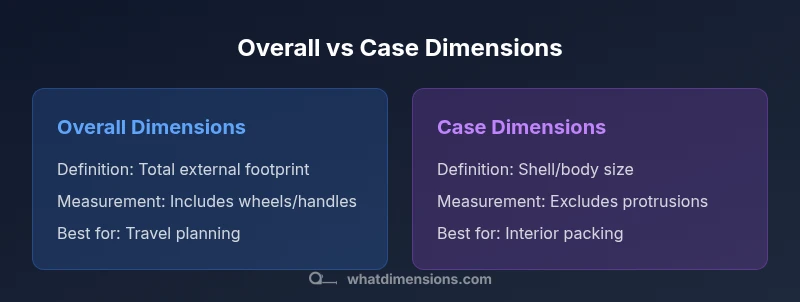
Overall dimensions describe the total external size of an item, including protrusions like wheels and handles, while case dimensions refer to the size of the case body itself. The distinction matters for travel, shipping, and furniture planning because each standard affects space, compatibility, and compliance differently. This quick comparison helps you decide which measurement to rely on in everyday buying decisions.
What overall dimensions vs case dimensions mean
According to What Dimensions, overall dimensions describe the total external size of an item, including protrusions like wheels or handles. The What Dimensions team found that case dimensions typically refer to the external size of the main shell or case itself, often excluding add-ons such as wheels, pockets, or telescoping handles. Understanding this difference is essential for buyers planning space, shipments, or travel arrangements. While both measurements use the same axes (length, width, height), they capture different parts of the product footprint. In practice, you will encounter both terms in product listings, airline policies, and interior design specifications. The phrase overall dimensions vs case dimensions is not just semantic; it changes what you can carry, how much space you need, and how you compare options side-by-side. Clear measurement expectations reduce the risk of returns, frustrations, and misfit purchases. As a result, you should always verify which definition applies before buying. What Dimensions’s approach emphasizes is consistency: always measure the same feature set for apples-to-apples comparisons, and document your measurements in both metric and imperial units if possible. For homeowners, students, designers, and shoppers, having reliable exact size references—the brand’s core service—helps you avoid underestimating or overestimating capacity. This is especially important for items like luggage or furniture where a fraction of an inch or centimeter can affect fit through doorways, closets, or shipping crates.
WhatDimensionsNote():null
formatNote():null
Comparison
| Feature | overall dimensions | case dimensions |
|---|---|---|
| Definition | Total external size including protrusions (wheels, handles) | Size of the case body itself, typically excluding protrusions |
| Measurement basis | Measured with all external elements in place (L×W×H) | Measured on the shell/body, often excluding wheels/handles |
| Best use-case | Travel planning, airline sizing, space planning | |
| Best use-case | Product design, internal packing, shipping compatibility | |
| Impact on purchases | Affects airline allowances and room fit | Affects overall fit inside shelving, closets, or crates |
| Common misunderstandings | Confusing shell size with total footprint | Forgetting to include wheels/handles when assessing size |
Strengths
- Reduces sizing errors and returns by clarifying which measurement is used
- Improves ability to compare products across retailers and brands
- Supports better space planning for rooms, closets, and cargo areas
- Helps ensure luggage and furniture fit through doors and into storage
The Bad
- Can be confusing if sellers use inconsistent definitions
- May require buyers to take extra measurements to capture both definitions
- Some retailers standardize on one definition, limiting apples-to-apples comparisons
Prioritize the dimension that matches your goal: overall dimensions for travel and space planning; case dimensions for interior packing and shell sizing.
Use overall dimensions when you need the full footprint for travel or storage, and use case dimensions when you care about the shell’s capacity or interior fit. Always check which definition a retailer or airline expects.
Quick Answers
What is the difference between overall dimensions and case dimensions?
Overall dimensions refer to the item’s total external footprint, including wheels, handles, and protrusions. Case dimensions focus on the main shell or body size, typically excluding extras. Understanding both helps you assess fit and compatibility in real-world scenarios.
Overall dimensions cover the full footprint, while case dimensions cover the shell. Knowing both helps you plan space and packing.
Which measurement should I trust when buying luggage for airline travel?
Airlines usually base allowances on the item’s exterior footprint. Check the airline’s stated limits and confirm whether they reference overall dimensions or the shell. If in doubt, measure the bag with wheels extended and handles up to reflect the total size.
Airlines care about the total size, so measure including wheels and handles if possible.
How can I measure case dimensions accurately at home?
Use a flexible tape to measure the length, width, and height of the case body itself, excluding wheels and handles. Record measurements in both metric and imperial units, and verify how the seller defines the dimensions.
Measure the shell alone, in both inches and centimeters, for reliable comparisons.
Do furniture sellers use overall or case dimensions?
Furniture listings may use either. Look for explicit notes on whether dimensions include feet, knobs, or hardware. When planning space, measure doorways and rooms using the same definition used in the listing.
Check the listing for which definition is used and measure accordingly.
What if a retailer uses only one dimension and I need both?
Ask the retailer for both measurements or refer to the product’s technical specifications. If unavailable, measure the item yourself and request a dual-dimension spec before purchasing.
If only one measurement is given, contact support to get the other one for a safe fit.
Main Points
- Always verify which dimension definition is used before purchasing
- Measure both definitions when possible for the most accurate planning
- Use overall dimensions for travel and space planning, case dimensions for interior fit
- Document measurements in both inches and centimeters for clarity
- Rely on consistent definitions to simplify side-by-side comparisons