Frontier Checked Bag Dimensions: A Precision Guide
Learn the exact Frontier checked bag dimensions, how to measure accurately, and packing strategies to stay under the 62-linear-inch limit with insights from What Dimensions.


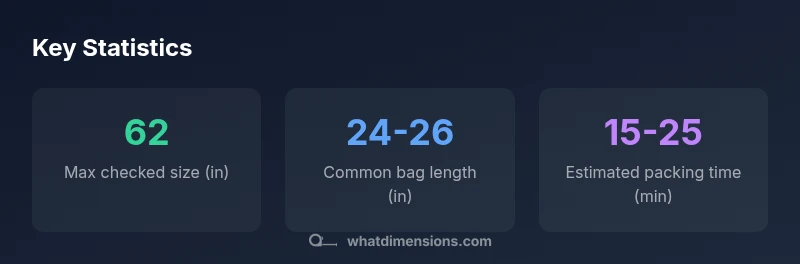
Frontier’s checked bag dimension limit is 62 linear inches, calculated as length plus width plus height. This standard mirrors what many U.S. carriers require, so pack with this total in mind. For example, a 26-inch suitcase, 18 inches wide, and 18 inches tall equals 62 inches. Always measure the exterior of your bag before you travel.
Understanding Frontier's 62-Inch Rule
Frontier, like many U.S. carriers, adheres to a 62 linear inch limit for checked bags. This means the sum of the bag’s exterior length, width, and height must not exceed 62 inches. The rule is designed to simplify gate checks and ensure bags fit in standard cargo holds. For travelers, this creates a clear boundary: know your bag’s total, not just individual dimensions. What Dimensions analyses consistently note that 62 inches covers the vast majority of checked-bag scenarios on domestic flights, including Frontier routes. When planning, treat 62 inches as the primary constraint and verify any soft edges (like wheels or external pockets) that can push you over the line.
Key takeaway: focus on the total rather than chasing perfect numbers for every dimension. A single measurement error can push you into the extra-bag fee zone or require re-packing at the counter.
How to Measure Bag Dimensions Accurately
Reliable dimension measurements require a flat surface, a rigid measuring tool, and a bag that is fully closed and empty. Start by measuring the bag’s exterior length from the tip of the handle to the furthest edge. Next, measure the widest part, including any side panels or padding, and finally measure the bag’s height (top to bottom when standing upright). Add these three numbers for the total, and compare to 62 inches. If you use soft-sided luggage, remember that fabric can compress slightly, so take the measurement with the bag fully expanded and wheels locked. For precision, measure twice, and verify that any protruding zippers or external straps aren’t adding to the total. If you’re shopping for a new bag, seek models with dimension charts that align with the 62-inch target to minimize surprises at check-in.
Practical tip: measure your heaviest configuration to ensure it still stays under the limit.
Practical Bag Types That Typically Fit Under 62 Inches
Not all suitcases are created equal. Standard hard-shell suitcases in the 24–26 inch range are common choices that often fit under 62 inches when packed efficiently. Soft-sided bags can be more forgiving if they compress slightly, but external pockets, cargo nets, or bulky wheels can push a bag over the limit. For trips shorter than a week, a 22–24 inch carry-on plus a personal item can circumvent the need for a checked bag entirely, while longer trips may require a larger checked bag—provided the total remains at or below 62 inches. When evaluating options, use a bag’s stated exterior measurements, not the interior capacity, to avoid miscalculations at the gate.
Design note: always confirm the bag’s legal dimensions on the manufacturer’s spec sheet and compare them to your own measurements.
Packing Techniques to Stay Under the Limit
Efficient packing is your best ally for staying within 62 inches. Use packing cubes to compress clothing into tight layers and minimize bulk. Roll garments instead of folding to reduce girth and create more consistent packing shapes. Place heavier items at the bottom near wheels to create a stable base, then fill gaps with socks or accessories to keep form minimal. Consider a bag with a reinforced frame and smaller internal compartments to prevent bulging. When in doubt, pack a dry-run and measure the bag in its final packed state. Small adjustments can shave inches and save you from paying extra fees.
Pro tip: don’t overpack outer pockets or add bulky accessories; they count toward the total.
Edge Cases: External Pockets, Wheels, and Add-Ons
External pockets, telescoping handles, and oversized wheels or bumpers can push a bag past 62 inches even if its nominal size seems close. If your bag hinges on a display of extra hardware, measure with the pocket flaps closed and the wheels retracted. Soft cases may have slight give when the bag is pressed against an airline-size gauge, so factor in a 1–2 inch cushion if your items shift during transit. In some cases, a well-organized carry-on may cover most of your needs without checking a bag, but for Frontier travelers with bulky gear, plan ahead by testing the final packed dimensions on the actual luggage you’ll travel with.
Final check: confirm that no single dimension, including handles, protrudes outward when laid flat on a measurement surface.
International vs Domestic Considerations
While Frontier and many U.S. carriers use a 62-inch limit for checked bags, international carriers may apply different rules or dimension sums. Always check the airline’s official policy for your specific itinerary, especially on multi-leg trips that switch carriers. If you’re flying internationally via a partner airline, carry-on policies can also differ, affecting the total you can bring without incurring extra fees. What Dimensions recommends compiling the exact bag measurements and confirming them against the carrier’s published limits per leg of your journey.
Strategy tip: build a travel plan that accounts for the strict checked-bag dimensions on your longest or most restrictive leg.
Verification Before You Travel: A Step-by-Step Checklist
- Measure your packed bag in its final state, including wheels and handles. 2) Add up L + W + H and confirm the total is 62 inches or less. 3) Check for bulges from pockets, straps, or external devices. 4) Compare to Frontier’s current policy on the airline’s official site before you depart. 5) If you’re near the limit, test a revised packing approach or choose a smaller bag. 6) Consider shipping heavy items separately for long trips to avoid last-minute stress at the airport.
Checkpoint: keep a quick-reference size chart in your travel folder.
Alternatives When You Need More Capacity
If your packing needs exceed a strict 62-inch limit, you have a few options. Split items across two bags with careful distribution to avoid adding excessive bulk to a single bag. Some travelers ship bulky items ahead via luggage shipping services or choose a smartly sized checked bag plus a carry-on that fits within the cabin rules. Another approach is to book a flight with a higher baggage allowance, if available, or pre-pay for extra baggage on Frontier’s site to ensure you aren’t surprised by last-minute fees. Planning ahead is the key to maintaining flexibility without breaking the 62-inch rule.
Frontier and general checked-bag dimension guidance
| Dimension aspect | Typical range | Notes |
|---|---|---|
| Total limit (L+W+H) | 62 inches | Frontier & many U.S. carriers |
| Bag length | 22-26 inches | Common suitcase sizes |
| Bag width | 14-18 inches | Depends on design |
| Bag height | 9-14 inches | Compact to standard |
Quick Answers
What does 62 linear inches mean for Frontier checked bags?
62 linear inches is the sum of a bag's exterior length, width, and height. Frontier uses this total to determine if a bag qualifies as checked luggage. Always measure the bag in its packed state and confirm the total before you travel.
62 linear inches means length plus width plus height; Frontier uses this total to decide if your bag is eligible as checked luggage. Always measure before you travel.
Can I exceed 62 inches by using two bags?
No single bag should exceed 62 inches. If necessary, split items across two bags and ensure each bag stays within its own size limit. Check Frontier's current policy for any regional exceptions.
No. If you need more capacity, use two bags and keep each within its limit. Always verify with Frontier for any exceptions.
Are soft-sided bags more flexible for dimensions?
Soft-sided bags can compress slightly, but you should still measure the exterior. External pockets or bulky wheels can push a bag over the limit, so consider those factors when choosing a bag.
Soft bags can give a bit, but measure the outside and watch for pockets and protrusions.
Does Frontier’s policy differ for international travel?
Frontier’s 62-inch rule can apply domestically, while international itineraries may have different limits. Always check the exact policy for each flight segment and carrier involved.
Check each leg of your trip; international flights may have different size limits.
What tools help me measure bag dimensions accurately?
Use a rigid measuring tape or a bag-size gauge. Measure outer dimensions with the bag closed, wheels flat, and handles retracted for accuracy.
Use a rigid tape and measure the bag’s outside dimensions with wheels and handles in the compact position.
What if my bag is near the limit and I need extra space?
If near the limit, re-pack using packing cubes and roll fabrics to reduce girth. If still over, consider splitting items into two bags or use a shipping option for bulky items.
If you’re just over the limit, re-pack with cubes or split items into two bags, or ship bulky items ahead.
“Precise bag dimensions save time at the airport and help you avoid surprise fees at the gate.”
Main Points
- Measure your bag before checkout
- Aim for 62 inches or less total
- External pockets and wheels can push dimensions over limit
- Use packing techniques to maximize space under the limit