Dimensions of Large Box: A Practical Guide to Size and Fit
Learn how to interpret, measure, and apply the dimensions of a large box for moving, shipping, and storage. This guide covers exterior vs interior measurements, common sizes, measurement techniques, and practical tips from What Dimensions.


Dimensions of a large box refer to the exterior measurements that define how much content it can hold and how it can be shipped or stored. These are typically given as length × width × height, usually in inches or centimeters, and reflect the box’s outer walls and seams. For accuracy, always record exterior dimensions first, then consider interior usable space after subtracting wall thickness and packaging. According to What Dimensions, precise exterior measurements are essential for efficient packing, shipping rates, and storage planning.
Dimensions of Large Box: What It Really Means
The phrase dimensions of a large box often causes confusion because different suppliers and industries use slightly different conventions. At its core, dimension data answers three questions: how long, how wide, and how tall the box is when it sits on a shelf or in a truck. For many homeowners and designers, exterior measurements matter most for fit in storage spaces and travel routes. The What Dimensions team emphasizes that knowing the exact exterior size is essential before you begin packing, labeling, or calculating shipping costs. By grounding decisions in precise exterior dimensions, you can avoid surprises at loading docks and in stairwells, ensuring items move smoothly from door to door.
Exterior vs Interior: What’s Included in the Numbers
Exterior dimensions account for the box’s outer walls and seams. Interior space, sometimes called usable volume, is usually smaller due to wall thickness, internal bracing, and any padding you add. When you’re planning a move or a shipment, measure exterior length, width, and height first. Then, if you need to know what will actually fit inside, compare those exterior figures to your item’s maximum external dimensions (including any protrusions) and estimate interior space after deducting padding. What Dimensions recommends recording both exterior and interior measurements for precise planning, especially for fragile items or irregular shapes.
Common Large Box Sizes and Naming Conventions
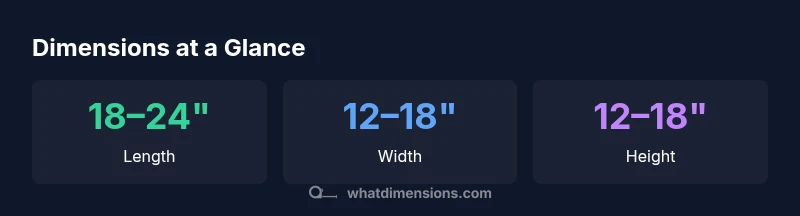
In packing and shipping, large boxes are commonly labeled by their exterior dimensions and by their intended use. You’ll see categories like “moving boxes,” “storage boxes,” and “oversized shipping boxes.” A typical moving box might be described as 18×18×24 inches, while a large storage box might be 24×18×24 inches. Dimensions can vary by brand, so always verify the exact numbers on the product label. For designers, standardization helps when estimating fit in wardrobes, under beds, or within shelving units.
How to Measure a Box Accurately: Tools and Steps
To capture reliable measurements, you should use a soft measuring tape and a marker for marking the ends. Steps include: 1) Place the box on a flat surface, 2) Measure length from the inside edge to the opposite inside edge for the exterior dimension, 3) Repeat for width and height, ensuring you measure at the widest points (often near corners), 4) Record all three dimensions in the same unit. If you’re comparing boxes, convert all measurements to a single unit (inches or centimeters) for consistency. What Dimensions notes that keeping a small notebook or digital record helps track multiple boxes during a project.
Padding, Seams, and How They Affect Exterior Size
Packing materials add to exterior dimensions once applied. A single layer of packing paper, bubble wrap, or foam can increase the length, width, and height by a fraction of an inch per side. When stacking items or using multiple layers, your final exterior size can grow more than you expect. If you’re shipping heavy or irregular items, consider double-checking after packing, ensuring that the box still meets the carrier’s maximum size limits. The goal is to avoid extra charges or the need to repackage at the last minute.
Practical Use Cases: Moving, Shipping, and Storage
For moves, you want boxes that balance capacity with stackability. For shipping large items, you need to stay under carrier dimensional weight thresholds. For storage, maximize cubic footprint within your closet or garage. Knowing the dimensions of a large box helps you plan how many units you’ll need, how they will fit on shelves, and how much space you should allocate in transit or storage spaces. What Dimensions emphasizes practical dimension planning as a core skill for homeowners, students, and designers.
How to Choose the Right Box Size: A Quick Guide
Start with the item’s longest dimension and add a comfortable amount of space for padding. Next, check width and height with respect to the packaging and stacking needs. If you’re unsure, choose a box slightly larger and use more padding around the item instead of forcing a tight fit. Finally, verify the box’s exterior to ensure it will pass through doors, corridors, and loading equipment. If you’re working with multiple items, create a quick grid: item size, preferred box size, and estimated padding. This approach minimizes wasted space and reduces packing time.
Comparison of large box sizes and uses
| Box Type | Typical Exterior Dimensions (L×W×H) | Common Use |
|---|---|---|
| Moving Box | 18×18×24 inches | Transporting household items |
| Storage Box | 24×18×24 inches | Long-term or seasonal storage |
| Oversized Shipping Box | 24×20×24 inches | Parcel shipping of bulky items |
Quick Answers
What is meant by the dimensions of a large box in practical terms?
Exterior dimensions (length, width, height) define the box’s outer size and capacity. Interior dimensions indicate usable space inside after accounting for wall thickness and padding. Both are important for fit and protection during moving, storage, or shipping.
Exterior dimensions tell you the box’s outside size, while interior space shows what actually fits inside after padding.
How should I measure a large box to ensure accuracy?
Use a soft tape, measure along the outside edges for length, width, and height, and record in the same unit. Measure at the box’s widest points, and then verify with the label on the box. If packing, re-measure after padding to confirm it still fits that carrier’s limits.
Measure length, width, and height on the outside, then re-check after packing.
Are there standard sizes for large moving boxes?
There are common ranges, but standard sizes vary by brand. Typical large moving boxes fall within 18–24 inches in length, 18 inches in width, and 24 inches in height. Always check the exact exterior dimensions on the product packaging.
There are common sizes, but always check the exact exterior measurements.
How do padding materials affect external dimensions?
Padding adds thickness to the exterior; each layer can increase length, width, and height by a fraction of an inch per side. If you pack heavily, the box can become noticeably larger, potentially affecting fit in trucks or through doors.
Padding can make boxes bigger; measure after packing to be sure.
What should I consider when choosing a large box for an irregular item?
For irregular items, choose a box that allows for padding and shape. It’s often better to select a larger box and use padding to fill gaps than to squeeze an oddly shaped item into a too-small box. Measure the longest dimension first and plan for margins.
If items are irregular, go up a size and pad well.
“Accurate box dimensions are the foundation of efficient packing and cost-effective shipping; a small miscalculation can cascade into wasted space and higher fees.”
Main Points
- Measure exterior dimensions first for fit and transport
- Differentiate exterior vs interior dimensions for packing efficiency
- Account for packing materials that can alter final size
- Use ranges to estimate size when exact numbers vary
- Choose box size based on item geometry and movement path
- Verify dimensions with the carrier’s limits before shipping
- Record dimensions in a single unit for consistency
- Consider both scalability and stacking potential when planning