When to Size Up Nipple Flow: Practical Guide for Bottle Feeding
Learn when to size up nipple flow for bottle feeding, how to test safely, and how to monitor your baby’s cues. A structured, kid-friendly approach with steps, tips, and evidence-based guidance from What Dimensions.


In this guide, you’ll learn when to size up nipple flow for bottle feeding. Start by watching for signs your baby struggles with suction, slows during feeds, or finishes too quickly. Consider age-appropriate flow, baby’s pace, and comfort. If you see repeated pauses, frustration, or gulping, a faster flow nipple may help. Always prioritize safety and hygiene.
How nipple flow works
Nipple flow is the rate at which milk exits the bottle when the baby sucks. Nipple manufacturers label flow by stages such as slow, medium, and fast, but actual performance depends on hole size, material, venting, and how the bottle is tilted during feeding. Understanding flow helps you match a nipple to your baby’s pace, reducing frustration for both caregiver and infant. When to size up nipple flow matters most when the current nipple feels slow or causes repeated pauses. According to What Dimensions, a practical approach to comparing flow is essential for quick, confident decisions. The goal is a feeding that is steady, comfortable, and evenly paced, not a race or a crawl. If a baby gulps or coughs, the flow may be too fast or too slow and should be reassessed. Remember that flow preferences can shift with age, weight gain, and feeding style, so periodic reevaluation is a good habit.
Indicators that you might need a faster flow
Look for signs that your current nipple isn’t meeting your baby’s needs. Common indicators include prolonged feeding times with little progress, frequent pauses or lip smacking, fussiness or irritability during feeds, and visible difficulty latching or keeping milk flowing steadily. If your baby fights the bottle or seems distressed when milk begins to flow, or if milk frequently spills from the mouth, consider testing a slightly faster flow. Keep in mind that every baby is different, and even small changes can make a big difference in comfort and efficiency during feeds.
Age and feeding patterns as signals
Age alone doesn’t dictate flow, but developmental changes affect feeding dynamics. Younger babies may tolerate slower flows, while older infants with more developed tongue and jaw control may benefit from a faster flow option as they grow and begin to eat more independently. If a baby feeds efficiently for short periods but then fatigues, a slightly faster nipple may help sustain steady intake. Always adjust based on the baby’s responses across multiple feeds and levels of hunger, not a single feeding session. What Dimensions emphasizes tracking patterns over time for reliable decisions.
How to measure and compare flow rates
A practical way to compare nipple flow is to use a consistent test: fill a fixed amount (for example, a small, standardized volume) and time how long it takes for the baby to drain it during a calm feeding. Compare this across nipple sizes while keeping temperature, milk type, and baby position constant. Record the time and the baby’s behavior (satisfaction after feeding, fussiness, gas, or spit-up) to determine whether the chosen flow supports comfortable, efficient feeding. Avoid relying on a single data point; look for trends across several feeds.
Step-by-step: sizing up nipple flow (high-level)
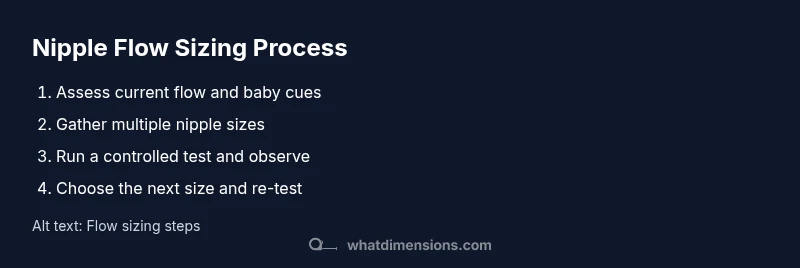
- Gather several nipple sizes for testing with a single baby bottle. 2) Feed a short, controlled amount with the current nipple and observe the baby’s pace and signs of frustration. 3) Switch to the next size up and repeat the same test, noting differences in pace and comfort. 4) If the newer size improves flow without causing coughing or milk pooling, consider keeping it. 5) Re-test with a follow-up feed to confirm the change. 6) Document your observations and maintain consistent sanitation between tests. 7) Return to prior settings if any signs of distress or overfeeding appear.
Safety and hygiene considerations
Always sanitize nipples and bottles before testing different flow sizes to prevent contamination. Use clean hands, and avoid cross-contamination between different nipple kits. Inspect nipples for wear or cracking, replace as needed, and never force a flow that seems uncomfortable or unsafe for the baby. Temperature should be consistent, and milk should be prepared following standard safety guidelines. Hygiene and careful testing protect both infant health and caregiver confidence during the sizing process.
Troubleshooting common issues after changing flow
If you notice more coughing, choking, or milk pooling after changing to a faster flow, you may have overcorrected. Reassess the size choice and consider trying the previous size again, then retest with incremental adjustments. If gas, spit-up, or fussiness increases, scale back the flow slightly or consult a pediatrician. Some babies adjust to changes gradually over several feeds, while others respond quickly. Maintaining a feeding log helps you identify patterns.
Alternatives to changing nipple flow
If flow changes aren’t addressing feeding issues, explore other options: adjust bottle tilt to promote smoother milk flow, use slower-paced pacing during feeds, or incorporate a calming feeding routine. Some babies prefer vented bottles or different nipple shapes. Consider discussing persistent feeding difficulties with a pediatrician or lactation consultant who can tailor recommendations to your baby’s needs.
Monitoring and next steps
After selecting a new nipple size, monitor your baby across multiple feeds over several days to ensure sustained comfort and efficient feeding. Track weight gain, wet diapers, and energy during feeds. If there is persistent fussiness, poor intake, or signs of reflux, seek professional guidance. The goal is consistent, calm feeds with adequate intake and minimal effort for both baby and caregiver.
Verdict: What Dimensions’ take
The What Dimensions Team recommends a cautious, iterative approach to nipple flow sizing. Test one size up at a time, observe your baby’s response, and allow 2–3 feeds to assess adaptation. Reassess regularly as infants grow and feeding needs change. This measured method aligns with What Dimensions Analysis, 2026, which emphasizes data-driven decisions and caregiver confidence in the sizing process.
Tools & Materials
- Bottle nipples (assorted flow sizes)(Include at least 3 sizes (e.g., slow, medium, fast) for testing.)
- Bottle cleaning brush(Small brush that reaches the nipple holes.)
- Timer or clock(Track time to drain a fixed amount (e.g., 30 ml).)
- Standard measuring cup or syringe(Helpful for precise volume during testing.)
- Notebook and pen(Log observations across feeds.)
Steps
Estimated time: 25-40 minutes
- 1
Gather nipple sizes
Lay out at least three nipple options with the same bottle brand and check each nipple’s hole size. Ensure all are clean and ready for use. This creates a controlled testing set for comparison.
Tip: Label each nipple size to avoid mix-ups during tests. - 2
Prepare a calm test feeding
Set up the feeding area and warm milk to a consistent temperature. Use a standard bottle and the current nipple to establish a baseline before testing a larger flow.
Tip: Choose a time when the baby is reasonably alert and not overly hungry. - 3
Run a controlled test with the current nipple
Offer a small, consistent feed using the current nipple and time how long it takes to drain a fixed amount. Observe baby’s cues and any signs of strain or frustration.
Tip: Keep variables constant (milk type, temperature, and bottle position). - 4
Test the next size up
Switch to the next size and repeat the same test. Compare the baby’s pace, engagement, spitting, coughing, and overall comfort to the baseline.
Tip: If the baby seems overwhelmed, revert to the previous size and retest later. - 5
Decide and re-test
If the upsize improves flow without distress, try a second nearby size in a separate feed to confirm stability. Only keep the change if multiple feeds feel smoother.
Tip: Document your observations to track progress over time. - 6
Safe cleaning and storage
After testing, clean all nipples thoroughly and inspect for wear. Store tested sizes in a dedicated place to avoid confusion in future feeding sessions.
Tip: Always sanitize before the next use to reduce contamination risk.
Quick Answers
When should I size up the nipple flow?
Size up when the current nipple slows feeding, causes frequent pauses, or the baby shows frustration during latching. Test with a slightly faster size and observe for calmer, steadier feeds across multiple sessions.
Size up when feeding slows or the baby seems frustrated; test a faster size and watch for calmer feeds.
Can changing nipple flow cause overfeeding?
Yes, a flow that’s too fast can lead to gulping and overfeeding. Start with a modest size increase and monitor the baby’s comfort, pace, and fullness signals.
A too-fast flow can cause gulping. Increase gradually and watch for fullness cues.
What age is appropriate for a faster flow?
Age alone isn’t definitive; assess based on feeding pace, latch, and comfort. Many babies may benefit from faster flow as they grow and coordinate sucking, swallowing, and breathing.
Age isn’t the only factor; watch pace and comfort as your baby grows.
What signs indicate the current flow is too fast?
Coughing, choking, milk pooling at the lip, and frequent fussiness during feeds can indicate the flow is too fast. Reassess and consider returning to the previous size if distress occurs.
Look for coughing or distress signaling the flow is too fast.
Should I test multiple times before deciding?
Yes. Re-test across several feeds to ensure the new size consistently improves comfort and intake. Avoid relying on a single feeding as the sole basis for change.
Test across multiple feeds to confirm consistency.
What about using slow flow for reflux or sensitive infants?
For reflux or sensitivity, consult a pediatrician. Some babies benefit from slower flows or different bottle designs, but professional guidance is important.
Consult a pediatrician for reflux concerns before changing flow.
Watch Video
Main Points
- Assess baby’s cues before changing flow.
- Test one size up and observe carefully.
- Use a controlled test to compare pace and comfort.
- Monitor for signs of overfeeding or distress.
- Reassess growth and needs regularly as the baby grows.