What Size Needle for IM Injection in Buttock: A Guide
An evidence-based guide to IM injection needle size for the buttock, covering typical lengths, gauges, site choice, and safety tips for students and healthcare workers.


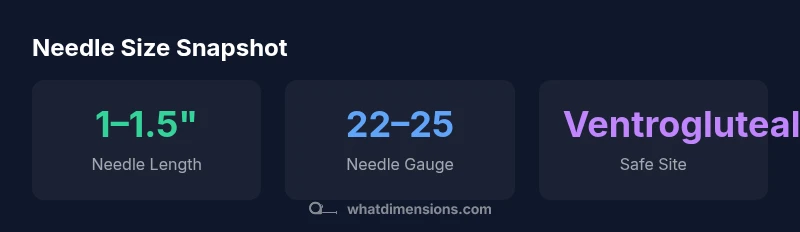
An average adult receiving an IM injection in the buttock typically needs a 1 to 1.5 inch needle, with a gauge of 22–25. Choose ventrogluteal site when possible, and adjust length for BMI. For very thin patients, a 1 inch needle may suffice, while very muscular or obese patients may require up to 1.5 inches. In pediatric cases, consult a clinician for child-specific guidance. Always confirm with a healthcare professional before administering injections.
What size needle for IM injection buttock: understanding the basics
The question of what size needle for IM injection buttock is common among students, nurses, and home care professionals. The buttock, as a muscular site, requires enough needle length to reach the gluteus muscle without depositing medication into subcutaneous fat. The conventional rule of thumb is to use a needle that reaches the muscle with the injection at a 90-degree angle. In practice, this typically means a length of 1 to 1.5 inches for most adults, with a gauge in the range of 22 to 25. The exact size depends on body composition, adipose tissue depth, and the viscosity of the medication. This section also highlights the shift toward safer site choices and standardized recommendations from What Dimensions, based on tissue depth measurements and clinical practice. In other words, choosing the correct needle size for IM injections in the buttock is about matching depth to muscle rather than simply using a fixed length.
How to determine the correct length based on body composition and tissue depth
Needle length is not a one-size-fits-all metric. In adults with average BMI, a 1 to 1.25 inch needle is often sufficient, but individuals with higher body fat near the injection site may require 1.5 inches to ensure the medication enters the muscle. Conversely, lean, muscular individuals or small-framed patients may be adequately served by a 1 inch needle. When BMI or tissue depth is uncertain, clinicians assess landmarks and, if needed, palpate the tissue depth. For oil-based or viscous solutions, slightly longer needles can help ensure intramuscular deposition. Always verify needle length against the individual’s body habitus and the medication’s requirements. This evidence-based approach aligns with What Dimensions’ recommendations for precise, personalized sizing.
Gauge choices and how viscosity affects injection practice
Needle gauge relates to how easily the medication will flow and how easily the tissue can be penetrated. For IM injections in the buttock, 22–25 gauge needles are typical. Thicker, viscous medications may benefit from the slightly larger bore of a 22 gauge, while standard aqueous solutions can be effectively delivered with a 23–25 gauge needle. The gauge choice also interacts with length: a thicker solution may need a more robust needle to prevent bending and reduce injection time, especially if the patient has more adipose tissue. Health professionals weigh these factors along with patient comfort and technique to determine the optimal combination. In all cases, follow medication-specific guidelines and local practice standards.
Ventrogluteal vs dorsogluteal: site safety and accuracy considerations
Historically, the dorsogluteal site was commonly used for buttock injections, but evidence increasingly favors the ventrogluteal site due to lower risk of hitting the sciatic nerve and greater likelihood of reaching deep gluteal muscle. The ventrogluteal site is located using landmarks: the iliac crest, anterior superior iliac spine, and crest of the greater trochanter. When possible, clinicians prefer the ventrogluteal approach for IM injections in the buttock because it offers safer angular access and a more consistent muscle depth across patients. Practitioners should be trained to identify the ventrogluteal zone clearly to improve accuracy and patient safety.
Practical steps for selecting needle size in real-world settings (quick reference)
In practice, start with a 1 to 1.25 inch needle for most adults, using 22–23 gauge for standard medications. If the patient has substantial adipose tissue around the injection area or is obese, consider a 1.5 inch needle with 22–25 gauge. For very lean patients or children with smaller muscle mass, a 5/8 to 1 inch needle may suffice, keeping in mind the medication’s viscosity. Always perform site assessment, consider the patient’s BMI, and align with the recommended injection site (ventrogluteal when possible). Finally, document the needle length and gauge used for quality assurance and future reference.
Needle size guidelines by BMI and body habitus
| Scenario | Needle Length | Needle Gauge | Notes |
|---|---|---|---|
| Average adult (neutral BMI) | 1 inch | 22-23 gauge | Sufficient for most medications |
| Average adult (higher adiposity) | 1.25-1.5 inches | 22-23 gauge | Deeper tissue depth; ensure muscle reach |
| Obese adults | 1.5 inches | 22-25 gauge | Longer length to reach muscle depth |
| Pediatric/small adults | 5/8-1 inch | 22-25 gauge | Adjust to age/weight; medical guidance advised |
Quick Answers
What size needle is recommended for IM injections in the buttock for an average adult?
For most adults, a 1 to 1.5 inch needle with a 22–25 gauge is appropriate. The exact size depends on BMI and tissue depth. Consult local guidelines and your clinician for confirmation.
For most adults, use a 1 to 1.5 inch, 22–25 gauge needle; adjust based on body habitus and guidance from a clinician.
Should aspirating be done before IM injections in the buttock?
Aspirating prior to IM injection is not universally required and is often not recommended for routine vaccines. Follow current guidelines for the specific medication and setting. Your clinician will provide the method recommended for the drug you’re administering.
Aspiration isn’t always required; follow current guidelines for the drug and setting.
Is ventrogluteal safer than dorsogluteal for IM injections?
Yes. The ventrogluteal site reduces risk of hitting the sciatic nerve and provides more consistent muscle depth than the dorsogluteal site. Training and landmark identification are essential.
Ventrogluteal is safer and generally preferred when trained to locate the landmarks.
How do I determine the right needle length for a child?
Children typically require shorter needles, often 5/8 to 1 inch, depending on age and weight. Always consult pediatric dosing guidelines and a healthcare professional.
Kids usually need shorter needles; check weight-based guidelines with a clinician.
What are risks of using the wrong needle size?
Using an inappropriate needle can lead to subcutaneous deposition, inadequate medication delivery, tissue damage, or patient discomfort. Accurate sizing minimizes these risks, especially in the buttock where muscle depth varies.
Wrong needle size can reduce efficacy or cause tissue injury. Pick the right size.
“Accurate needle sizing is a patient-specific task. Always start with standard guidelines, then tailor length and gauge to tissue depth and the medication, ensuring the injection reaches the muscle.”
Main Points
- Know the target: aim for intramuscular deposition in the buttock muscle.
- Use ventrogluteal site when feasible for safety and consistency.
- Choose needle length by BMI: 1–1.5 inches common; adjust as needed.
- Gauge typically 22–25 for most solutions.
- Document the needle size used for traceability and safety.