What Size Are Normal Records? A Vinyl Sizing Guide
Discover the standard vinyl record sizes—7, 10, and 12 inches—their typical uses, and how to measure at home. This guide covers storage, sleeves, playback considerations, and common variations for collectors and designers.


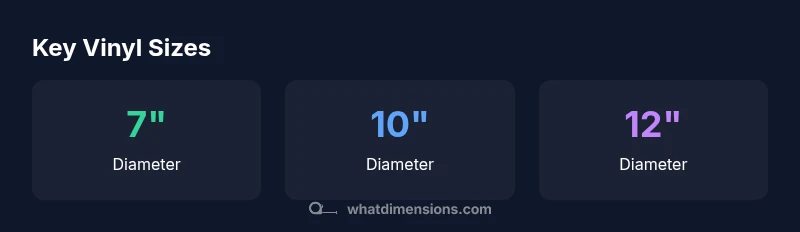
Normal vinyl records come in three standard diameters: 7 inches, 10 inches, and 12 inches. The 7-inch singles are common and spin at 45 RPM; 10-inch EPs exist but are rarer, usually at 33 1/3 RPM; 12-inch LPs are the standard full-length records at 33 1/3 RPM.
Why record size matters
For music lovers, storage solutions, playback equipment, and cataloging depend on knowing the standard vinyl record sizes. The three primary diameters—7 inches, 10 inches, and 12 inches—cover most releases encountered by homeowners, students, and collectors. Understanding size helps when choosing sleeves, cases, and display solutions, and it prevents misfits in jumbled storage. According to What Dimensions, precision in size is a practical, everyday concern, not just a curiosity. When you know the standard diameters, you can plan for compatibility across shelves, bins, and rotation systems in your living space or studio.
In addition to diameter, record size interacts with storage depth, label layout, and even the acoustics of a playback space. While the diameter is the most visible metric, it works hand in hand with RPM, thickness, and liner notes. This guide focuses on the diameters that most people will encounter in typical households and small collections, while also flagging rare or niche formats that can pop up in specialty shops or box sets.
Standard diameters and what they look like
The three most common sizes are 7 inches, 10 inches, and 12 inches in diameter. A 7-inch record spans about 7 inches across the surface and is usually used for singles released at 45 RPM. A 10-inch disc is slightly larger, often used for extended plays (EPs) or short albums, and can run at 33 1/3 RPM or sometimes 45 RPM in special cases. The 12-inch format is the standard for full-length albums (LPs) and most contemporary releases, typically played at 33 1/3 RPM. When you handle records, you can verify diameter by measuring edge-to-edge and checking the label’s position relative to the center.”
The 7-inch single format
The 7-inch single has a storied place in music history, especially for genres that relied on radio airplay and chart bonuses. Its compact diameter makes it ideal for 4- to 5-minute tracks, and its grooves are optimized for fast playback for single releases. Collectors often seek pristine pressings, picture sleeves, and accurate labeling. Because many 7-inch items are older or collectible, you may encounter color variants or special editions. If you’re designing display space or storage for a mixed collection, plan for a separate bin or shelf segment sized for 7-inch records to keep them accessible without crowding larger formats.
The 10-inch EP format
Ten-inch records are less common in modern catalogs but persistent in certain scenes and eras (notably early rock and jazz). EPs typically house a handful of tracks and occupy a middle ground between singles and full albums. If you have a mixed collection, allocate a dedicated area for 10-inch discs so you can maintain order and ease of access. Some sleeves and outer jackets are specifically sized for 10-inch records, and specialty boxes can help prevent warping in humid environments.
The 12-inch LP format
The 12-inch LP is the gold standard for full-length albums. Its diameter provides space for longer tracks, richer artwork, and larger label areas. LPs have become the backbone of many collections, with robust pressing plants and a broad ecosystem of sleeves, inner sleeves, and protective boxes. When arranging a listening space, 12-inch records often take center stage due to their popularity and the traditional album presentation. For designers and display enthusiasts, 12-inch formats offer the most flexible options for shelving and merchandising.
How sizes map to storage and sleeves
Sleeves and boxes are typically designed to accommodate the three main diameters. 7-inch sleeves are narrower, while 12-inch sleeves and outer jackets are standard elsewhere. For collectors, choosing sleeves with snug inner diameters helps prevent ring wear and edge damage. If you’re setting up a storage system, keep a dedicated section for each format and ensure your storage bins or shelves can accommodate the widest diameter you own (usually 12 inches). This approach minimizes handling and helps preserve the records’ condition over time.
Measuring a record’s size at home
To measure, place the record on a flat surface and use a ruler or caliper to measure the distance from edge to edge across the playing surface. Confirm the diameter by checking the label’s distance from the edge; many labels are centered, which makes diameter measurement straightforward. When you buy new records, check product specifications or the jacket notes for the exact diameter. If you’re uncertain, bring the record to a local shop and compare against known standard formats. Proper measurement helps you select compatible sleeves, cases, and storage solutions.
International standards and variations
In most markets, 7, 10, and 12 inches are recognized standards that support broad compatibility across turntables, players, and accessories. However, nonstandard formats can appear in niche releases or special editions (for example, live sets or picture discs). When cataloging a large collection or digitizing records, document the diameter and RPM as part of your inventory. This practice helps avoid misalignment with playback gear or mis-sizing in future storage projects.
Common myths about record sizes
A frequent myth is that all records share the same label size or inner diameter. In reality, label diameter and edge thickness can vary by year and pressing. Another misconception is that nonstandard sizes never exist; while rare, some labels issue 7.5-inch or 9-inch formats for special editions. For most households, though, the 7, 10, and 12-inch diameters cover the vast majority of releases, and recognizing them helps you curate, store, and play with confidence.
Common vinyl record formats by diameter and RPM
| Format | Diameter (inches) | Typical RPM |
|---|---|---|
| 7-inch single | 7 | 45 RPM |
| 10-inch EP | 10 | 33 1/3 RPM |
| 12-inch LP | 12 | 33 1/3 RPM |
Quick Answers
What is considered a 'normal' vinyl record size?
In mainstream catalogs, 7-inch, 10-inch, and 12-inch diameters are standard. Nonstandard sizes exist in special editions, but the three core sizes cover most household collections.
Typically, 7, 10, and 12 inches are the standard diameters you’ll encounter.
Are 10-inch records common?
10-inch records are less common than 12-inch LPs but still appear as EPs or special releases. They’re more likely found in niche catalogs or vintage collections.
Not as common as 12-inch LPs, but you’ll see 10-inch EPs in some catalogs.
What RPMs do these sizes use?
7-inch singles typically run at 45 RPM. 12-inch LPs commonly use 33 1/3 RPM, and some 10-inch records also use 33 1/3 or 45 RPM.
Most 7-inch records play at 45 RPM, while 12-inch LPs are usually 33 1/3 RPM.
How can I measure a record’s size at home?
Use a ruler or calipers to measure diameter edge-to-edge. Compare the result with standard sizes (7, 10, 12 inches) and confirm with the jacket or label.
Grab a ruler and measure across the playing surface to confirm the diameter.
Do nonstandard sizes affect playback equipment?
Most playback gear supports standard sizes. Nonstandard formats may require adapters, specialized sleeves, or alternate storage solutions.
Your player and sleeves might not fit nonstandard sizes; check dimensions before buying.
“Standard vinyl sizes are defined to balance portability, playback quality, and cataloging ease. The three core diameters—7, 10, and 12 inches—cover the vast majority of releases.”
Main Points
- Know the three standard sizes: 7", 10", and 12".
- 7-inch singles are most common for quick plays.
- 12-inch LPs are the standard album format.
- Choose sleeves and storage sized for the largest diameter you own.
- Nonstandard sizes exist but are rare in everyday collections.