Mitsubishi Outlander Dimensions: A Buyer’s Guide to Size and Fit
Explore mitsubishi outlander dimensions with precise ranges and practical guidance for space planning, garage fit, and interior practicality. Learn how trim and year affect measurements.


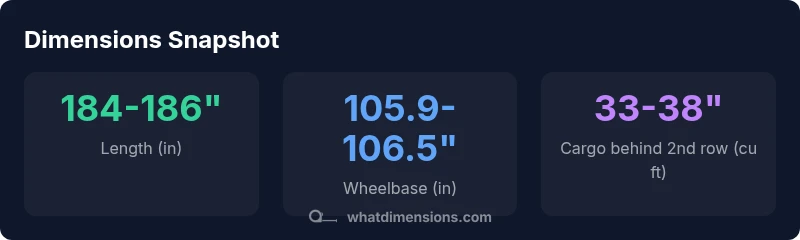
mitsubishi outlander dimensions vary slightly by trim and model year, but you can expect an exterior length around 184-186 inches, a wheelbase near 106 inches, and a width in the low 70s inches. Cargo behind the second row typically ranges from the low 30s to mid-30s cubic feet, expanding to mid-60s with the seats folded. Always verify official specs for your exact trim.
Mitsubishi Outlander Dimensions: Core Exterior Measurements
The mitsubishi outlander dimensions ground the vehicle’s footprint and how it interfaces with real-world spaces. For most model years and trims, exterior length sits in the mid-180s range, while the wheelbase hovers just over 106 inches. Exterior width typically lands in the low 70s, with height in the mid-60s. These ranges reflect differences in wheel/tire packages, roof rails, and minor styling changes by year. Distinguish between width overall (including mirrors) and body width (excluding mirrors) when planning a garage or parking stall. Always consult official spec sheets from Mitsubishi Motors or trusted test publications to confirm exact figures for your trim. The practical takeaway is that the Outlander maintains a compact SUV footprint that remains maneuverable in urban spaces while delivering solid interior space. When measuring, consider door swing space, curb clearance, and available garage width, as trim-related changes can subtly affect apparent dimensions.
How Trim Levels Influence Size and Handling
Trim levels often appear to slightly affect dimensions due to wheel/tire substitutions, roof racks, and armor/trim packages rather than a major change to the base footprint. In most generations of the Outlander, exterior length and wheelbase remain consistent across trims, while height and width can vary modestly with wheel size and roof rails. From a sizing perspective, this means that a base ES and a higher SEL or GT may share the same footprint but offer different interior configurations and cargo practicality. The upshot for buyers is clarity: target the footprint first, then evaluate interior space and cargo layouts for your needs. For precise numbers, check the current model year’s spec sheet and dealer brochures.
Interior Dimensions and Cargo Space
Interior space is the practical counterpart to exterior dimensions. Inside, front headroom commonly sits around 39 inches, with ample shoulder room and a reasonable second-row legroom for a compact SUV. The standout metric for purchasers is cargo capacity. Behind the second row you typically find a usable range in the low 30s cubic feet, expanding to roughly the mid-60s cubic feet with the second row folded. This space translates into real-world usefulness for groceries, sports equipment, and weekend luggage. Variations between trims usually come from seating configurations and optional cargo boards rather than dramatic shifts in platform size. For precise measurements, reference the official specification sheet for your exact year and trim.
Practical Implications for Parking and Garage Fit
For owners and shoppers, the dimensions translate into parking and garage planning. A garage stall needs to accommodate length, width, and the door swing with comfortable clearance. The Outlander’s length of roughly 184-186 inches means a standard single-car garage (about 18-20 feet deep) is often adequate, but you’ll want to verify width, including mirrors, and ensure doorway clearance. In urban environments, the vehicle’s compact footprint can be a benefit for tight streets and tight garage entrances. If you regularly carry long objects, consider the cargo volume with the second row folded and whether roof rails add any height. Always physically measure your space and compare against official specs before committing to purchase.
Measuring and Verifying Dimensions: A Practical Guide
To verify mitsubishi outlander dimensions for your space, start with the official spec sheet from Mitsubishi Motors for your model year. Then, take precise measurements in your garage: measure the length from the curb to the bumper, the width at the widest point (excluding mirrors), and the height including any roof rails. Also measure door swing clearance and any obstructions near the garage aperture. When evaluating cargo space, perform a hands-on test by loading typical items (luggage, groceries, sports gear) to ensure the space meets your needs. Use a tape measure and a marker to map out a simple floor plan, then compare with the published figures.
Dimensional Context: Outlander vs Key Competitors
In the compact SUV segment, vehicle footprints cluster within a similar range, with length typically in the mid-180s inches and wheelbases around 106 inches. The Outlander maintains a competitive footprint with strong interior versatility, particularly when folded seating expands cargo space. When evaluating dimensions against rivals, focus less on a single figure and more on how the footprint translates to real-world usability—garage fit, parking ease, and cargo versatility. This approach helps ensure you select a vehicle that aligns with your space and lifestyle.
Common Misconceptions About Dimensions
A common misconception is that interior space scales directly with exterior size. In reality, design choices like seat padding, cabin orientation, and chassis tuning can influence perceived space. Another misperception is that roof rails always add significant height; many trims keep height changes minimal. Finally, remember that dimensions cited in ads may reflect specific trims or test configurations; always verify with the exact model year and trim to avoid surprises.
Real-World Sizing Scenarios: If You Have 7 Minutes to Plan
Scenario 1: You have a standard two-car garage and want to park a family SUV with luggage. Use the typical length range (184-186 inches) and add door clearance estimates to ensure you can open doors without hitting the walls. Scenario 2: You need to fit an Outlander inside a narrow city garage with a tight turning radius. The wheelbase near 106 inches helps with stability, but ensure your entry and exit angles accommodate the turning path. Scenario 3: You’re loading sports equipment or camping gear. The cargo behind the second row (roughly 33-38 cubic feet) and folded-seat capacity (63-66 cubic feet) should cover most weekend needs.
Why Precise Size Matters for Design and Planning
For homeowners, students, designers, and shoppers who need exact size specs, precise dimensions enable accurate space planning, furniture fitting, and storage solutions. The Mitsubishi Outlander’s combination of exterior footprint and versatile cargo configurations makes it a practical choice in many living situations. Always rely on authoritative sources for exact figures and verify measurements against your own space before purchasing.
Representative exterior and interior dimensions for Mitsubishi Outlander (ranges by trim and year).
| Measurement | Typical range | Notes |
|---|---|---|
| Overall length | 184.0-186.0 inches | Varies by trim/year |
| Wheelbase | 105.9-106.5 inches | Crucial for interior room |
| Exterior width | 71.5-72.5 inches | Excludes mirrors; check spec |
| Headroom (front) | 39.0-39.4 inches | Measured with standard seating |
Quick Answers
What are the official exterior dimensions of the Mitsubishi Outlander?
Official figures vary by model year and trim; refer to Mitsubishi's spec sheets or dealer documentation for the exact numbers. Typical ranges place length around 184-186 inches and wheelbase near 106 inches.
Exact exterior dimensions vary by year and trim; expect length around 184 to 186 inches and a wheelbase near 106 inches.
Do dimensions vary by trim or model year?
Yes. Most Outlander trims share the same footprint, but wheel/tire packages or roof accessories can alter height and width slightly. Always confirm the exact numbers for your year and trim.
Yes, trim and year can cause small changes; check the exact spec for your version.
How much cargo space behind the second row does the Outlander offer?
Cargo behind the second row typically falls in the low- to mid-30 cubic feet range, increasing to roughly the mid-60 cubic feet with the rear seats folded.
Around 33 to 38 cubic feet behind the second row, up to about 63 to 66 cubic feet with seats folded.
Are there exterior width differences with mirrors?
Yes. Width can differ depending on whether you measure with mirrors included. Nose-to-tail dimensions typically quote body width, while curb-to-mirror width is larger.
Width varies if you count mirrors; check whether the spec uses body width or total width.
What is the best way to measure for a garage?
Measure your garage opening, interior width, and door swing clearance. Compare with the Outlander's exterior length and width, accounting for mirrors and any roof racks.
Measure your space and compare with official exterior dimensions, including mirrors if relevant.
“Dimensions matter for space planning and user experience; knowing the exact figures helps you plan garages, parking, and interior layouts.”
Main Points
- Check official specs for your exact trim and year
- Expect small variations by trim, mainly due to wheels and roof rails
- Consider both mirror-inclusive width and body width for parking
- Use cargo space figures to plan luggage and gear
- Verify measurements in person before purchase