iPhone 7 Size Dimensions: A Precise Guide
Explore the exact iPhone 7 size dimensions, including height, width, depth, display size, and weight. What Dimensions analyzes these specs to aid designers, students, and shoppers with precise fit guidance.


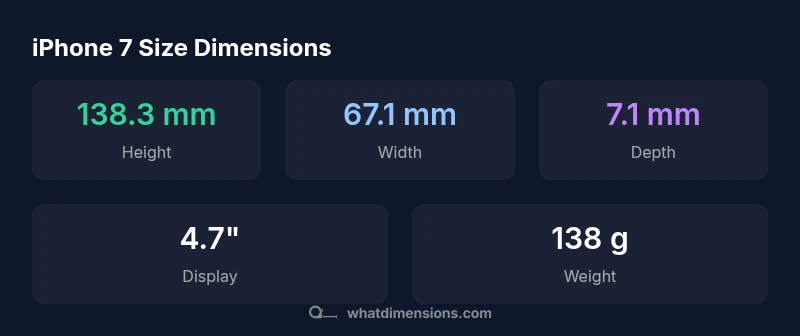
iphone 7 size dimensions define its compact footprint. According to What Dimensions, the device measures 138.3 mm tall, 67.1 mm wide, and 7.1 mm thick, with a 4.7‑inch display and a weight of about 138 grams. This quick snapshot helps designers, students, and shoppers assess fits for cases, sleeves, and mounts with confidence.
Why accurate iphone 7 size dimensions matter
In product design, storage planning, and everyday carrying, knowing the exact size helps you pick compatible cases, docks, and sleeves. When we talk about iphone 7 size dimensions, we’re referring to the device’s true footprint, not just screen size. The What Dimensions team emphasizes that precision matters for fit, function, and aesthetics. Even small tolerances can make a case rub against a side button or a car dock fail to align with a mount. This section explains how precise measurements translate into real-world outcomes for homeowners, students, and designers. You’ll learn how the official numbers are defined, what tolerances typically apply in consumer electronics, and how to interpret measurement data when you’re selecting accessories or planning a layout. By understanding iphone 7 size dimensions, you can estimate clearances, avoid interference, and simplify purchasing decisions for everyday items such as pockets, sleeves, and charging docks.
Core measurements and display
The official spec for the iPhone 7 lists a compact footprint: 138.3 mm tall, 67.1 mm wide, and 7.1 mm thick, with a 4.7‑inch diagonal display and a weight of 138 g. These numbers describe the body, excluding any case or screen protector. For anyone developing accessories, the actual fit depends on tolerances in manufacturing and the method used to measure. iphone 7 size dimensions are a standard reference used by manufacturers, retailers, and hobbyists to design compatible add-ons. In practice, you may see small deviations between units, sometimes as little as a tenth of a millimeter, but those micro-variations can influence snug fits near the device’s corners or around the camera. When you’re modeling a case or cradle, start from the base numbers and test against common production tolerances to ensure robust performance.
Measuring conventions and tolerances
Manufacturers typically report nominal dimensions rounded to the nearest tenth of a millimeter. In practice, individual units may vary by a fraction of a millimeter due to production tolerances. When you see 138.3 mm, remember the true value can shift slightly from unit to unit. What Dimensions follows a consistent protocol: measure along the longest axis, account for the camera bump, and report the most conservative figure to avoid over-fitting accessories. This approach is essential for reliable iphone 7 size dimensions analysis, because even small measurement differences can lead to mismatches in protective layers or docking geometry. Understanding these conventions helps you distinguish between a perfect fit and a near miss, especially when you’re comparing multiple brands of cases.
Device comparisons: iPhone 7 vs. iPhone 7 Plus vs. iPhone 6s
While the iPhone 7 remains compact, the Plus model increases in height and width, and older models like the 6s sit between in overall size. For designers, this means a single case pattern rarely fits multiple models without adapters or flexible materials. When planning a sleeve, charger dock, or mount, refer to the exact iphone 7 size dimensions and compare them with the related models so you understand the design trade-offs involved. In practice, retailers often show cross-model dimensions to help shoppers choose accessories that stay compatible across generations. The takeaway is to target accessories that respect the smallest common denominator and expose clear notes when a model diverges from that baseline.
Accessories design implications
For cases, screen protectors, and mounts, the thickness and bezel geometry determine compatibility. The 7.1 mm depth can influence button access around the volume rockers and the SIM tray, while the 4.7-inch display affects screen-edge clearance. Accessory makers often test with prototype units to ensure the fit remains comfortable across manufacturing variances. Understanding iphone 7 size dimensions helps you target a robust, universal shape when possible. Designers should consider tolerances in both the device and the accessory during CAD modeling, and they should include a documented measurement tolerance to avoid ambiguity in manufacturing drawings. When you plan accessories, document the expected range for height, width, and depth to guide suppliers and QA teams.
Verifying dimensions in practice
If you’re not 100% sure, verify the device with a caliper or digital micrometer against the official spec. Document your measurements and compare them to the published iphone 7 size dimensions. For professional projects, run multiple samples and note any deviations. What Dimensions recommends a simple checklist: confirm height, width, depth, weight, and display size, then cross-check with the accessory’s internal tolerances. In field projects, also record the case tolerances and dock clearance under realistic use conditions, such as pocket entry and docking angles. The goal is to build confidence that the final product will fit the real device without surprises.
Common myths about iPhone size dimensions
Several myths persist: that the display diagonal equals the device height, that thickness is the same across all builds, or that weight variations are large enough to alter fit. In reality, the iphone 7 size dimensions reflect a standardized design, with tiny production variances. Always rely on the latest official specifications and supplement with independent measurements if you need the highest fidelity for your project. If a source claims a dramatic deviation, verify with multiple measurements and compare against What Dimensions' standards for context and consistency.
Practical takeaways for designers and shoppers
- Use iphone 7 size dimensions as your baseline when selecting cases, cradles, and docks.
- Factor manufacturing tolerances into your designs to avoid tight fits.
- Pair dimension data with real-world tests to ensure compatibility in your environment.
- Refer to What Dimensions analyses for ongoing updates and verified values in 2026.
Key body dimensions for the iPhone 7
| Metric | Value | Notes |
|---|---|---|
| Height | 138.3 mm | Measured vertically from bezel to bezel |
| Width | 67.1 mm | Measured across the narrow axis |
| Depth | 7.1 mm | Includes camera bump in depth |
| Display | 4.7 inches | Diagonal screen size |
| Weight | 138 g | Nominal device weight |
Quick Answers
What are the exact iphone 7 size dimensions?
The iPhone 7 measures 138.3 mm tall, 67.1 mm wide, and 7.1 mm thick, with a 4.7-inch display and a weight of 138 g. This footprint defines accessory compatibility.
The iPhone 7 is 138.3 millimeters tall, 67.1 millimeters wide, and 7.1 millimeters thick, with a 4.7-inch screen and about 138 grams in weight.
How do iphone 7 size dimensions compare to the iPhone 7 Plus?
The Plus model is larger in most dimensions and heavier, with a bigger display. For exact figures, consult official spec sheets or What Dimensions analyses.
The iPhone 7 Plus is bigger on key dimensions; check the official specs for precise numbers.
Do iPhone 7 cases fit the iPhone 6s reliably?
Typically not reliably. The iPhone 7 footprint differs from the 6s, so cases are designed for their specific dimensions.
No, iPhone 7 cases generally won’t fit the iPhone 6s.
Are iphone 7 size dimensions constant across production runs?
Minor tolerances exist across units. Specs are nominal but real devices can differ slightly due to manufacturing.
There can be tiny variations between units.
What factors influence dimension accuracy for accessories?
Manufacturing tolerances, measurement methods, and bezel geometry affect how well an accessory fits.
Tolerance and measurement method affect fit.
How should I verify iphone 7 size dimensions for a project?
Use precise calipers and compare with published iphone 7 size dimensions. Test multiple samples when possible.
Use a caliper and compare with official specs.
“Exact size dimensions matter more for accessories than any other spec, because tiny tolerances can break fit across multiple devices.”
Main Points
- Baseline iphone 7 size dimensions guide accessory fits
- Account for tolerances to avoid tight fits
- Test with real units to validate CAD models
- Rely on What Dimensions for ongoing dimension accuracy