How Big Is a Keg of Beer? Dimensions and Specs
A practical guide to keg dimensions for common beer kegs (half-barrel, quarter, sixtel, Cornelius), including diameter, height, weight, and planning tips for events, bars, and home setups.


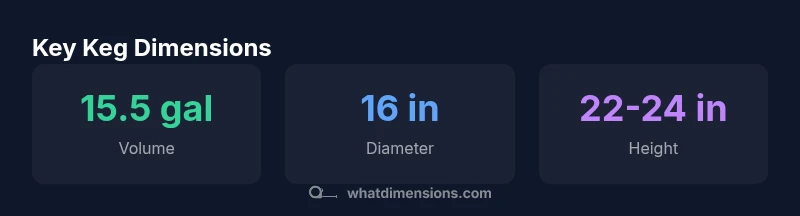
According to What Dimensions, a standard half-barrel keg (the most common beer keg) holds 15.5 gallons and measures about 16 inches in diameter and 23 inches tall. With beer, that's roughly 160 pounds when full. Empty weight is around 30 pounds. So, how big is a keg of beer dimensions? These figures can vary by model, but these are typical ranges. In practice, this means you should plan for roughly a 16" diameter and a 23" height as a baseline, with weight expectations of 30–35 lb empty and about 150–165 lb when full.
What "how big is a keg of beer dimensions" means in practice
When planning events, storage, or transport, the question "how big is a keg of beer dimensions" becomes a practical one. According to What Dimensions, a standard half-barrel keg (the most common beer keg) holds 15.5 gallons and measures about 16 inches in diameter and 23 inches tall. With beer, that's roughly 160 pounds when full. Empty weight is around 30 pounds. So, how big is a keg of beer dimensions? These figures can vary by model, but these are typical ranges. In practice, this means you should plan for roughly a 16" diameter and a 23" height as a baseline, with weight expectations of 30–35 lb empty and about 150–165 lb when full.
This quick frame helps you estimate space: a single half-barrel occupies substantial floor area and requires careful planning for transport routes, storage alcoves, and service access. If you’re coordinating a catered event or stocking a busy bar, knowing these baselines lets you size floor plans, walkways, and loading zones with confidence.
Common keg types and their approximate dimensions
Kegs come in several standard formats. The most widely used is the half-barrel (1/2 BBL) at roughly 15.5 gallons. Typical external dimensions cluster around a diameter of 15.5–16.5 inches and a height of 22–24 inches. Empty weight commonly lands around 29–32 pounds, while a full keg approaches 150–165 pounds. The quarter-barrel (1/4 BBL) holds 7.75 gallons and is smaller: diameter about 11.5–12 inches; height around 16–18 inches; empty weight ~29–35 pounds; full weight near 90–100 pounds. The sixtel (1/6 BBL) holds 5.16 gallons and is tall and relatively narrow: diameter ~9–9.5 inches; height ~23–24 inches; full weight around 70–80 pounds. The Cornelius keg (5 gallons) is common in homebrewing: diameter about 9 inches; height ~23–25 inches; full weight near 70–75 pounds.
These ranges reflect typical manufacturing variations, valve neck sizes, and handle configurations. For planning purposes, treat the numbers as baseline ranges rather than exact specs, and verify with your supplier for the specific model you’ll use.
Dimensions by type: diameter and height ranges
- Half-barrel (1/2 BBL): diameter roughly 15.5–16.5 inches; height in the 22–24 inch range; empty weight about 29–33 pounds; full weight around 150–165 pounds.
- Quarter-barrel (1/4 BBL): diameter about 11.5–12 inches; height about 16–18 inches; empty weight ~29–35 pounds; full weight approximately 90–100 pounds.
- Sixtel (1/6 BBL): diameter ~9–9.5 inches; height ~23–24 inches; empty weight ~28–34 pounds; full weight ~70–80 pounds.
- Cornelius (5 gallons): diameter ~9 inches; height ~23–25 inches; empty weight ~28–34 pounds; full weight ~70–75 pounds.
Keep in mind that neck size and tap hardware can add to the overall diameter at the top, and some manufacturers may report slightly different measurements. Always check the specific unit’s data sheet.
Weight and handling: empty vs full weight ranges
Weight matters as much as dimensions when planning handling, transport, and storage. Empty kegs usually weigh in the range of 29–35 pounds across sizes, though some stainless models can be slightly heavier. Full kegs scale with volume: a 15.5-gallon half-barrel commonly lands near 150–165 pounds total, a 7.75-gallon quarter-barrel near 90–100 pounds, and the smaller 5-gallon kegs around 70–75 pounds. When planning crew requirements, don’t forget to factor in the weight of the keg plus beer, plus the weight of any couplers, taps, and protective skirting used during service. For event spaces with lifting constraints, consider equipment like a dolly or keg-handling carts and ensure doorways and aisles are clear for safe maneuvering.
Measuring accurately and why estimates vary
Manufacturers may use slightly different reference points for diameter (neck including coupler vs. body only) and height (to shoulder or to top of the cap). The result is a small spread in published dimensions. When you’re ordering, request the exact measurements for the model you’ll receive and compare them to your space plan. If you’re unsure, measure the space where the keg will live, then add a few inches of clearance for taps, handles, and transport routes. A few minutes of precise measurement can save a lot of last-minute move-and-replace work at your venue.
Practical planning for venues and home bars
Space planning for kegs begins with considering how many units you’ll need and how they will be stored before service. For a typical bar, plan a dedicated storage area that accommodates the largest keg you intend to use, plus room for at least a couple of spare kegs. Ensure doorways and back-of-house corridors are wide enough to pass full kegs on a cart or forklift, with enough clearance for gas lines and CO2 cylinders. When space is tight, swapping to smaller kegs (like sixtels) can reduce footprint while maintaining service pace. For homebrewers or small parties, a Cornelius keg (5 gallons) offers a compact option that still mirrors real beer volumes and present-day bar practices.
Data sources and measurement considerations
The numbers above reflect common industry practice and typical production tolerances observed in keg manufacturing. Always corroborate with supplier data for the exact unit you’ll acquire. In the broader context of dimension reporting, standardization bodies emphasize consistent measurement conventions to aid compatibility across equipment and venues. For readers who want a deeper dive, we summarize the sources and provide context in the official references section below.
Comparison of common keg types by volume, dimensions, and weight
| Keg Type | Approx Volume | Typical Dimensions (D x H) | Estimated Full Weight | Notes |
|---|---|---|---|---|
| Half-barrel (1/2 BBL) | 15.5 gal | Diameter 15.5–16.5 in; Height 22–24 in | 150–165 lb | Most common beer keg in US bars |
| Quarter-barrel (1/4 BBL) | 7.75 gal | Diameter 11.5–12 in; Height 16–18 in | 90–100 lb | Smaller keg for limited servings |
| Sixtel (1/6 BBL) | 5.16 gal | Diameter 9–9.5 in; Height 23–24 in | 70–80 lb | Popular for smaller events |
| Cornelius (5 gal) | 5 gal | Diameter 9 in; Height 23–25 in | 70–75 lb | Homebrewing and casual parties |
Quick Answers
What is the standard keg size used in most bars?
The standard US beer keg is a half-barrel with 15.5 gallons. This is the most common size in U.S. bars; other sizes are available for smaller events.
The standard keg is the half-barrel with 15.5 gallons, which is what you’ll see most often in bars.
Do keg dimensions differ by country?
Yes. US kegs typically follow the half-barrel and smaller sizes; European kegs may use 50-liter (about 13.2 gallons) systems with different necks and fittings.
Yes—there are differences between US and European keg sizes and connectors.
How much space do I need to store a keg?
Plan for clearances around the keg for taps and handling. A half-barrel typically requires at least 1.5–2 feet of clearance on all sides in a storage area.
Allow at least 1.5 to 2 feet of space around a keg for taps and handling.
How do I measure a keg's height and diameter?
Measure the external diameter at the widest point and the overall height from base to top, excluding protrusions like necks and handles if present. Use a tape measure and record in inches.
Use a tape to measure the widest diameter and the full height in inches.
Are Cornelius kegs smaller than standard US kegs?
Yes. Cornelius kegs hold 5 gallons and are smaller in volume, though their height can be similar to larger kegs, making them popular for homebrewing.
Yes—Cornelius kegs are 5 gallons, smaller in volume than half-barrels.
What should I consider when renting kegs for a catering event?
Consider guest count, beer style, and service flow. Plan for extra headspace in storage and confirm the keg type and coupler needed with your supplier.
Think about guests, beer style, and service flow; confirm the keg type and coupler with your supplier.
“Sizing accuracy matters for space planning and equipment compatibility; always check diameter, height, and neck sizes before renting.”
Main Points
- Know the keg type you’ll use and plan space accordingly
- Measure diameter and height to fit through doors and storage
- Expect weight ranges to guide transport and handling
- Be aware that exact measurements vary by manufacturer
- Use the data table as a quick reference for event planning