Gas Cylinder Dimensions: A Comprehensive Size Guide
Understand gas cylinder dimensions: diameter, height, and capacity, plus how international standards and datasheets guide you to select the right cylinder for LPG, industrial, or lab use.


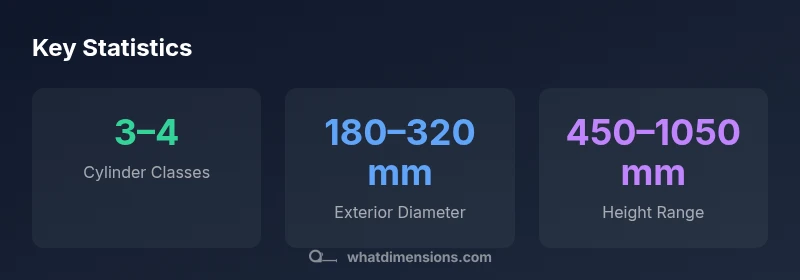
Gas cylinder dimensions are defined by external diameter and height, plus capacity, with variations by gas type, pressure class, and regulatory standards. In practice, measurements are described using labels such as D (diameter) and H (height), and the overall size depends on whether the cylinder is for LPG, industrial gases, or laboratory use. For exact specs, consult manufacturer datasheets and applicable standards.
What dimensions mean on gas cylinders
Gas cylinder dimensions are primarily described by the external diameter (D) and the overall height (H). These measurements determine how a cylinder fits in storage, transport, and use areas. In most standards, the D dimension is the widest cross-section, while H reflects the vertical footprint. Capacity is often given as mass (kg) of gas or as equivalent volume at standard temperature and pressure. Because cylinder walls and valves add to the external size, the actual usable volume may differ slightly from nominal capacity. When comparing cylinders, always read the datasheet to confirm the exact D, H, and wall thickness values for safety-critical calculations and handling procedures.
How size affects use and safety
Size matters for safe handling and practical use. Larger diameters require broader clearance in storage rooms and transport routes, while taller cylinders impact footing and tipping hazards. The gas type also drives dimension choices: LPG cylinders prioritise compact footprints for home kitchens and small businesses, whereas laboratory or industrial cylinders emphasize higher capacities with safer, standardized coupling and neck dimensions. Proper segregation by gas class reduces cross-contamination risks and simplifies inventory management. Always follow manufacturer guidelines and local safety codes when selecting a cylinder size for a given application.
Reading cylinder labels and datasheets
Every cylinder should have a label with key dimensions, capacity, and pressure ratings. Look for the D and H values, the nominal gas capacity (in kg or liters), and the service pressure. The neck or valve standard is also critical for compatibility with regulators and adapters. If you can’t locate dimensions on the label, refer to the manufacturer’s datasheet or the applicable standard (e.g., ISO or regional equivalents). Accurate interpretation of these figures helps ensure correct fittings, safe handling, and compliance with regulatory requirements.
Regional and standard variations
Cylinder dimension conventions vary by region and standard. ISO-based systems emphasize uniform external dimensions and safety markings, while regional bodies (such as those governing LPG or industrial gases) add specific requirements for thread types, valve interfaces, and labeling. When sourcing cylinders across borders, verify that the dimensions, pressures, and connection standards match your equipment and regulatory environment. This cross-reference reduces risk and streamlines maintenance.
Practical guidance for choosing the right cylinder
To select a cylinder that fits your space and workflow: 1) identify the gas type and required capacity, 2) measure available clearance for diameter and height, 3) confirm valve and regulator compatibility, 4) check the supplier’s datasheet for exact D/H values, 5) consider how frequent handling will occur and choose a weight and height that minimize strain. Document these choices to maintain safe and efficient operations.
Common mistakes when measuring or handling cylinders
Common errors include assuming nominal capacity equals actual usable gas, selecting oversized cylinders for compact spaces, and misreading dimension labels. Always measure with calibrated tools, verify the orientation for reading D and H, and ensure that storage areas have adequate ventilation and secured supports. Regular training on dimension recognition can prevent costly misfits and safety incidents.
Approximate dimension categories by cylinder class
| Cylinder Class | External Diameter | Height | Typical Gas |
|---|---|---|---|
| Domestic LPG | varies | varies | LPG |
| Industrial gas | varies | varies | Industrial gases |
| High-pressure or specialty | varies | varies | Specialty gases |
Quick Answers
What do D and H mean on gas cylinder labels?
D stands for the external diameter, while H represents the cylinder height. These measurements determine how the cylinder fits in spaces and with attachments. Always verify D and H on the datasheet.
D is the diameter and H is the height; both determine fit and handling. Check the datasheet for exact values.
Why do cylinder dimensions vary across gases?
Different gases require different container designs for safety, pressure ratings, and compatibility with regulators. Standards balance capacity, portability, and safe handling.
Gas types drive container designs, including safety features and regulators.
How are cylinder dimensions specified in standards?
Standards specify external diameter, height, wall thickness, and connection interfaces. Reading the datasheet is essential to confirm exact values and compatibility with equipment.
Standards define size, wall, and connections; always read the datasheet.
Can I convert cylinder dimensions to capacity?
Dimensions and capacity are related but not directly interchangeable. Use the manufacturer’s data for precise capacity figures and consider regulator and valve specifications when sizing.
Dimensions help you pick the right size; refer to the datasheet for capacity details.
Where can I find authoritative specs for a cylinder?
Consult the cylinder’s datasheet from the manufacturer and cross-check with ISO or regional standard documents. Provider documentation usually includes D, H, capacity, and pressure ratings.
Check the manufacturer’s datasheet and applicable standards for specs.
“Accurate gas cylinder dimensions are the foundation of safe handling and proper equipment fit. Size choice should be guided by standard-compliant datasheets and region-specific requirements.”
Main Points
- Understand that diameter and height define most cylinder sizes
- Read manufacturer datasheets for exact D and H values
- Different gases and regions use different standards
- Plan for storage space and valve compatibility when sizing