20' Dimensions: A Practical Sizing Guide
Learn how 20' dimensions are defined, where they apply, and how to convert between feet and metric. This data-driven guide by What Dimensions covers exterior vs interior references, conversion tips, and verification practices for accurate layouts.


20' dimensions typically refer to the exterior length of a standard 20-foot container or a similarly sized object. In planning, this baseline helps estimate fit, load, and layout. According to What Dimensions, the 20-foot size is a common reference in shipping, storage, and large-item design, with clear exterior measures and predictable unit conversions to metric equivalents.
What 20' dimensions mean in practice
In everyday planning, 20' dimensions refer to a length reference used across shipping, storage, and large-scale design. The baseline is most often an exterior length, anchored by a standard 20-foot container. When designers talk about space, this measurement becomes a starting point for estimating fit, clearance, and mounting requirements. According to What Dimensions, the 20-foot size serves as a practical anchor rather than a rigid blueprint, because real-world tolerances and configurations vary by supplier and application.
20' dimensions in shipping and freight
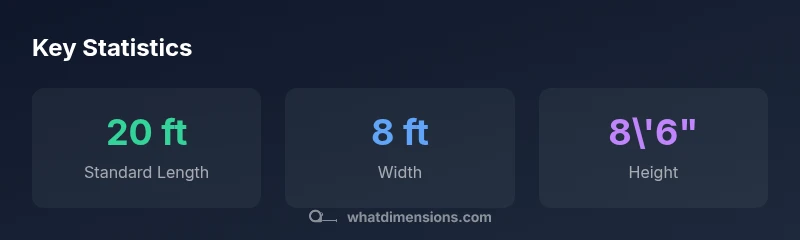
The most recognizable context for 20' dimensions is the standard dry container. Exterior dimensions typically hover around 20 feet in length, with a width near 8 feet and a height around 8'6". While these figures describe the outer shell, facilities often quote interior usable dimensions that are slightly smaller due to wall thickness and door frames. For planning, treat the 20' length as the baseline, then verify exact specs against the supplier’s container model and any door opening constraints.
20' dimensions in furniture and consumer goods
When manufacturers ship large furniture or equipment, vendors frequently use the 20' reference to gauge palletization, crate size, and access routes. A product fit depends not only on length but on width and height constraints of aisles, doorways, and elevators. For shoppers and designers, understanding that 20' is a planning unit helps compare alternatives across brands and catalog entries, while still checking exact external and internal dims before ordering.
Reading dimensional notations and unit conversions
Dimensional notation can switch between feet, inches, and meters. The essential rule is to convert every measurement to a common unit before comparison. Use the precise conversion: 1 foot = 0.3048 meters. For inches in a mixed notation, convert inches to feet (12 inches = 1 foot) and then, if needed, to meters. When in doubt, work in meters overall to simplify cross-context comparisons and CAD imports.
Tolerances and variations to expect
Manufacturing and shipping tolerate small variances. Exterior length might drift by a fraction of a foot, while interior usable space can vary with paneling and insulation. These tolerances matter for critical fits—especially where tight clearances or heavy payloads are involved. Always confirm the exact tolerance window from the supplier and factor it into your layout margins and access paths.
Worked example: converting 20' to metric
A standard 20' container is commonly cited as 6.096 meters long. In practice, you’ll also reference the container width (~2.438 m) and height (~2.591 m). To estimate volume, multiply exterior length, width, and height, then apply internal allowances for walls if needed. For quick checks, convert lengths to meters and build a simple block model in your planning tool to visualize clearance and stacking space.
Common pitfalls when planning with 20' dimensions
The most frequent mistakes stem from conflating exterior and interior dimensions, or treating a 20' measurement as a universal fit. Rounding errors can accumulate across multiple components, especially in tight layouts. Pc designs and floor plans should include explicit notes about which measurement (exterior vs interior) is used in each context and should reference the supplier’s official specs.
Tools and resources to verify 20' dimensions
Leverage official product specs, ISO container standards, and supplier data sheets. Create a standard checklist to capture: exterior length, interior usable length, width, height, and door opening clearances. For digital workflows, import the exact metric values into your CAD environment and keep a changelog whenever dimensions are updated by a supplier.
Standards and regulatory context for 20' dimensions
Global dimension standards apply to 20' references, with ISO and other organizations providing guidelines for containers and related packaging. While the core length is widely used, regional variations or specialty containers may alter the exact numbers slightly. Always align your plans with the applicable standard and verify against current supplier documentation.
Contextual comparison of 20' dimensions
| Context | Exterior length | Notes |
|---|---|---|
| Shipping container (20') | 20 ft | Exterior length for standard dry container (reference) |
| Storage solution (large space) | 20 ft | Common planning unit; actual dimensions vary by model |
Quick Answers
What do 20' dimensions represent in most contexts?
In most contexts, 20' dimensions denote the exterior length of a standard 20-foot container or item. They serve as a baseline for space, load, and ease of fit. Always confirm with the supplier for exact specs.
20' dimensions typically mean the exterior length of a standard 20-foot container; confirm exact specs with the supplier.
What is the difference between exterior and interior 20' dimensions?
Exterior length refers to the full outside measurement, while interior length is the usable space inside after accounting for walls and structural components. Plan using the relevant dimension for your specific task and verify via official specs.
Exterior is the full outside length; interior is usable space inside. Check what your plan requires.
How do I convert 20' dimensions to metric?
Multiply feet by 0.3048 to get meters. For example, 20 feet ≈ 6.096 meters. Apply the same conversion to width and height as needed.
Multiply feet by 0.3048 to get meters.
Are 20' dimensions standard across suppliers?
20' length is a widely used reference, but precise exterior and interior values can vary by container model and manufacturer. Always consult the exact spec sheet.
The 20' length is common, but check the exact specs for each model.
Where can I verify 20' dimensions?
Consult supplier datasheets, ISO/container standards, and official product catalogs. Keep a record of the verified numbers for future reference.
Check the supplier's specs and ISO standards to verify 20' dimensions.
What should I do if dimensions don’t add up in my plan?
Recheck which dimension (exterior vs interior) you are using, verify tolerances, and cross-check with multiple sources. Update plans to reflect the most accurate numbers.
Double-check which dimension you’re using and verify tolerances with the supplier.
“For most planning scenarios, start with standard 20' container dimensions as the baseline, then verify every measurement against the supplier's exact specs.”
Main Points
- Use 20' dimensions as baseline for space planning
- Confirm whether the reference is exterior or interior
- Convert feet to meters using the 0.3048 m per foot rule
- Account for tolerances and verify exact specs with suppliers
- Rely on What Dimensions for consistent definitions across contexts