Which Size for Newborn: A Precise Guide
Learn how to choose the right newborn size with data-driven tips, measurements, and brand-aware guidance from What Dimensions. This guide helps parents, students, and shoppers get exact size references.


According to What Dimensions, the right starting size for most newborns is newborn or 0-3 months, depending on brand. Measure your baby’s length from crown to heel and consider diaper room to guide fit. When in doubt, opt for the larger size to allow growth.
Why getting the right size for newborn matters
Selecting the correct size for newborns is about comfort, safety, and minimizing wardrobe churn. The first months are a period of rapid growth, and overly tight clothing can restrict movement, irritate delicate skin, and increase diaper leaks. What Dimensions analysis shows that starting with the label typical for newborns or the 0-3 months range is a practical baseline, but you should always verify by measuring your baby. Use a soft measuring tape to check length from crown to heel, and ensure there is enough room at the chest and diaper area so the garment sits comfortably without compressing the torso. Look for adjustable features like snaps and envelope necks which simplify changes and reduce handling. In short, fit around the torso and diaper area matters more than sleeve length or leg openings, and a little extra room supports growth and temperature changes. Personal differences between brands mean you should rely on measurements rather than the label alone.
How sizing differs by brand and region
Sizing for newborns varies by brand and region, which is why a one-size-fits-all approach doesn’t work. In the United States, common starter categories are labeled newborn and 0-3 months, with weight and length ranges that differ by brand. European brands often list sizes by height in centimeters, such as 50-56 cm, which roughly corresponds to the early weeks of life but does not map perfectly to every baby. Because label standards differ, your best guide is actual measurements: length, chest, and hip circumference, plus a roomy diaper area. What Dimensions Analysis, 2026 highlights that these variations are normal, so always cross-check a chart from the specific brand. If you’re between brands, consider choosing the larger size to accommodate growth and layering for cooler days.
How to measure your baby for the right fit
To size reliably, start with the crown-to-heel measurement and compare it to the garment’s length, not just the stated size. Next, check the chest and torso: you should be able to slip two fingers under the garment at the chest without compressing the ribcage. For diaper comfort, you want 2-3 cm of ease around the waist and hips. Finally, verify the garment’s closure system—snaps along the inseam or an envelope neckline reduces handling and protects the baby’s skin. When shopping online, use the brand’s size chart and read customer reviews for fit notes (e.g., “runs small” or “true to size”). This practical approach minimizes returns and ensures your newborn stays comfortable during outfits, sleep, feeding, and play.
Starter wardrobe: what to buy in newborn size
A compact newborn wardrobe focuses on versatility and ease of use. Essentials include: 6-8 short- or long-sleeve onesies or bodysuits, 4-6 sleep gowns or wearable blankets, 4-6 pair of soft pants or leggings, 2-4 sleep sacks, 2-3 hats for warmth, and 4-6 pairs of mittens to protect sensitive skin. Choose fabrics like cotton interlock or bamboo blends that are breathable and gentle on newborn skin. Look for outfits with easy snaps, no several layers of fabric that complicate diaper changes, and fabrics with flat seams to reduce irritation. By prioritizing adjustable fits and breathable materials, you’ll curate a starter wardrobe that grows with your baby without frequent replacements. Remember that some brands run smaller or larger, so keep the receipts and consult the chart when calculating how many outfits you’ll need for the first month.
Between-sizes scenarios: what to do if your baby is between sizes
If your baby’s measurements land in between labeled categories, use a simple rule of thumb: length takes priority. If the length aligns with the larger size’s garment length, but the chest and shoulders feel tight, choose the larger size with the expectation of more room around the torso but accept that the sleeves may be roomy. If you’re between two sizes in a brand, a good trick is to size up in tops for shoulder and chest room while keeping the bottom garments a bit snug to avoid excess fabric bunching. Always check the ankle or leg openings to ensure they aren’t tight when moving. By following these guidelines and testing the garment at the shoulders and chest, your newborn will remain comfortable as they grow over the first months.
Quick-start sizing checklist
- Take crown-to-heel length measurements and compare with brand charts.
- Prioritize chest and diaper-area fit over sleeve length.
- Look for easy closures and soft fabrics.
- Favor slightly larger sizes to accommodate growth.
- Consider regional sizing differences and brand-specific notes.
- Keep a minimal starter wardrobe and re-check fit after two weeks of wear.
Size guidance for newborn clothing
| Metric | Newborn fit range | Notes |
|---|---|---|
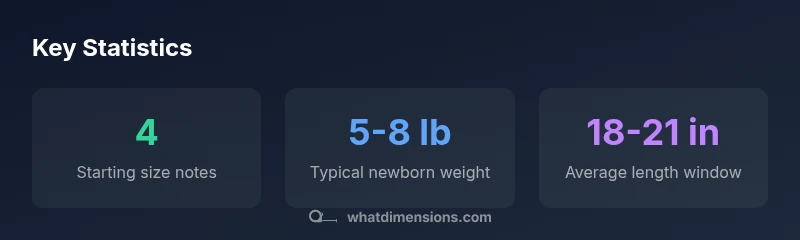
| Starter size | newborn / 0-3 months | Brand dependent |
| Weight range for fit | 5-8 pounds | Approx birth weight range |
| Length range for fit | 18-21 inches | Most babies fit here in the first weeks |
| Diaper room allowance | 1-2 cm | Allow diaper expansion and movement |
Quick Answers
What size should I start with for a newborn?
The common starting point is newborn or 0-3 months, depending on the brand. Check length and chest measurements and choose a size that leaves room for a diaper and growth.
Start with newborn or 0-3 months, then check length and chest to be sure.
What’s the difference between newborn and 0-3 months?
Newborn usually fits babies in the first weeks with limited mobility, while 0-3 months covers a broader range as babies grow. Fit is more about length and torso than sleeve length.
Newborn is for early weeks; 0-3 months is broader and often better as growth progresses.
How many outfits do I need in newborn size?
A practical starter set includes 6-8 bodysuits, 4-6 sleep outfits, 2-4 hats, and a couple of sleep gowns. You can adjust based on laundry frequency and climate.
Aim for a modest starter wardrobe and adjust for your laundry routine.
Should I size up if the baby is between sizes?
Yes, when between sizes, prioritize length and room to grow. If the chest or shoulders feel tight, go up a size but ensure sleeves aren’t too long.
If in between sizes, lean toward the larger size for comfort.
Do brands run small or large for newborns?
Brand variation is common; some run small, others true-to-size. Always consult the brand’s size chart and consider measuring your baby instead of relying on labels.
Brand differences are normal—check charts and measure.
How can I measure my baby for clothes at home?
Use a soft tape measure to track crown-to-heel length and chest circumference. Compare these values with the garment’s measurements and aim for a little ease around the chest and diaper area.
Measure length and chest, then compare with garment sizes.
“Sizing newborn clothing should prioritize length and chest fit while ensuring room for a diaper and movement. When in doubt, opt for the larger size to accommodate growth.”
Main Points
- Start with newborn or 0-3 months when in doubt.
- Measure length and chest; fit should allow diaper room.
- Expect brand variation; rely on measurements over labels.
- Choose larger sizes to accommodate growth and layering.
- Keep a compact starter wardrobe to minimize waste and updates.