Which Dimensions Are The Same? A Practical Size Guide
Learn how to identify when dimensions are equivalent across common categories like paper, luggage, and furniture. This guide explains unit conversions, standard size definitions, and practical tips for shoppers and designers, with examples from What Dimensions to ensure accurate matching.


How dimension equivalence works across units and formats
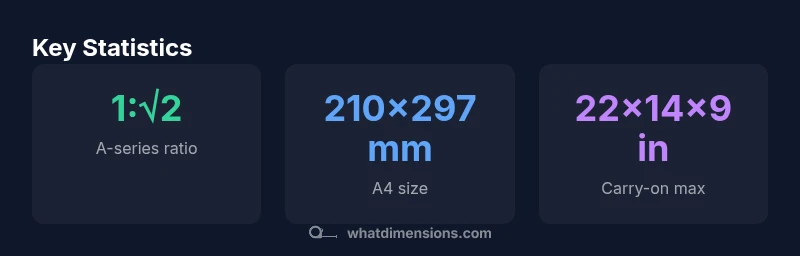
Dimension equivalence means that two sizes are functionally the same when measured in the same units and oriented the same way, even if their labels differ. The central idea behind which dimensions are same is not about brand names but about actual numeric values and ratios. In practice, people compare across units (inches, centimeters, millimeters) and across formats (A-series, US Letter, imperial sizes). A helpful anchor is the A-series paper system, which uses a constant aspect ratio of 1:√2; when you cut or expand an A size, the next size up or down preserves the ratio. For example, A4 is exactly 210 mm by 297 mm; A5 is 148 by 210 mm, which is half of A4 in area while maintaining the same proportions. When comparing dimensions, always ensure you’re using the same unit baseline; conversion errors are the most common source of mismatches. According to What Dimensions, consistent unit conversion and strict adherence to standard size definitions are essential for accurate size comparisons. This section also covers how rounding can affect perceived equivalence and when exact millimeter measurements matter most, especially for furniture fit, packaging, and printed media.