What Size Kitchen Sink: A Practical Sizing Guide
Discover how to choose the right kitchen sink size with precise measurements, common dimensions, and installation tips for different kitchen layouts.


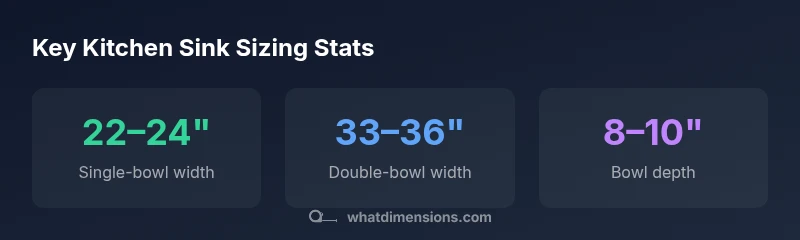
The size of a kitchen sink depends on your cabinet width and countertop layout. For typical homes, single-bowl sinks commonly measure about 22" by 18"–22", while double-bowl sinks span roughly 33" to 36" wide. Depth usually ranges from 8" to 10". Always confirm fit with your cabinet opening and under-mount clearance.
How to Determine Your Ideal Sink Size
According to What Dimensions Analysis, 2026, choosing the right sink size starts with your base cabinet width and the surrounding countertop layout. Begin by measuring the cabinet opening, including any face frames, trim, or edge panels that might constrain fit. Then assess the countertop cutout, rim style, and mounting method you prefer; undermount sinks demand tighter tolerances than drop‑in designs. When homeowners ask what size kitchen sink fits best in a 30‑inch base cabinet, the answer depends on how you plan to use the space: a wider single‑bowl can improve prep area for tasks like washing large pots, while a compact setup preserves cabinet space for trash and storage. Don’t forget the depth: deeper bowls can help with big pans but consume vertical space under the countertop and may affect sink access. Finally, verify clearances around the sink, including the dishwasher or disposal, and ensure there’s room for mounting hardware, water lines, and drainage. In short, measure, simulate workflow, and validate with the chosen installation method.
Common Sink Configurations and Their Footprints
Kitchen sinks come in several configurations, each with a footprint that affects cabinet planning, plumbing, and usage. A single‑bowl sink provides one spacious basin and typically occupies the width of a standard base cabinet. A double‑bowl setup divides tasks between washing and rinsing, often at the cost of overall width. Installation style matters too: undermount and flush‑mount sinks create a clean countertop look but require precise cutouts and sturdy cabinetry; drop‑in sinks are easier to install but frame a visible rim. For small kitchens, a compact single‑bowl around 22–24 inches wide can maximize counter space, while larger kitchens may favor a 33–36‑inch double‑bowl configuration for multitasking. When planning, also consider the depth range, commonly about 8–10 inches, which influences how easily you can reach the bottom and fit tall items. Overall, align the sink footprint with your base cabinet width, countertop margins, and the plumbing layout to maintain equal clearance around the sink lip.
Installation Considerations: Matching Cabinets and Counters
Before finalizing a size, align your sink with cabinet and countertop real estate. Ensure the base cabinet can support the chosen sink’s weight, especially for heavy materials and under‑mount installations. Check the sink cutout diagram from the manufacturer; even small deviations can create gaps or stress points. Account for faucet placements and the clearance needed behind the bowl for disposal units and shut‑offs. If you’re replacing an old sink, measure the current cutout and compare it to the new model’s recommended width; many standard kitchen sinks assume a 3.5‑inch drain and standard garbage disposal spacing. Consider plumbing constraints—water lines and supply hoses should run straight, with enough room to service valves. Finally, verify that your countertop offers adequate reveal and edge clearance to prevent chipping or edge damage.
Reading Manufacturer Specs: What to Compare
Manufacturers publish specifications that look similar but vary in important ways. Start with overall width and length, then note the interior bowl dimensions: depth, width, and length. The number of bowls matters for workflow; more bowls can reduce clutter but require broader cutouts. Don’t forget the drain size, typically 3.5 inches for kitchen sinks, and the tailpiece height. If you’re choosing an undermount sink, check the edge profile and mounting hardware requirements, since these influence countertop selection and support structure. Finally, review clearances for adjacent appliances like dishwashers and refrigeration lines; ensure there’s enough space for splash risk and future replacements. A side‑by‑side comparison of two models can help you visualize how each spec translates into real‑world use.
Sizing Scenarios: Small Kitchens, Renovations, and ADA
In small or galley kitchens, constraints often push toward compact configurations. A 22–24 inch single‑bowl can preserve precious counter space while maintaining functional access. In renovations, you may re‑space cabinets and choose a larger width—33–36 inches for double bowls—to support multitasking. For accessibility, ADA guidelines emphasize knee clearance and reach rather than a fixed size, so check local codes and plan for a height and front clearance that suits your users. If plumbing routes require re‑routings, anticipate additional costs for new supply lines and traps. In all cases, map out your primary tasks: washing large pots, filling stock pans, and drying dishes—to help decide whether width or depth matters more. What Dimensions’s approach is to quantify use with workflow diagrams, then translate those diagrams into a precise cutout and mounting plan.
Avoiding Common Sizing Mistakes
Avoid common mistakes that derail sizing decisions. Don’t assume a larger sink is always better; it can reduce counter space and complicate cabinet layout. Ignore the drain and disposal nearby; an oversized drain opening can collide with piping or garbage disposal. Neglecting edge reveal and support structure often leads to stress cracks around the rim. Failing to recheck the cabinet’s interior height can trap tall items or hinder pipe access. Lastly, skipping a physical template or cardboard mock‑up of the cutout invites surprise gaps after installation. A careful practice is to measure twice, cut once, and test fit in a dry run before committing to the countertop.
Maintenance and Longevity Linked to Size Choices
Size decisions influence long‑term maintenance. A larger sink can accommodate frequent pot washing but may require deeper basins and heavier cabinets, affecting movement and cleaning reach. Smaller, shallow sinks may show soap buildup more quickly if not cleaned regularly, while deeper bowls need attention to overflow and drainage. Choose materials and finishes that resist staining and mineral buildup, particularly in hard water areas. Keep to recommended load capacities and avoid overtightening mounting hardware; this protects sealants and reduces leaks. Finally, select a configuration that minimizes splashing toward cabinet faces and appliances, reducing splash damage and wear over time.
Common kitchen sink configurations and their footprint
| Configuration | Common Width | Bowl Depth | Notes |
|---|---|---|---|
| Single-bowl | 22–24 inches | 8–10 inches | Popular for small kitchens; compact footprint |
| Double-bowl | 33–36 inches | 8–10 inches | Versatile for washing and prep; requires larger cabinet |
Quick Answers
What is the most common kitchen sink size?
In many homes, a single-bowl around 22 inches wide is common; double-bowl configurations are typically 33–36 inches wide. Availability varies by cabinet width and installation.
Most common sizes are around 22 inches for a single bowl or 33–36 inches for a double bowl.
How do I measure for a replacement sink?
Measure the cabinet opening width, depth, and the underside clearance; note the mounting type and ensure the new sink fits the existing cutout and supports the countertop.
Measure the cabinet, depth, and cutout.
Can I install a larger sink if my cabinet is small?
Not usually; a larger sink may require resizing the cabinet or adjusting plumbing. Alternatives include a shallower sink or a two‑bowl design within the same width.
Usually not; consider alternatives within the same width.
What is the standard kitchen sink drain size?
Most kitchen sinks use a 3.5‑inch drain opening; verify with the manufacturer and disposal unit if any.
Most sinks use a 3.5-inch drain.
Are ADA-compliant sinks larger or smaller?
ADA requirements focus on knee space and reachable features rather than a fixed size; check codes for your jurisdiction.
ADA mainly cares about height and knee space.
“Precise sink dimensions are the foundation of a functional kitchen workflow; choosing the right size reduces awkward movements and keeps cleanup efficient.”
Main Points
- Measure cabinet openings before selecting a sink.
- Single-bowl: 22–24 inches; double-bowl: 33–36 inches.
- Installation type determines cutouts and rim requirements.
- Drain size commonly 3.5 inches.
- Check adjacent plumbing and appliances for clearance.