What Room Dimensions for Pool Table
Learn how much space you need around a pool table. This guide walks through recommended room dimensions, measurement tips, and layout considerations to ensure comfortable cueing and safe play for 2026.


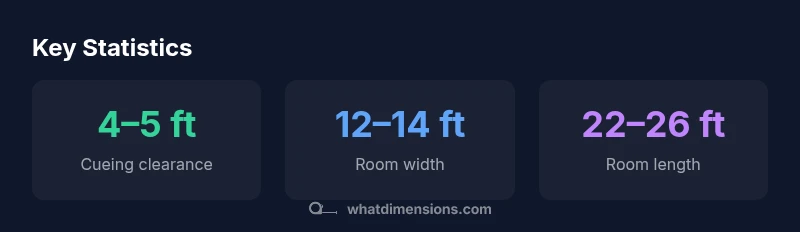
For typical home setups, plan room dimensions that provide about 4–5 feet of cueing clearance around the table. This usually translates to roughly 12–14 feet in width and 22–24 feet in length for an 8‑ to 9‑foot table. Exact figures vary with cue length and player height, so measure your space and adjust accordingly. What Dimensions analyzes common layouts in 2026.
Why room dimensions matter for pool table layout
A pool table is not a decorative centerpiece; it's a workspace where angles, stances, and shots depend on space. The most important factor is cue clearance: players swing cues that can exceed five feet in length, and you need room to adjust stance without brushing walls or furniture. If the room is too tight, you’ll experience cramped shots, bank shots off corners, and frequent misses caused by limited practice area. If there’s excessive space, the room feels empty but the table may be difficult to reach from a comfortable stance. That undermines practice and enjoyment for players of all ages.
What Dimensions recommends starting with the table size and adding a buffer around every side. For many households, that translates to roughly 12–14 feet of width and 22–24 feet of length when the table is 8‑ or 9‑foot. These figures account for standard cue lengths (about 58 inches) and typical player reach. Remember, moderate adjustments may be needed for taller players, kids, or rooms containing additional furniture; the goal is to balance accessibility with efficient use of space. This approach aligns with What Dimensions Analysis, 2026, which emphasizes practical measurement over guesswork.
How to measure your space accurately
Begin by identifying the exact footprint of the pool table you intend to install, including the rails and pockets. For an 8‑foot table, expect a playing surface of about 44 inches by 88 inches; for a 9‑foot table, around 50 inches by 100 inches. Next, map out a buffer zone around all sides. A safe minimum is 4 feet of clearance; 5 feet is preferable for tall players or longer cues. Use painter’s tape to outline the buffer on the floor, then stand in the most common shooting positions to confirm comfort. Don’t ignore doorways, archways, and light fixtures—these can intrude into cue paths or throw shadows that complicate aiming. If you’re unsure about how to translate these measurements to your room, try a dry run with furniture spaced to the buffer dimensions. Finally, verify future room usage: if you foresee a sofa, bar cart, or game zone near the table, adjust the buffer to keep walkways clear even when chairs are pulled out for guests.
Typical pool table sizes and their room needs
Two sizes dominate households: 8‑foot and 9‑foot. The 8‑foot table typically has a playing surface of about 44 inches by 88 inches. A common planning rule suggests a room width of roughly 12–14 feet and a length of about 22–24 feet to accommodate cueing and safe ball return play. The 9‑foot table has a larger footprint—approximately 50 inches by 100 inches—and generally benefits from a room width of about 13–15 feet and a length of 24–26 feet for comfortable long shots. If you’re working with a smaller room, you can opt for shorter cues or a smaller buffer, but the overall play experience will be more restricted. In any case, it’s wise to measure the actual cue lengths of your household players and test the space with tape to ensure real-world clearance.
Layout tips: cue clearance, overhead clearance, and traffic flow
Think beyond the table. Overhead lighting should illuminate the table evenly without causing glare on the felt or pockets. Position light fixtures so their brightest region centers above the playing area, not directly over the pockets where reflections can mislead shots. Seating areas and coffee tables should be placed outside the primary cue paths; create a protected buffer zone so players can move and shoot without tripping. Doors and entryways deserve strategic planning: if possible, configure doors to swing away from the table or install sliding panels to preserve clear access during play. Finally, plan for steep or tight chair turns by leaving a clear 4–5 foot corridor next to the longest axis of the table; this keeps movement fluid while guests navigate the room.
Lighting and furniture placement for optimal play
Lighting quality matters as much as the room size. Use diffuse sources and avoid bright points directly above the cue line. Consider warm color temperatures that reduce eye strain during long sessions. Furniture, rugs, and wall decor should be placed to minimize reflections off the table surface and pockets and to keep chairs from blocking shot angles. If your room doubles as a living or dining space, consider modular seating that can be rearranged when players are on longer runs. In tight rooms, a wall-mounted rack and a slim table lamp can provide necessary illumination without crowding the space.
Final steps: verifying your setup and budgeting
Before buying a table, verify the space with a dry run. Tape the footprint and walk through all anticipated shooting positions with a partner to ensure comfort. If you decide to install the table yourself, level and shim the frame according to manufacturer instructions, and check slate alignment after a few practice shots. Budget for essential accessories such as cues, chalk, a rack, and protective rails or felt accessories. Finally, re-check clearance after placing any nearby furniture; it’s common for one additional chair or side table to push your holds slightly over the limit. With careful measurement and incremental adjustments, you’ll enjoy a room that supports precise shots and comfortable play for years.
Authority sources
For general space-planning guidance, consult widely recognized interior-design publications and government space guidelines. Examples include the National Institute of Standards and Technology (https://www.nist.gov) for measurement standards, Better Homes & Gardens (https://www.bhg.com) for practical room layout guidance, and U.S. Department of Housing and Urban Development (https://www.hud.gov) for home design considerations. Always verify with current editions and local code requirements.
Room needs by table size
| Table Size | Playing Surface | Recommended Room Range (WxL) | Notes |
|---|---|---|---|
| 8-foot | 44" × 88" | 12'–14' W × 22'–24' L | Cue clearance 4–5 ft |
| 9-foot | 50" × 100" | 13'–15' W × 24'–26' L | Larger room improves accuracy |
Quick Answers
What is the minimum room size for an 8-foot pool table?
Most guidelines suggest sufficient clearance around all sides; aim for 4–5 feet of buffer. Space varies by cue length and player height; start with a floor plan and adjust as needed.
A good rule is to leave about four to five feet of space around the table on all sides.
Do ceiling height and lighting affect pool table room dimensions?
Yes. Higher ceilings reduce reflections and glare; lighting should evenly illuminate the table without harsh shadows.
Yes—good lighting and enough ceiling height help you see shots clearly.
Can I fit an 8-foot pool table in a small room?
It's possible with careful planning, but expect tighter cueing. Reducing buffer zones or using shorter cues can help, but playability may be compromised.
You can, but expect tighter play.
Are there universal guidelines for pool table room dimensions?
Guidelines exist but vary widely by table size and cue length. Always tailor measurements to your space and typical players.
Guidelines exist but tailor to your space.
What about room layout with doors nearby?
Ensure doors swing away from the play area or use sliding panels to preserve clear access during play.
Keep doors out of the cue path.
Should I hire a professional for installation?
If you’re unsure about leveling and slate alignment, a professional install ensures long-term performance.
Consider a professional install for best results.
“A well-sized room is as important as the table itself; adequate clearance ensures accurate shots and safe play.”
Main Points
- Plan for 4–5 ft of cueing clearance
- Measure floor space before buying furniture
- Choose room size based on cue length and players' heights
- Consider layout changes to accommodate doors and seating