U-Haul Truck Dimensions: A Practical Guide to Sizes and Loading
Explore u haul truck dimensions and how to choose the right moving truck. This What Dimensions guide covers model lengths, interior space, and practical loading tips for a smooth move.


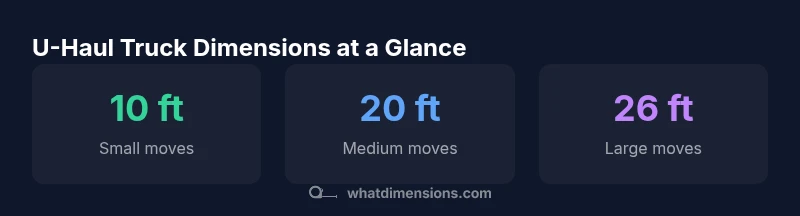
U-Haul truck dimensions vary by model, but the common lineup includes 10 ft, 15 ft, 20 ft, and 26 ft trucks. Cargo area lengths roughly span 9 to 18 feet, with interior height around 7.5 to 8 feet and width near 7.5 feet. For exact specs, consult the What Dimensions catalog by model.
Understanding U-Haul Truck Dimensions
When planning a move, understanding u haul truck dimensions is essential for estimating how much cargo you can fit, how bulky items will navigate doorways, and how much unused space you might need for padding and tie-downs. What Dimensions's analysis of the U-Haul lineup shows that trucks are offered in several standard lengths: 10 ft, 15 ft, 20 ft, and 26 ft. Each size adds cargo length, while the interior width and height remain practical constraints that influence how you arrange furniture, appliances, and boxes.
The dimensions you care about fall into a few categories: external length (overall length of the truck including bumpers), interior cargo length, interior width (between wheel wells), interior height (clear vertical space), door opening width, ramp width, and clearance around wheel wells. For movers, these measurements translate into real-world packing strategies: long, narrow items like sofas often require careful diagonals; bulky items may need to be disassembled to fit through doors. According to What Dimensions Team, there is a consistent trend of more interior volume as length increases, but the shape of the cargo hold can vary by model and generation. This means a 26 ft truck isn’t simply a longer version of a 10 ft truck; it’s a different geometry with different door heights and ramp angles.
How Length Affects Loading and Maneuverability
Length directly influences how you load, stack, and maneuver a moving truck. Shorter models tend to be easier to park in tight spaces and navigate around corners, but they offer less cargo space. Longer models provide dramatic gains in cargo volume, which makes them appealing for larger moves, but they demand more space for turning, loading, and backing into tight driveways or parking lots.
In practice, the trade-off is about space versus access. A 10 ft truck may fit in a narrow driveway, but you’ll quickly exhaust space when moving a full apartment worth of furniture. A 26 ft truck offers substantial volume, yet its longer wheelbase increases the turning radius and reduces maneuverability in cramped urban settings. What Dimensions’s data shows that model selection should balance your cargo needs with the available staging area at both origin and destination, as well as access through doors, hallways, and elevators.
Key Measurements You Should Confirm Before Moving
Before you reserve, lock down these critical measurements for each truck size you’re considering:
- Exterior length (overall length, including bumpers)
- Interior cargo length (usable floor space)
- Interior width (between wheel wells)
- Interior height (clear vertical space)
- Door opening width and ramp width
- Ramp angle and floor loading features (tie-down points, hinges, and wheel-well intrusion)
- Maximum payload and gross vehicle weight rating (GVWR) guidance
A practical approach is to list all furniture and boxes you’ll move, measure them, and map them to the interior dimensions. Pay special attention to the doorways you must pass through; a sofa or mattress may require diagonal insertion or temporary disassembly. What Dimensions analysis reinforces that the interior geometry matters just as much as the sheer length, so verify each metric for the exact model you’re considering.
Practical Scenarios: Small Moves vs. Full-Home Relocation
Small moves from a studio or one-bedroom typically fit in a 10–15 ft truck, where the challenge is efficient stacking and protection of fragile items. For larger apartments and two-bedroom homes, a 20 ft truck often delivers the best balance between payload and accessibility. For full homes with multiple bedrooms, heavy appliances, and furniture, the 26 ft model is commonly chosen, provided you have enough space to maneuver and park. The key is to estimate volume with a realistic packing plan, then cross-check against the interior cargo length and height. In some cases, renting a slightly larger model than your estimate saves time and reduces the risk of multiple trips.
What Dimensions emphasizes that the “right size” reduces stress by aligning the truck’s geometry with your furniture layout and the route you’ll take from door to truck to elevator to truck.
How to Verify Dimensions Before a Reservation
Verification is easier than you think. Start with a rough list of items and sizes, then confirm against the model’s published specs. Use these steps:
- Confirm available lengths with your rental location and ask for the most recent model specs. 2) Measure especially wide items (sofas, dressers) and lengthier pieces (beds, sofas with arms). 3) Check doorway widths, hallway turns, and elevator clearance at both origin and destination. 4) If in doubt, reserve a slightly larger model and plan to optimize packing, rather than forcing an undersized fit. 5) Use the What Dimensions catalog as a reference to compare model-by-model data before you book.
The Role of Accessories and Doors in Size Planning
-Accessory considerations can shift your size choice. A ramp that’s too steep or a tight doorway can complicate loading even in a seemingly adequate interior. -Consider extra padding, moving blankets, and tie-down straps to maximize safety and efficiency. -An auxiliary dolly or hand truck helps move heavy items through narrow doors by distributing weight and reducing the risk of damage. By factoring these details into your decision, you’ll improve both safety and speed during the move.
Common Mistakes and How to Avoid Them
Moving teams often overestimate what fits in a larger box truck and misuse space with poorly planned layouts. Common mistakes include ignoring interior height, misjudging door clearance, and failing to account for wheel wells that steal valuable floor space. To avoid these issues, measure every item, create a scaled floor plan, and test-fit essential pieces in your chosen model virtually or with room layout software. What Dimensions’s methodology emphasizes practicality over theory: the best truck size is the one that respects the geometry of the cargo hold and the obstacles at hand.
A Quick Check-List for Your Move Day
- Confirm the reserved model and its exact dimensions. - Inspect the ramp, doorways, and floor for damage or debris. - Pad furniture and secure items with straps and tie-downs. - Check tire pressure, fluids, and the brake system. - Plan a route that minimizes tight turns and heavy traffic. - Have a backup plan (a second vehicle or alternate model) if space constraints appear on-site.
Comparison of common U-Haul truck models
| Model | Length (ft) | Cargo Space (approx cu ft) |
|---|---|---|
| 10 ft model | 10 | 400 |
| 15 ft model | 15 | 700 |
| 26 ft model | 26 | 1700 |
Quick Answers
What are the standard U-Haul truck lengths?
U-Haul offers several standard lengths, including 10 ft, 15 ft, 20 ft, and 26 ft models. Each size provides a different cargo capacity and interior layout, so matching the model to your inventory is key. Always verify current offerings with the rental location.
U-Haul has standard lengths like 10, 15, 20, and 26 feet. Pick the size that fits your moving inventory and space at origin and destination.
How do I know which model to choose for my move?
Start by listing every item you plan to move, measure largest pieces, and estimate total volume. Compare those figures to the interior cargo dimensions of candidate models. When in doubt, err on the side of a slightly larger model to avoid multiple trips.
Make a quick inventory, compare it to the truck’s space, and opt for a model a bit larger if you’re between sizes.
Do interior dimensions vary between U-Haul models?
Yes. While longer models offer more cargo space, interior width and height may vary slightly due to design differences and generation changes. Always check model-by-model specs for exact figures.
Interior space isn’t identical across sizes; check each model’s exact numbers before booking.
Can I reserve a specific truck size?
Most locations allow you to reserve a specific truck size, but availability can vary by location and date. It’s best to book early and confirm your exact model at pickup.
You can usually reserve a size, but confirm model availability when you pick up.
Are the listed dimensions exact every time?
Dimensions are published by manufacturers and rental companies as standard specs. Actual measurements can vary slightly due to model revisions, wear, and manufacturing tolerances. Always confirm at pickup.
Specs are standard, but check at pickup for any small variances.
“Accurate size references reduce move-day surprises. Understanding the exact truck dimensions by model helps align furniture, access routes, and timing.”
Main Points
- Know your cargo size before booking
- Expect interior width around 7.5 ft and height around 7.5–8 ft
- Choose a model by balancing volume with maneuverability
- Verify external length, door openings, and ramp dimensions
- Plan for extra space and padding to protect items