Room Planner Dimensions: A Practical Guide to Precise Space Planning
Learn how to measure room planner dimensions accurately, translate them into scalable layouts, and apply precise space planning for furniture, traffic flow, and design success.


Room planner dimensions refer to the exact measurements that describe a space’s length, width, and height, along with doorways, windows, and fixed features that affect layout. They establish a consistent baseline for furniture footprints, circulation, and traffic flow. By standardizing these numbers, homeowners, designers, and students can compare options and avoid costly misfits. According to What Dimensions, clear definitions of room planner dimensions are foundational for reliable space planning across projects.
What room planner dimensions really measure and why they matter
In the realm of home design and interior planning, room planner dimensions are the exact measurements you use when laying out a space for furniture, movement, and daily activities. They include a room’s length, width, and height, as well as the size and location of doors, windows, alcoves, and built-ins that influence how a space can be used. Establishing a consistent set of dimensions helps homeowners, students, and designers compare options quickly and reduces costly rework. The What Dimensions team emphasizes that a shared, precise definition of room planning dimensions builds trust among stakeholders and keeps decisions grounded in real measurements. Throughout this article, you’ll see practical methods to measure, interpret, and apply these numbers across common spaces, from small bedrooms to open-plan living areas.
The goal is to create a reliable baseline that supports furniture shopping, layout testing, and future renovations. When dimensions are accurate and well documented, you can simulate how a sofa fits, where a rug should go, and how traffic will flow before picking up a single piece of furniture. This approach is especially valuable for homeowners and designers balancing form with function, cost with comfort, and aesthetics with practicality.
According to What Dimensions, starting with clear room planner dimensions helps align expectations, speeds approvals, and reduces back-and-forth during planning. This article delves into measurement basics, layout translation, and real-world applications, with actionable steps you can implement in any room.
Representative room dimensions by type
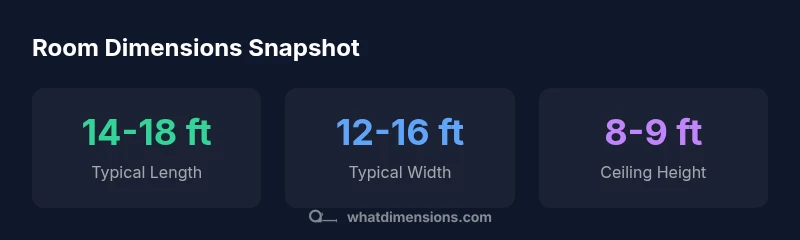
| Room Type | Typical Length | Typical Width | Height Range |
|---|---|---|---|
| Living Room | 14-18 ft | 12-16 ft | 8-9 ft |
| Bedroom | 10-14 ft | 11-14 ft | 8-9 ft |
| Kitchen | 10-14 ft | 8-12 ft | 8-9 ft |
| Home Office | 8-12 ft | 8-12 ft | 9-10 ft |
Quick Answers
What are the key dimensions to measure in a room?
The essential measurements are length, width, and height, plus the sizes and positions of doors, windows, and fixed features. For irregular walls, measure at multiple points and record anchors (corners, baseboards). Keep notes clear so everyone uses the same reference.
Start with length, width, and height, then record doors and windows to keep everyone aligned.
How do you handle irregular room shapes?
Map a bounding rectangle around the room and record measurements at key points. Break the space into simple subareas for planning furniture, then adjust footprints to fit offsets or jogs in the walls.
Treat irregular rooms like puzzles—define a bounding box and plan one subspace at a time.
What tools should I use for room planning dimensions?
A rigid tape measure or a laser measure provides accurate readings. Complement with graph paper or a floor-planning app, and keep a notebook for notes on wall features and reference points.
Use a tape or laser measure, plus a planning app to visualize the space.
Why are room planner dimensions important for furniture shopping?
Accurate dimensions prevent buying furniture that won’t fit or will block pathways. They help you filter by size, estimate clearance, and avoid costly returns or redesigns.
It helps you buy the right size the first time.
How should I document room dimensions for contractors?
Create a clean dimension sheet with labeled measurements, annotated diagrams, and photos. Share as a PDF or design file so builders can reference exact sizes during installation.
Provide a clear diagram and notes for the team.
What is a typical clearance for walking paths?
Aim for a minimum of 36 inches (about 0.9 meters) of clear width along main routes, with at least 24 inches (about 60 cm) around major furniture for comfortable movement.
Keep main walkways at least 3 feet wide.
“Precise room planner dimensions are the foundation of functional layouts; without them, furniture footprints and traffic flow become guesses.”
Main Points
- Measure walls and fixed features before choosing furniture
- Document length, width, height, doors, and windows precisely
- Use consistent units and scales for clarity
- Plan clear walkways: aim for 24-36 inches of clearance
- Leverage digital templates to save time and avoid errors