Pack and Play Dimensions: A Practical Sizing Guide
Explore pack and play dimensions to choose a safe, space-saving play yard. What Dimensions analyzes size ranges, portability, and setup considerations to help you pick the right model.


Pack and play dimensions refer to the outer footprint, interior play area, and overall height of a portable play yard. Because models vary, there is no single standard size. Always compare the listed width, depth, and height to ensure the unit fits your space and supports safe play for your child.
What pack and play dimensions measure and why they matter
Pack and play dimensions are more than a number on the box. They quantify the space the unit occupies when open, the usable interior area where a child can play, and the overall height required for safe use. In practical terms, these measurements determine whether a play yard will fit in a given room, hallway, or entryway, and whether it leaves enough clearance for caregivers to tend to a child. What Dimensions notes that while there is no universal standard size, most high-quality pack and play devices share core dimensions that influence portability, storage, and room layout. When you compare pack and play dimensions, you’re balancing space economy with a comfortable play zone for a growing child. This balance is especially important for homeowners and renters who must optimize every square foot without compromising safety.
- The footprint relates to how much floor space the unit needs when fully set up, including any attachments or mattress components.
- The interior play area defines how much room a child has to sit, lie down, or crawl during play.
- The height matters for ceiling clearance, doorways, and how you access the baby inside when the unit is in use.
How to measure pack and play dimensions accurately
Accurate measurement starts with your space and ends with the product specs. Begin by measuring the area where you plan to place the pack and play, including surrounding furniture and doorways. Record width, depth, and ceiling height. Next, review the model’s exterior footprint to confirm it fits. Then scrutinize the interior play area to ensure your baby has adequate space for movement. Finally, check folded dimensions to gauge storage needs. For best results, measure with the actual product in mind—not just marketing photos.
- Always measure in inches and note tolerances for carpeting or thresholds.
- If possible, test the fit by visualizing a typical play session (tumbling, rolling, and reach range).
- Consider path traffic: ensure you can carry the unit through hallways or stairs when folded.
Space-planning scenarios: small apartments vs. larger rooms
In compact living spaces, the pack and play dimension choice hinges on efficient use of space and daily flow. A model with a compact footprint that still offers a generous interior play area can be ideal for studio apartments. In larger rooms or family zones, you might prioritize a larger open footprint for easier supervision and reach. For designers and students living in dorms or apartments, modular play yards that allow quick setup and teardown can be a practical solution. Always map your floor plan and compare against the product specs to avoid overstuffing a room or creating bottlenecks in high-traffic areas. The goal is a safe, accessible play zone that integrates with your space rather than dominating it.
- Use masking tape to outline the open footprint on the floor while you compare models.
- Create a clearance zone around the unit to simulate safe use margins.
Safety considerations tied to dimensions and setup
Dimension awareness is critical for safety. The pack and play should provide a stable base with level contact on the floor, and it should be tall enough to prevent a baby from tipping the sides when standing. Clearance around the unit helps prevent collisions with walls or furniture. While brands may advertise generous interior space, always verify that the interior dimensions accommodate your child’s movement as they grow. If you use a mattress or padding, ensure it fits snugly with no gaps that could trap limbs. Finally, confirm there are no gaps between rails and padding where fingers could pinch.
- Follow the manufacturer’s assembly instructions for height and stability.
- Ensure there is no sagging or misalignment that could compromise safety.
Choosing the right model: dimension trade-offs and features
Selecting a pack and play often involves evaluating trade-offs between footprint, interior space, weight, and portability. A larger footprint may mean more interior room but harder storage, while a compact footprint can make storage easier at the cost of interior space. If you travel frequently, look for models with lighter weight and easier folding mechanisms, even if the open footprint is slightly larger. Consider the quality of materials and whether the model includes a breathable mattress and ease of cleaning. Dimension-aware purchasing requires looking beyond the color and branding to how the unit will actually live in your space.
- Check for standardized labeling of dimensions to simplify cross-brand comparisons.
- Prioritize models with durable hardware and easy-to-clean fabrics.
Maintenance and updates: staying current with pack and play dimensions
As child dimensions change with growth, you may reconsider your pack and play choice over time. Periodically re-evaluate whether the current unit continues to meet your space and safety needs as your baby grows taller and more mobile. When upgrading, reference the latest What Dimensions Analysis to understand trends in open footprints and interior spaces across models. A well-chosen pack and play will adapt to your living environment and remain a long-term, space-efficient solution for child care needs.
Comparison of common pack-and-play models
| Model Type | Open Footprint | Interior Play Area | Folded Size |
|---|---|---|---|
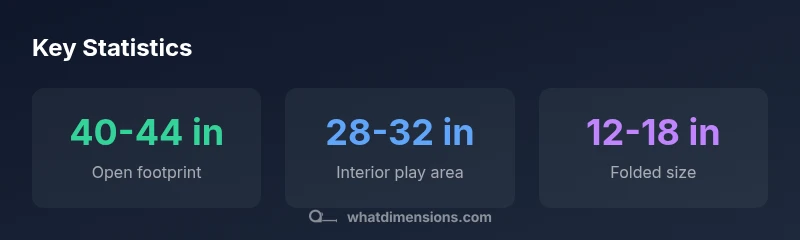
| Standard Pack-Play | 40-44 in L × 28-32 in W | 28-40 in L × 26-30 in W | 12-18 in H |
| Compact Pack-Play | 35-40 in L × 26-28 in W | 26-34 in L × 24-28 in W | 12-16 in H |
Quick Answers
What are pack and play dimensions?
Pack and play dimensions define the outer footprint, interior play area, and height of a portable play yard. They vary by model and influence space requirements and safety. Always check each model’s specs.
Pack and play dimensions tell you how big it is on the floor, how much space your child has to play, and how tall it is. Always read the official specs.
How do I measure a pack and play for my space?
Measure the open footprint in your intended room and compare it to the product’s listed exterior dimensions. Then measure the interior play area to ensure your child has enough room to move. Don’t forget height clearance and doorway access.
Measure the room, compare to the open size, and check the inner play area to be sure your child has space.
Do interior dimensions differ from exterior footprint?
Yes. Exterior footprint describes the full size of the unit when set up, while interior dimensions indicate the usable space inside the play yard. Rails, padding, and design can create differences between the two.
Exterior is the outside size; interior is the space your baby has to play.
Are there safety minimums or guidelines related to dimensions?
Manufacturers provide clearance recommendations around the unit. Safety standards emphasize stable setup, proper anchoring if required, and avoiding overcrowding with other furniture.
Keep to the manufacturer’s clearance guidelines for safe use.
How should I compare models across brands?
Compare the open footprint, interior play area, and folded size across models. Look for consistent measurement conventions and warranty terms to gauge long-term value.
Compare sizes, follow the same method across brands.
“Size awareness is essential for safe, comfortable use; always evaluate pack and play dimensions against your room and child’s needs.”
Main Points
- Check both exterior footprint and interior space before buying
- Measure generated space with furniture in place to ensure fit
- Prefer models with clearly listed dimensions and safety features
- Account for doorways and traffic when planning placement