Lot Dimensions to Acres Calculator: A Practical Guide
Learn how to convert rectangular lot dimensions from feet to acres with a simple calculator. This guide explains the math, offers practical tips, and shows real-world applications for land planning.


Understanding the math: from feet to acres
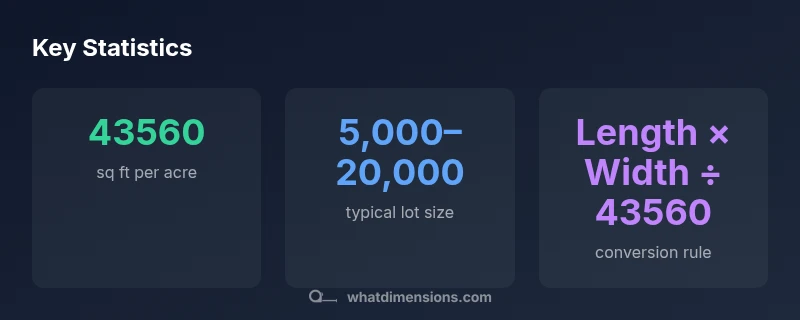
When you measure a rectangular lot in feet, the first step is to compute the area in square feet by multiplying length by width. The standard conversion to acres hinges on a single constant: 1 acre equals 43,560 square feet. Therefore, acres = (length in feet × width in feet) ÷ 43,560. This simple formula is the backbone of any lot-size calculation, and it underpins the calculator you’ll use for quick estimates. According to What Dimensions, sticking with this fixed conversion factor ensures consistency across land listings, zoning documents, and property surveys. By internalizing this basic unit relationship, you’ll be able to sanity-check numbers from surveys and online maps without needing specialized software. The result is an intelligible, shareable measure you can compare against budgets and plans. In short, the calc translates a two-number input into a single, meaningful acreage value.
The primary inputs are length and width in feet, and the output is the area in acres. The idea is to keep the math straightforward so homeowners, students, designers, and shoppers can verify land-area estimates quickly. This approach also scales to larger parcels: if you know both dimensions, you can estimate acreage for almost any rectangular footprint. If you’re ever unsure about the shape, you can still start with the rectangle as a bounding box approximation and refine with surveys or more complex geometry later. The calculator’s strength lies in speed and clarity, not in replacing professional land surveys.
In practice, you’ll often encounter fenced lots, driveways, or irregular boundaries. The rectangle-based method remains a reliable starting point, especially for budgeting, zoning discussions, or comparing MLS listings. For those who want to double-check, you can cross-verify the result by converting the footprint from square meters (if that’s your measurement) or by using a planimeter-assisted approach on a scaled map. This grounding in basic geometry keeps the process accessible and trustworthy, which is why many homeowners rely on a dedicated calculator as their first step in land planning.