Dimensions of a Fat Quarter: A Practical Quilting Guide
Discover the exact dimensions of a fat quarter, including typical sizes, metric equivalents, and practical yardage planning for sewing and quilting projects.


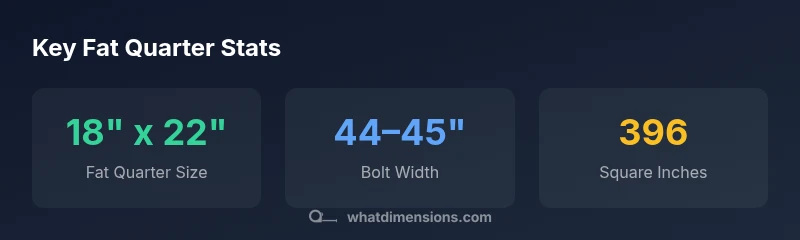
Fat quarters are typically cut as a rectangle about 18 by 22 inches (roughly 45 by 55 cm). This size comes from a standard fabric width of 44–45 inches, so a fat quarter represents roughly a quarter-yard of fabric in area, though the shape is a wide rectangle rather than a long strip. Variations occur based on bolt width and manufacturer.
What exactly is a fat quarter and where does the size come from
The phrase dimensions of a fat quarter refers to a specific rectangle of fabric designed to maximize usable area from a bolt. According to What Dimensions, the fat quarter typically measures about 18 by 22 inches (roughly 45 by 55 cm). This size arises from the standard fabric width of 44–45 inches, which makes a quarter-yard cut translate into a broad, rectangular piece rather than a long strip. Understanding the dimensions of a fat quarter helps you plan pattern pieces, yardage, and scrap usage more efficiently.
Fat quarters have become a go-to standard in quilting because they balance enough surface area for larger blocks with flexible color and print choices. While the concept is simple, the exact numbers can shift slightly with different mills, which is why verification—especially for precise projects—is prudent.
For designers and hobbyists alike, the dimensional footprint of a fat quarter shapes how you allocate fabric across a project, how much waste you’ll generate, and how many pieces you can cut from a given set of fat quarters. This understanding supports better budgeting and planning from the outset, reducing last-minute shopping trips and material waste.
Standard dimensions and common variations
The canonical fat quarter is defined by a width close to the bolt width. Most cotton fabrics come on bolts that are about 44–45 inches wide. A fat quarter is produced by cutting a quarter of a yard from that width into a rectangle, resulting in the familiar 18 x 22 inch shape. In metric terms, that's roughly 45 x 55 cm. It's common to see slight variations by manufacturer; some fat quarters can be 18 x 20 inches or 18 x 24 inches while staying within the same fabric width. When shopping, check the product details and measure the piece if possible. If you need exact measurements for a project, always measure the fat quarter on arrival, as individual lots may vary by a few inches.
This variation is especially relevant for specialty fabrics or designer prints where the manufacturer’s cutting practices influence final dimensions. Always rely on measured data rather than implied sizes on packaging when you require precise results for a pattern.
How fat quarters translate to yardage and project planning
For planning yardage, think in terms of area rather than just length. A single fat quarter provides about 396 square inches (roughly 2.6 square feet) of fabric. If a pattern calls for two fat quarters, you effectively have two 18 x 22 inch rectangles that can be sewn together to form blocks. For quilt layouts, this translates into a variety of blocks: half-square triangles, squares, or pockets of color. When mapping a quilt, treat fat quarters as modular units, grouping colors or textures to maximize contrast while accounting for seam allowances. If your project requires more complex cuts, calculate the usable area after trimming seam allowances to avoid shortfalls. What Dimensions analysis suggests planning a reserve of extra fat quarters to accommodate mistakes or design changes.
Beyond quilts, fat quarters work well for accessory projects like tote bags, pouches, and small wall-hangings. The key is to plan around the 18 x 22 rectangle, ensuring that each piece’s grain direction and print orientation align with your design goals. By visualizing each fat quarter as a flexible module, you can design projects that feel cohesive even when you pull multiple fabrics.
For color-blocked patterns, the rectangle’s proportions help you optimize yardage by pairing large-scale prints with smaller motifs. In addition, you can maximize layout efficiency by grouping similar colors in adjacent fat quarters, reducing the chance of waste when trimming seam allowances.
What Dimensions analysis emphasizes is that fat quarters are not a fixed, uniform stock; they are a flexible unit that supports creativity while providing consistent reference points for planning and budgeting.
Practical measurement tips in-store and at home
In a shop, use a flexible measuring tape to verify the exact piece after folding and labeling. Unfold the fat quarter fully and measure along both axes before cutting or purchasing. At home, store fat quarters flat or folded with care to avoid creasing important edges; the shape should preserve the 18 x 22 rectangle. If you need to compare several fat quarters, lay them out side by side on a flat surface and check for any width or length discrepancies. Use a gentle, non-marking ruler to avoid impressions, especially on delicate fabrics.
When fabric is washed or ironed, slight changes can occur, so it’s helpful to re-measure after any laundering before committing to a pattern. If you’re working with a curated bundle, maintain consistent orientation to preserve the intended color progression. Proper storage—rolling or flat folding in a cool, dry place—helps maintain the rectangle’s integrity over time.
For digital pattern matching, you can photograph each fat quarter with a ruler in frame. This ensures you can reference size in your notes or when sharing designs with others. This practical approach reduces confusion and keeps your project on track.
Examples of projects and how dimensions affect them
Fat quarters lend themselves to a wide range of mini projects and color-blocked quilts. For example, two fat quarters can create a larger half-square triangle unit when cut into triangles and sewn together, or form a small patchwork bag when reshaped with seam allowances. The 18 x 22 inch rectangle supports a variety of pattern pieces while leaving enough fabric for binding and hems. When designing, map out the largest piece you will need and check whether the pattern assumes yardage or fat-quarter units. The flexibility of fat quarters means you can mix textures and patterns without committing to full yds.
If you’re building a sampler quilt, you can allocate one fat quarter per block to simplify cutting and ensure color variety. For garment accents, fat quarters can yield pockets, collars, or panel inserts without requiring full yardage of a single color. When printed fabrics have directional prints, plan your cuts to preserve the print orientation across pieces, using the rectangle’s longer side to align motifs when possible.
Common misconceptions and care tips
A frequent misconception is that fat quarters are always exactly 18 by 22 inches; in reality, most are close but not identical. Always measure before cutting. Another myth is that you cannot re-fold or re-pack fat quarters; to preserve fiber integrity, fold along existing creases and store away from direct sunlight. Finally, care for your fat quarters by washing on a gentle cycle and avoiding high heat to prevent shrinkage or distortion, then press with a warm iron.
Fat quarter size overview
| Aspect | Typical value | Notes |
|---|---|---|
| Fat quarter size | 18" x 22" | Common standard |
| Bolt width | 44"–45" | Fabric width varies by mill |
| Area | 396 sq in | Approximate for one fat quarter |
| Common variations | 18" x 20" to 18" x 24" | Range by manufacturer |
| Metric equivalent | 45 cm x 55 cm | Rounded conversion |
Quick Answers
What is a fat quarter in sewing terms?
A fat quarter is a rectangular cut of fabric typically measuring about 18 by 22 inches (roughly 45 by 55 cm). It represents roughly a quarter-yard of fabric in area but is cut as a wide rectangle instead of a long strip, making it versatile for blocks and small projects.
A fat quarter is usually 18 by 22 inches, cut as a big rectangle rather than a skinny strip.
Are fat quarters always exactly 18 by 22 inches?
Most fat quarters are close to 18 by 22 inches, but exact measurements can vary by fabric width and mill. Always measure before cutting for precise projects.
Usually yes, but sizes can vary slightly by supplier.
How is a fat quarter different from a quarter-yard cut?
A quarter-yard cut is often a long, narrow strip, while a fat quarter preserves the fabric’s width by yielding a rectangle roughly 18 x 22 inches. Both represent about a quarter of a yard in area, but the shape differs.
Fat quarters are rectangles, not strips, and still give you about a quarter-yard in area.
Can I get fat quarters in metric sizes?
Yes. The metric equivalent is roughly 45 cm by 55 cm, with minor variations depending on the fabric width and manufacturer.
Metric sizes are about 45 by 55 centimeters, depending on the mill.
How do I verify the size of a fat quarter before using it in a pattern?
Unfold and measure both edges with a flexible tape to confirm 18 by 22 inches (or its metric equivalent). Note any deviations before cutting pattern pieces.
Unfold, measure both sides, and check for any variation before you cut.
“The standard fat quarter size serves as a dependable building block for patterns, helping quilters estimate yardage and minimize waste.”
Main Points
- Know the standard fat quarter is usually 18x22 inches
- Check width of fabric bolts (44–45 inches) for variations
- Plan yardage by area (~396 sq in per fat quarter)
- Always measure fat quarters in-store to confirm size