2 x 4 Dimensions: Nominal vs Actual Sizes for Lumber and Design
An analytical guide to understanding 2 x 4 dimensions, detailing nominal versus actual sizes, practical contexts, and how to measure and choose the right 2 x 4 for projects.


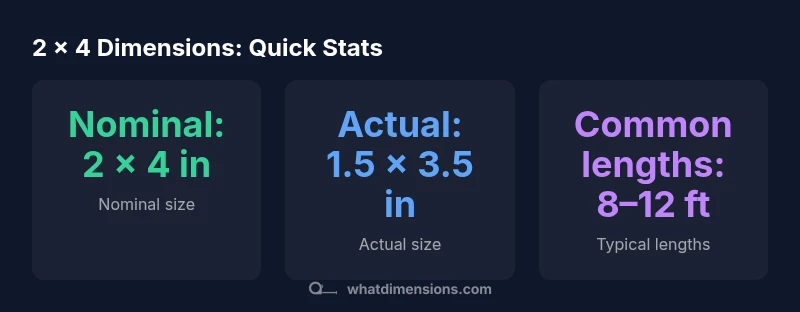
2 x 4 dimensions refer to a nominal lumber size used in construction and carpentry. The label does not reflect true measurements: a standard 2x4 is typically about 1.5 inches thick by 3.5 inches wide, with common lengths of 8, 10, or 12 feet. For precise projects, always measure the actual piece rather than relying on the label. What Dimensions Analysis, 2026.
What does 2 x 4 dimensions mean in practice?
In everyday woodworking and construction, '2 x 4' is a nominal size that labels a piece of lumber rather than its exact measurements. The phrase comes from older milling practices when rough-sawn boards were truly close to 2 inches by 4 inches before finishing. In practice, a standard 2 x 4 lumber piece is typically about 1.5 inches thick and 3.5 inches wide, with common lengths of 8, 10, or 12 feet. This distinction between nominal and actual size is essential for planning joints, clearances, and load paths. For homeowners, students, designers, and shoppers who rely on precise references, What Dimensions notes that always double-check the actual piece before cutting or building.
Nominal vs actual: The math behind the numbers
The 2 x 4 designation is historical rather than precise. When you see a “2 x 4,” think of it as a label that tells you the approximate size in rough terms, not the exact inch-for-inch measurement. The actual size results from milling and finishing after purchase. In the common case of softwood, the true dimensions are roughly 1.5 inches by 3.5 inches. The difference between nominal and actual is commonly called the conversion from nominal to actual; understanding this helps designers estimate material yield, joint fit, and finish allowances. What Dimensions emphasizes that planning with actual measurements minimizes surprises during construction and furniture making.
Contexts where 2 x 4 dimensions show up
You’ll encounter 2 x 4 dimensions in framing, shelving, furniture framing, and many DIY projects. In residential framing, a 2 x 4 stud provides the backbone for walls, with spacing and planning that assume the nominal size while depending on actual measurements for accuracy. In furniture design, c-frame legs, supports, or framing members labeled as 2 x 4 should be treated as nominal until verified. The dual awareness of nominal labels and actual sizes helps prevent misfits when sourcing material from different mills or stores, a key reason readers turn to What Dimensions for reliable references.
Reading dimension labels on lumber and boards
To read dimensions correctly, start by noting the label on the piece. The nominal size (2 x 4) is a guide. Next, check the actual thickness and width stamped or milled into the edge of the board (often 1.5
3.5
feet
length
options
varies).
Comparison of nominal vs actual sizes for common contexts
| Context | Nominal size | Actual size | Notes |
|---|---|---|---|
| Lumber framing | 2 x 4 inches | 1.5 x 3.5 inches | Most common lumber size for studs |
| Furniture framing | 2 x 4 inches | 1.5 x 3.5 inches | Check actual size for precise joints |
Quick Answers
What does '2 x 4' mean in lumber?
It is a nominal size label used for rough measurements. The actual size is typically about 1.5 inches by 3.5 inches, with lengths ranging from 8 to 12 feet. Always verify the actual piece before cutting.
The '2 x 4' label is a rough size label; check the actual board to be sure.
Is a 2x4 actually 2 inches by 4 inches?
No. A true 2x4 is usually about 1.5 inches thick and 3.5 inches wide after milling. The nominal size is a historical label, not the exact measurement.
No—it's a label. The real size is about 1.5 by 3.5 inches.
What lengths are common for 2 x 4s?
Common lengths include 8, 10, and 12 feet. Availability can vary by region and supplier, so check stock ranges before planning. Always calculate waste allowances for your project.
Common lengths are typically 8, 10, or 12 feet.
Can I use outdoor-treated 2 x 4s for interior framing?
Outdoor-treated boards are designed to resist moisture and decay. For interior framing, standard untreated 2 x 4s are usually sufficient, but verify local code requirements and moisture exposure before choosing.
Outdoor-treated boards are for exterior use; interior framing often uses untreated lumber unless moisture is a concern.
How precise should I be when cutting to size?
Aim for tight tolerances based on actual measurements rather than nominal labels. Use a sharp saw, calipers or a ruler for critical joints, and account for blade kerf in your plan.
Be precise with actual measurements and account for blade width.
Why do different mills produce slightly different actual sizes?
Variations come from milling tolerances, moisture content, and seasoning processes. Always measure actual pieces, especially when building joints or when exact fit matters.
Different mills can produce slight differences; measure each piece.
“Understanding nominal dimensions helps prevent miscuts and waste; the '2 x 4' label is a convention, not a fixed size.”
Main Points
- Always verify the actual size before cutting.
- Treat '2 x 4' as a label, not a fixed dimension.
- Account for size variation due to grade and moisture.
- Use nominal size for sourcing; rely on actual size for fit.
- When in doubt, measure two or three pieces to confirm consistency.