RV Queen Bed Dimensions: A Practical Guide to Fit in Small Spaces
Explore typical RV queen bed dimensions, how lengths vary by model, and practical measurement tips to ensure a comfortable, space-efficient sleep setup in your RV.


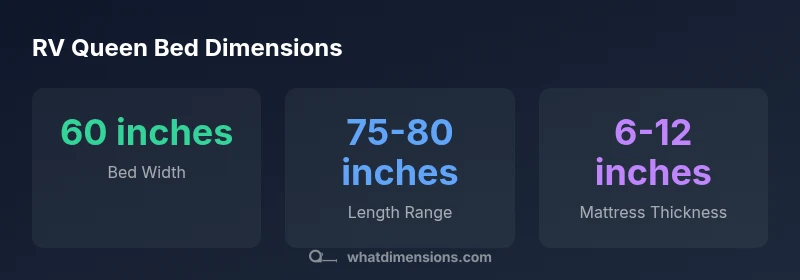
RV queen bed dimensions generally measure 60 inches in width and between 75 and 80 inches in length, though exact figures vary by model and layout. Always confirm the exact footprint of your specific RV bed before buying a mattress or frame. If you’re shopping, measure the sleeping area first, including clearance for sheets and bedside furniture, and plan for any slide-outs or overhead cabinets.
The Reality of RV Queen Bed Dimensions
In an RV, the term “queen” is not a universal footprint. The bed area is shaped by the floor plan, slide-outs, and storage features. According to What Dimensions, the RV queen footprint most commonly sits around 60 inches wide and roughly 75 to 80 inches long. Some models use a 60x75 footprint (often called a short queen), while others accommodate 60x80 configurations. The exact footprint depends on the coach’s design, bed platform, and whether the bed is fixed or convertible. Before purchasing a new mattress, measure the space where the bed sits—head to foot and along the sides—and check access for bed rails or under-bed storage. This upfront check prevents mismatches that complicate bedding and nightly movement. What Dimensions emphasizes that even within the same line, floorplans can differ, so always verify the precise numbers for your unit. The bottom line is to treat “queen” as a family of footprints rather than a single size, which helps you select compatible sheets, frames, and supports.
Width and Length: What Most RV Queens Share
Most RV queens are designed around a standard width of 60 inches to maximize interior efficiency. This width supports regular queen sheets and fitted sheets, and it keeps the bed centered in common RV layouts. Lengths typically fall in a 75–80 inch range, with 75 inches common for shorter floorplans and 80 inches more frequent in deeper or longer models. This range accommodates adult sleepers and a variety of sleeping configurations, but it also means a typical household queen mattress (often 80 inches long) may not fit in many RV spaces without using an RV-specific mattress or shortening the footprint. If your space uses a 75-inch length, choose compact sheets and a frame with shallow clearance.
Common Variations You Might Encounter
Beyond width and length, several variations can affect fit:
- Short queen vs. standard RV queen: Short queen commonly refers to 60x75, while the standard RV queen is closer to 60x80 depending on the builder.
- Non-standard lengths: Some floorplans monolithically use intermediate lengths to align with cabinetry or storage features.
- Convertible or murphy setups: Some RVs integrate sofa-to-bed or murphy-bed mechanisms, which shift the footprint when deployed.
- Clearance considerations: Slips in overhead cabinets or walkways can constrain sleeper movement and sheet fit. Knowing these variations helps you choose the right mattress and accessories for your specific RV.
How to Measure Your RV Space Accurately
Start by clearing the area. Use a flexible tape measure to capture the bed width at the widest point, then measure length along the foot and head walls from wall to wall. Measure clearance at both sides for bed skirts and nightstands, and check the space above the mattress for overhead storage or fixtures. If the room isn’t perfectly rectangular, measure diagonally between corners to confirm the maximum available length. Don’t forget to account for the bed frame or platform thickness, as this adds to the total footprint. Finally, validate entry points: ensure you can bring in or rotate a mattress through doors and hallways without removing cabinets or doors. A precise measurement process saves headaches at purchase time and ensures a comfortable, properly fitting bed.
Mattress Thickness, Comfort, and Fit
In mobile spaces, mattress thickness matters as much as footprint. Thicker mattresses (8–12 inches) offer enhanced comfort but can reduce available clearance and complicate bedding. If space is tight, consider a thinner mattress (6–8 inches) paired with a supportive foundation designed for RV usage. Low-profile bed frames reduce the risk of headboard interference with overhead cabinets and keep the sleeping surface at a practical height for exit and entry. If you frequently travel with devices or bedding piling up near the bed, prioritize a breathable comfort layer and appropriate edge support to maintain even weight distribution when you sit on the edge.
Bed Frames, Slats, and Accessories for RVs
RVs benefit from low-profile frames and compact slats that don’t protrude into walkways. Look for beds with integrated under-bed storage to maximize space without sacrificing comfort. For sheets, choose deep-pocket fitted sheets sized for RV footprints, and verify that the bed’s mattress depth matches the sheet depth to avoid slipping. Consider a bed with a simple frame that can be disassembled for trailer storage or a lightweight platform that reduces vibration during travel. If you plan to retread a replacement, bring your exact footprint measurements to ensure compatibility with slats, bed rails, and headboards.
Practical Checklist: Before You Buy or Upgrade
- Confirm the exact RV queen footprint (width and length) for your unit.
- Measure surrounding clearance to guarantee easy bed entry, exit, and storage access.
- Check mattress depth and frame thickness to avoid interference with overhead cabinets.
- Select a low-profile frame if ceiling height or cabinet clearance is limited.
- Consider a mattress designed for mobile use (anti-sag, breathable cover, and lightweight materials).
- Bring any existing sheets to test fit during shopping to avoid wrong-pocket issues.
- Review entry paths and door widths to ensure the mattress can be moved in and out without disassembly.
- If you travel with kids or guests, evaluate bunk or convertible arrangements to match your space and comfort needs.
Typical RV queen bed footprint
| Component | RV Queen Size (typical) | Notes |
|---|---|---|
| Width | 60 inches | Standard RV queen width |
| Length | 75-80 inches | Typical length range by model |
| Common Mattress Thickness | 6-12 inches | Varies by model and comfort preference |
Quick Answers
What is the standard RV queen bed size?
There isn’t a universal standard. Most RV queens measure about 60 inches wide and 75–80 inches long, but exact numbers vary by model and floorplan.
Most RV queens are around 60 inches wide and 75 to 80 inches long, but you should check your specific model.
How do I measure my RV bed space?
Measure the width and length of the sleeping area, and verify clearance on both sides and at the head and foot. Don’t forget to measure overhead fixtures and the doors that lead to the space.
Measure width, length, and clearance, and check doors for space to bring in the mattress.
Can I use a regular household queen mattress in an RV?
Not typically, because mobile spaces have unique clearance and support needs. Use an RV queen or a mattress sized to fit the specific footprint of your RV.
RV spaces need RV-specific dimensions; standard household queens usually won’t fit properly.
What thickness should an RV mattress be?
Common RV mattress thickness ranges from 6 to 12 inches. Thicker mattresses are more comfortable but can affect clearance, so balance comfort with space.
Most RV mattresses are 6 to 12 inches thick depending on space and comfort needs.
What bedding is best for RV queen beds?
Choose deep-pocket sheets and a low-profile bed frame. Look for breathable materials and consider compact, travel-friendly toppers that don’t add bulk.
Pick sheets that fit snugly and a bed setup that won’t bump into cabinets.
“In RV layouts, the term 'queen' varies by model, so always confirm the exact footprint before buying. A precise measurement approach saves space and ensures comfort.”
Main Points
- Verify the RV queen footprint before buying any mattress.
- Expect a width around 60 inches and length in the 75–80 inch range.
- Account for overhead cabinets and slide-outs that affect clearance.
- Consider mattress thickness and a low-profile frame for tight spaces.
- Use What Dimensions references to ensure measurement accuracy.