Queen Bed Dimensions with Frame: A Practical Sizing Guide
Learn exact queen bed dimensions with frame, including standard mattress size, footprint ranges, and room-planning tips from What Dimensions.


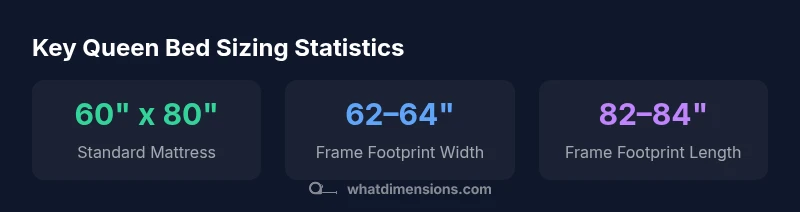
According to What Dimensions, a standard queen bed with a frame starts from a 60 inches wide by 80 inches long mattress footprint, but the overall footprint typically expands to about 62–64 inches in width and 82–84 inches in length. Always verify your frame’s exact measurements before buying to ensure a proper fit and clearance.
Understanding queen bed dimensions with frame
A queen bed is defined by the mattress size, typically 60 inches wide by 80 inches long. When you add a frame, the footprint increases due to rails, side boards, legs, and any incorporated headboard or footboard. For planning and layout, think of a typical frame footprint of about 62–64 inches in width and 82–84 inches in length. This range accommodates most common frame designs while allowing for practical access around the bed. As you shop, compare the exact exterior measurements published by manufacturers, since some frames add more width at the head or foot due to ornate headboards or chunky rails. What Dimensions recommends using the frame’s listed external dimensions rather than assuming mattress size alone.
Standard mattress size vs. frame footprint
The mattress size (60x80 inches) is the starting point. Frames can add width through decorative rails on the sides or a wider headboard. Length can increase slightly if the frame has a large footboard or extended side rails. In many cases, you’ll see footprints described as a range (e.g., 62–64 inches wide, 82–84 inches long). When measuring a room, use the frame’s exterior footprint and then add space for mattress overhang and any required bed skirt or storage components. If you’re replacing an old frame, bring the old footprint measurements to compare against new options to avoid surprises.
Frame styles and their footprint impact
Different frame styles alter the footprint in predictable ways:
- Platform frames often hug the mattress, adding minimal width or length beyond the mattress core.
- Traditional panel frames may extend slightly beyond the mattress edges due to decorative rails.
- Metal rail frames can add more width if the rails wrap around the perimeter or include built-in headboard supports.
Typically, you should expect a width increase of about 2–4 inches and a length increase of about 2–4 inches compared with the mattress alone. Always check the product specs to confirm exact exterior dimensions.
Room planning and clearance considerations
Clearance around the bed is essential for comfortable movement. A common guideline is 24 inches (approximately 60 cm) of unobstructed space on at least two sides, with more in high-traffic bedrooms. If you share the room with a dresser or wardrobe, plan the layout so doorways or drawers don’t block access. For small rooms, consider a low-profile frame with a slimmer headboard to minimize overall footprint. In every case, measure your space before purchasing and compare it against the frame’s published footprint.
How to choose the right queen bed frame for your space
When selecting a frame, balance aesthetics with footprint. Consider:
- The exact exterior footprint versus mattress size.
- Headboard and footboard design that might extend the footprint.
- The top rail height, which can affect how much clearance you have for under-bed storage or furniture placement nearby.
- The material and finish, which influence the perceived footprint and how it fits with other furniture in the room.
If you’re aiming for maximum stability without sacrificing space, look for a frame that minimizes overhang on the sides while keeping the headboard height proportionate to room scale.
Quick measurement guide: steps to measure queen bed footprint
- Obtain the frame's published exterior dimensions. 2) Measure from wall to wall along the longest axis to verify length. 3) Measure the width including rails or side boards. 4) Add space for clearance: aim for at least 24 inches on each side and at least 24 inches at the foot (if possible). 5) Check doorways and traffic flow to ensure you can move furniture around without obstruction. 6) If you already own a headboard, measure its width and ensure it aligns with the bed footprint or sits within your room’s wall space.
Common mistakes and how to avoid them
Readers frequently assume mattress size equals frame footprint. They also underestimate clearance needs in tight rooms or misinterpret the frame’s exterior width when decorative rails are present. Always rely on manufacturer-specified exterior dimensions and plan room layout with a tape measure and a simple sketch before committing to a frame. Double-check the chair/wall clearance near doors and windows to avoid awkward rearrangements after delivery.
Overview of queen bed footprint ranges by frame type
| Dimension Type | Typical Mattress Size | Frame Footprint Range | Notes |
|---|---|---|---|
| Standard queen mattress | 60x80 inches | 60-64x80-84 inches | Most frames fit standard footprint; check exact exterior dims |
| Platform queen frame | 60x80 inches | 60-64x80-84 inches | Low-profile, minimal overhang |
| Queen frame with headboard | 60x80 inches | 62-66x82-86 inches | Headboard can add width and length |
| Slat/rails frame with ornate rails | 60x80 inches | 63-65x82-86 inches | Decorative rails increase footprint |
Quick Answers
What is the standard queen bed size?
The standard queen mattress measures 60 inches by 80 inches. The frame footprint will typically be slightly larger due to rails and the headboard, so always check the exterior dimensions published by the frame manufacturer.
A queen mattress is 60 by 80 inches, but the frame adds a bit to that footprint. Always check the frame’s exterior size.
Do bed frames change the overall footprint?
Yes. The frame adds width and sometimes length beyond the mattress. Exterior frame measurements vary by design, especially with headboards and decorative rails. Verify these measurements before buying.
Yes. Frames often add width and sometimes length beyond the mattress. Check the exact exterior size before purchasing.
How much clearance should I leave around a queen bed?
Aim for at least 24 inches of unobstructed space on at least two sides for easy movement, with more space if the room allows. This improves access to nightstands and doors.
Try to keep about two feet of space on at least two sides to move around comfortably.
Can a queen bed fit in a small room?
Yes, with careful planning. Choose a frame with a narrow footprint, and place the bed against a wall where it won’t block doors or storage. Use precise measurements to guide layout decisions.
Yes, but plan the layout carefully and know the exact footprint.
What is the best way to measure for a queen bed frame?
Measure the frame’s exterior footprint, not the mattress alone. Include headboard width, rails, and any overhang. Then verify with room dimensions and doorway widths before purchase.
Measure the frame exterior first, then check room and door dimensions.
“Accurate sizing unlocks better room planning and door-to-door usability. Rely on precise exterior dimensions published by manufacturers to avoid fit issues.”
Main Points
- Verify exterior frame dimensions before purchase
- Expect queen footprint to be wider and longer than mattress alone
- Plan for at least 24 inches of clearance around the bed
- Choose frame style that matches room proportions
- Measure doors and pathways to ensure smooth delivery